
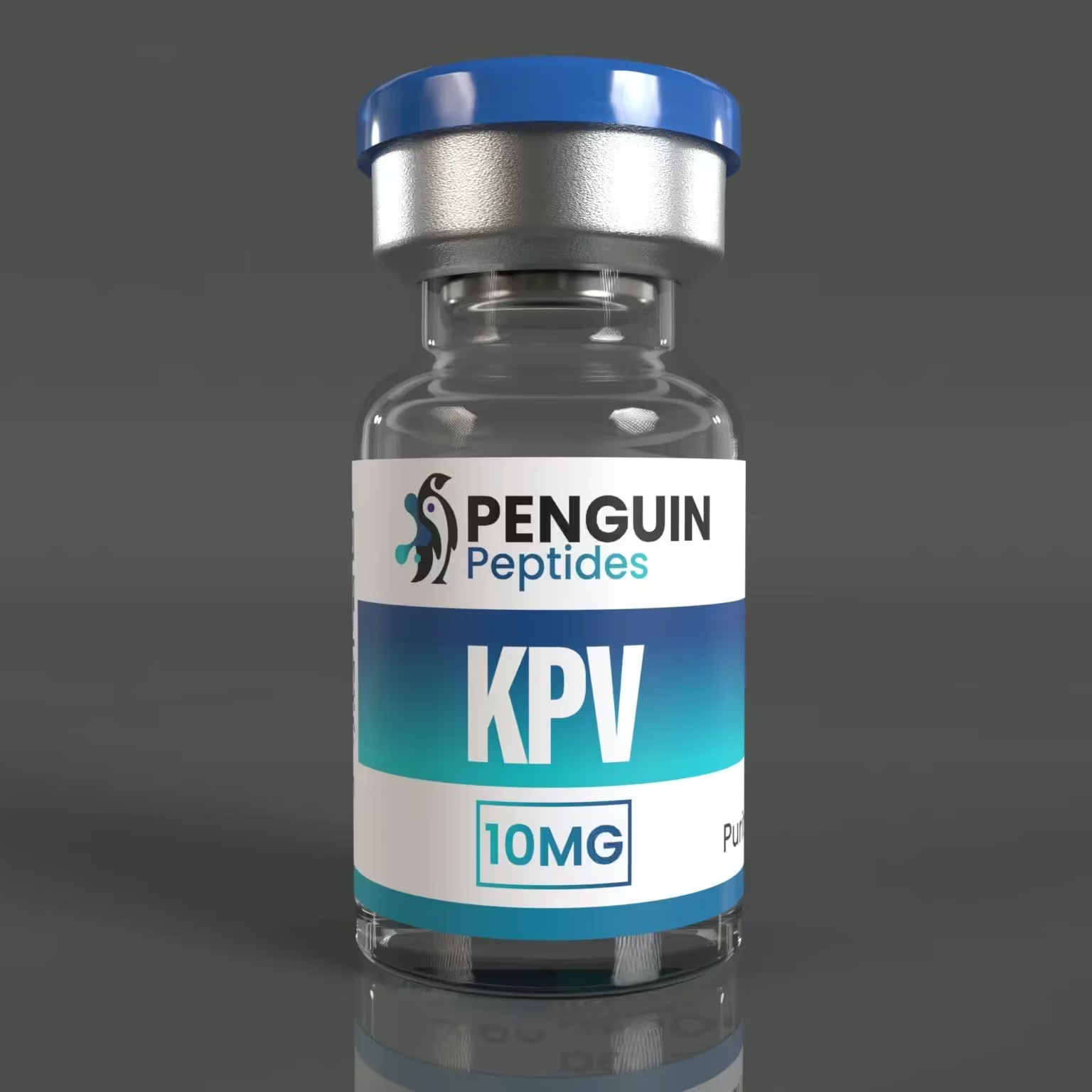
KPV Peptides 10mg
Original price was: $65.00.$59.00Current price is: $59.00.
🧬 KPV Peptides – 10mg
🔬 High-purity anti-inflammatory tripeptide
✅ ≥98% purity, HPLC tested
📦 10 vials included
💧 Free bacteriostatic water with every order
🧪 For laboratory research only
Order now – 10 vials + free Bac Water! 🚀
Premium KPV Peptides – 10mg Research Grade
KPV peptides are short, synthetic tripeptides composed of lysine, proline, and valine (Lys-Pro-Val). This sequence represents the C-terminal fragment of alpha-melanocyte-stimulating hormone (α-MSH), a naturally occurring neuropeptide that regulates inflammation and immune function. KPV peptides have attracted significant research interest because they retain the anti-inflammatory properties of the full α-MSH molecule while exhibiting greater stability and ease of synthesis. According to research published in ACS Biomaterials Science & Engineering, KPV is derived from α-MSH and has demonstrated anti-inflammatory effects in colitis models .
Unlike the full α-MSH hormone, KPV peptides lack pigment-inducing activity, making them a more targeted research tool for studying inflammatory pathways. Research has demonstrated that KPV peptides act through multiple mechanisms, including inhibition of NF-κB signaling, modulation of cytokine production, and regulation of oxidative stress pathways. Studies indexed in the NIH PubMed database have investigated KPV’s role in attenuating adipogenesis and lipid metabolism through modulation of ROS-mediated signaling .
This 10mg research-grade vial of KPV peptides is supplied as a lyophilized powder for laboratory investigation of inflammatory signaling, immune modulation, and tissue repair mechanisms. The tripeptide’s small size and stability make it particularly valuable for studies requiring cellular uptake and transport analysis, especially given its interaction with the PepT1 oligopeptide transporter .
Important Notice: This product is supplied for research purposes only and is not intended for human consumption or clinical use.
Product Specifications
| Feature | Specification |
|---|---|
| Peptide Name | KPV (Lysine-Proline-Valine) |
| Amino Acid Count | 3 |
| Molecular Formula | C₁₆H₃₀N₄O₄ |
| Molecular Weight | ~342.4 Da |
| Purity | ≥98% (HPLC) |
| Form | Lyophilized powder |
| Vial Size | 10mg |
| Storage | -20°C (long-term), 2–8°C (short-term) |
| Solubility | Soluble in sterile water or bacteriostatic water |
| For Research Use Only | Not for human or clinical use |
Mechanism of Action
NF-κB Pathway Inhibition
KPV peptides exert their primary anti-inflammatory effects through inhibition of the NF-κB signaling pathway. NF-κB is a transcription factor that controls expression of numerous pro-inflammatory genes, including TNF-α, IL-1β, and IL-6. Research published in ScienceDirect has demonstrated that KPV effectively blocks ROS-mediated caspase-1 activation and suppresses the redox-sensitive transcription factor NF-κB in keratinocyte models .
PepT1-Mediated Transport
A key feature distinguishing KPV peptides from larger peptides is their interaction with PepT1, a di/tripeptide transporter expressed in intestinal epithelial cells. According to research indexed in Science.gov, the intestinal H(+)-coupled peptide transporter PepT1 displays broad substrate specificity and accepts most charged and neutral di- and tripeptides . This transporter-mediated uptake may explain the peptide’s observed efficacy in gastrointestinal inflammation models.
Cytokine Modulation
KPV peptides modulate the balance between pro-inflammatory and anti-inflammatory cytokines. Studies have demonstrated that KPV reduces secretion of pro-inflammatory cytokines including TNF-α and IL-1β. Research in ACS Publications confirmed that KPV treatment decreased expression of proinflammatory cytokines such as tumor necrosis factor α and interleukin 6 in TNBS-induced ulcerative colitis models .
Research Applications
Inflammatory Bowel Disease Research
KPV peptide’s have been extensively studied in models of intestinal inflammation. Research has demonstrated that KPV reduces colitis symptoms including body weight loss and disease activity index scores. A study in ACS Biomaterials Science & Engineering showed that KPV treatment prevented colon shortening and decreased colonic myeloperoxidase levels in TNBS-infused rats .
Wound Healing and Skin Research
KPV peptides have shown promise in skin repair and wound healing studies. Research published in ScienceDirect demonstrated that KPV mitigates fine dust (PM10)-induced keratinocyte apoptosis and inflammation by regulating oxidative stress and modulating the MAPK/NF-κB pathway . These findings suggest potential applications in dermatological research related to environmental skin damage.
Immune Signaling Studies
KPV peptides modulate immune cell function through multiple pathways. Research from the NIH PubMed database has examined how KPV and related MSH peptides signal in human keratinocyte cells, showing that KPV elevates intracellular calcium in HaCaT keratinocytes . The peptide has also been studied for its effects on inflammatory signaling in various cell types.
Metabolic and Lipid Research
Recent studies have investigated KPV in metabolic contexts. Research indexed in PubMed demonstrated that KPV attenuates hepatic lipid accumulation through ROS-dependent regulation of the PPARγ pathway in HepG2 cells . Additional studies have examined KPV’s effects on adipogenesis and lipid metabolism, suggesting broader metabolic research applications.
Quality and Purity
Each batch of Penguin Peptide’s KPV peptides undergoes rigorous quality control:
-
≥98% purity verified by HPLC
-
Correct molecular weight confirmed by mass spectrometry
-
Third-party tested with Certificates of Analysis (COA) available
-
Sterility and mycoplasma tested
Independent testing has revealed that approximately 30% of sampled peptide products from unregulated sources may have mislabeling, dosing errors, or contamination issues. For researchers sourcing KPV peptide’s, verifying COA documentation from reputable suppliers is essential for ensuring product integrity and experimental reproducibility.
Frequently Asked Questions
What are KPV peptides?
KPV peptides are synthetic tripeptides composed of lysine, proline, and valine. They represent the C-terminal fragment of alpha-melanocyte-stimulating hormone (α-MSH) and are studied for their anti-inflammatory and immunomodulatory properties .
How do KPV peptides differ from full α-MSH?
KPV peptides retain the anti-inflammatory activity of α-MSH but lack the pigment-inducing effects associated with the full hormone. The shorter sequence also offers improved stability and ease of synthesis for research applications .
What purity level can I expect?
Our KPV peptides are provided at ≥98% purity, verified by HPLC with third-party testing.
What research applications are KPV peptides used for?
KPV peptides are studied in inflammatory bowel disease research, wound healing models, immune signaling studies, skin keratinocyte research, and metabolic lipid studies .
How should KPV peptides be stored?
Store lyophilized powder at -20°C for long-term stability. Reconstituted material should be stored at 2–8°C and used promptly following standard laboratory protocols.
Is this product suitable for human use?
No. This product is supplied for research purposes only and is not intended for human consumption or clinical application.
Conclusion
KPV peptides represent a valuable research tool for investigating inflammatory signaling pathways, immune modulation, and tissue repair mechanisms. With their high-purity formulation and comprehensive quality documentation, this 10mg vial enables researchers to study NF-κB pathway inhibition, PepT1-mediated transport, and the peptide’s diverse anti-inflammatory effects . The established pharmacology of KPV peptides provides a strong foundation for meaningful scientific inquiry across multiple research disciplines.
Ready to Advance Your Research?
Order premium KPV peptides (10mg) for your laboratory today. Contact our team for COA requests or technical inquiries.
Be the first to review “KPV Peptides 10mg”
Related products
Cellular Research Compounds
Reviews
There are no reviews yet.