
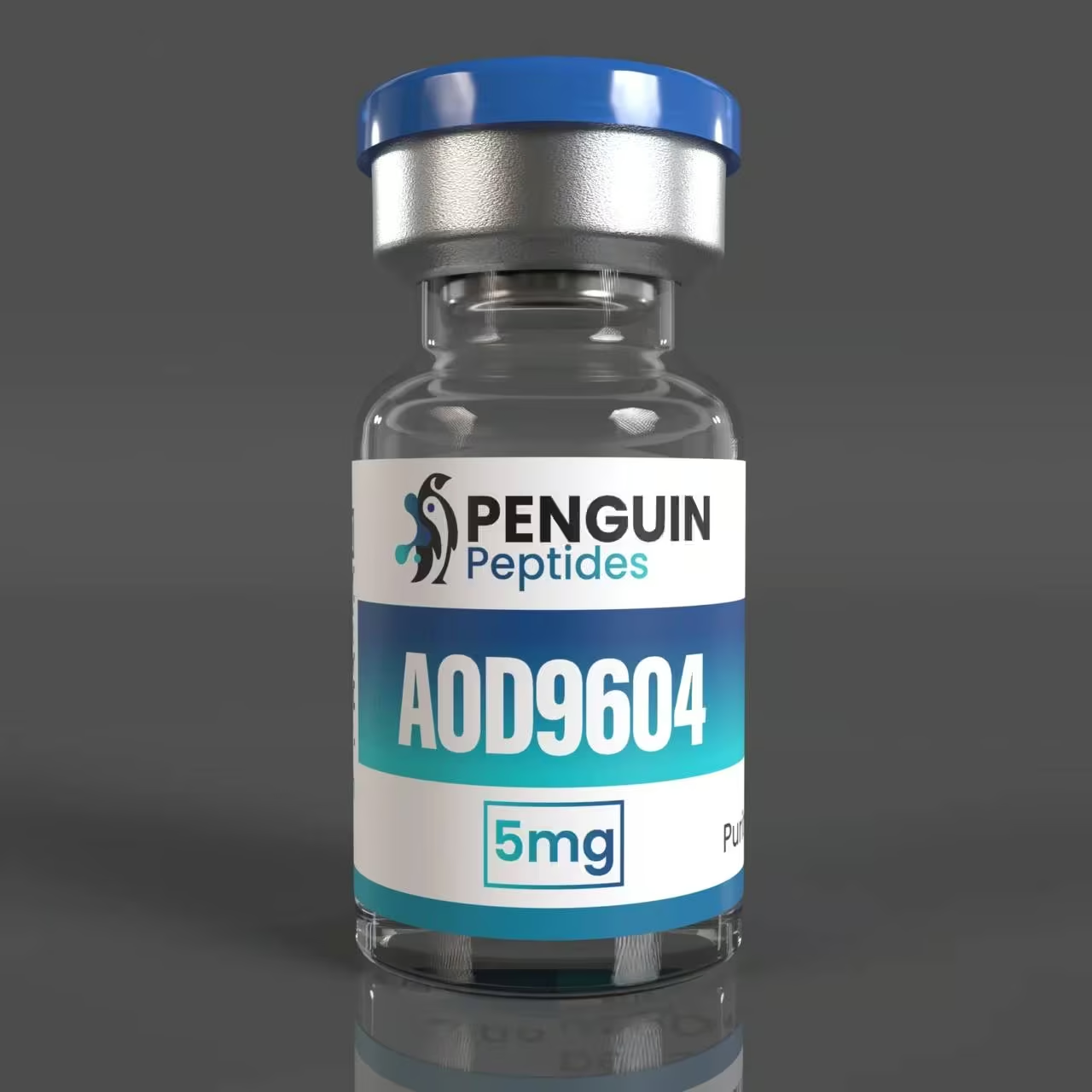
AOD9604
Original price was: $42.00.$40.00Current price is: $40.00.
🧬 AOD9604 – Research Peptide
-
🔬 Synthetic hGH fragment (177–191) for metabolic & lipolysis studies
-
🧪 ≥97% purity, HPLC-tested
-
📦 10 vials included
-
💧 Free bacteriostatic water with every order
-
🔥 For lab research only – not for human use
Grab your 10-vial research pack + free Bac Water today! 🚀
AOD9604 Peptide – Research-Grade Compound for Metabolic & Lipolysis Studies
AOD9604 is a synthetic peptide fragment derived from the C-terminal region of human growth hormone (hGH), specifically corresponding to amino acid residues 177–191, as classified in the NIH MeSH database. This modified peptide has emerged as a significant research tool for investigating lipid metabolism, adipocyte signaling, and metabolic regulation without the systemic effects associated with full-length growth hormone activation.
What Is AOD9604?
AOD9604 (also known as AOD-9604) is a synthetic 16-amino acid peptide that represents a stabilized analog of the hGH C-terminal fragment 176–191. Unlike full-length HGH 191AA, which activates the growth hormone receptor (GHR) and initiates the IGF-1 axis, AOD9604 is specifically engineered to isolate the lipolytic (fat-breakdown) activity of growth hormone while bypassing systemic GH receptor activation.
The Science Behind AOD9604
The mechanism of action of AOD9604 is unique among growth hormone-related peptides. Research published in a peer-reviewed endocrinology study indicates that AOD9604 does not compete for the growth hormone receptor nor induce cell proliferation through it. Instead, its lipolytic action is thought to involve the β3-adrenergic receptor pathway, with studies demonstrating that both human GH and AOD9604 increase β3-AR expression, which may subsequently contribute to enhanced lipolytic sensitivity.
Key research findings on AOD9604—documented across the PubMed Central repository—include:
-
Lipolytic activity – promotes fat breakdown (lipolysis) while reducing lipogenesis, as shown in early oral administration studies in rodent models.
-
Weight management research – a comprehensive metabolic review of AOD-9604 highlights its development trajectory for obesity-related research.
-
Favorable metabolic profile – reduces body weight without significantly affecting blood sugar levels.
-
Cartilage health – research suggests potential in cartilage regeneration and joint health (see orthopaedic applications below).
AOD9604 vs. Full-Length HGH: Key Research Differences
The antilipogenic action of the C-terminus hGH(177-191) has been well-characterized, distinguishing it from the full molecule. Regulatory and anti-doping contexts, such as those outlined by the World Anti-Doping Agency (WADA) and associated immunoassay studies, further differentiate these peptides based on receptor activation profiles.
| Feature | AOD9604 | HGH 191AA |
|---|---|---|
| Amino Acids | 16 (modified fragment 177–191) | 191 (full sequence) |
| Receptor Activation | Does not activate GHR | Activates GHR and IGF-1 axis |
| Primary Research Focus | Lipolysis, metabolic regulation | Growth axis, body composition, metabolism |
| IGF-1 Elevation | No | Yes |
| Half-Life | ~30 minutes (modified for stability) | Variable |
Product Specifications
| Feature | Specification |
|---|---|
| Peptide Name | AOD9604 (AOD-9604) |
| Amino Acid Count | 16 |
| Source | Synthetic fragment of hGH (residues 177–191) |
| Purity | ≥97% (HPLC verified) |
| Form | Lyophilised powder |
| Storage | -20°C (long-term) |
| For Research Use Only | Not for human consumption or clinical use |
Research Applications of AOD9604
Metabolic Research & Lipid Metabolism
AOD9604 is a valuable tool for researchers investigating lipid metabolism and energy balance. Studies have explored its role in:
-
Fat oxidation – both hGH and its C-terminal fragment increase fat oxidation in obese mouse models, as indexed in the National Center for Biotechnology Information (NCBI) databases.
-
Lipolysis stimulation – promotes breakdown of stored fat.
-
Weight management pathways – a Phase IIa trial referenced in clinical development literature highlights its metabolic profile.
Researchers studying metabolic disorders, obesity mechanisms, and adipose tissue biology can explore PubMed’s extensive library on AOD-9604 for foundational data to support in vitro and preclinical investigations.
Adipocyte Signaling Studies
The unique signaling profile of AOD9604 makes it particularly useful for studying adipocyte signaling pathways independent of GHR activation. Its interaction with the β3-adrenergic receptor pathway provides researchers with a model to investigate:
-
β3-AR expression and lipolytic sensitivity
-
Non-GHR-mediated metabolic signaling
-
Adipose tissue function and fatty acid metabolism
Cartilage & Joint Health Research
Emerging research has explored AOD9604 in the context of cartilage regeneration and joint health. A 2015 animal study using New Zealand white rabbits with experimentally induced knee osteoarthritis—published in a PubMed-indexed OA model study—found that intra-articular AOD9604 enhanced cartilage regeneration compared to saline. This opens avenues for research in:
-
Osteoarthritis models
-
Cartilage repair mechanisms
-
Musculoskeletal regenerative research, further contextualized by recent reviews in orthopaedic therapeutic peptides.
Fragment & Analog Development
As a modified fragment of the hGH C-terminus, AOD serves as a parent molecule for developing and studying smaller peptide analogs with specific biological activities. Researchers can use this peptide to:
-
Investigate structure-activity relationships
-
Develop targeted lipolytic compounds
-
Study receptor-independent metabolic signaling
Quality Assurance & Testing
Every batch of AOD9604 undergoes rigorous quality control testing to ensure research-grade reliability, aligned with regulatory standards set by the FDA and documented in the NCBI databases.
-
≥97% purity verified by HPLC
-
Correct molecular weight confirmed by mass spectrometry
-
Consistent amino acid sequence validated by peptide mapping
-
Certificates of Analysis (COA) available upon request
For researchers, third-party lab testing—including cross-referencing with FDA toxicology evaluations—provides the transparency and confidence needed for reproducible scientific work.
Frequently Asked Questions
What is AOD9604?
AOD9604 is a synthetic peptide fragment derived from the C-terminal region of human growth hormone, specifically amino acid residues 177–191. It is used in research to study lipid metabolism, adipocyte signaling, and metabolic regulation, with extensive background available via the NIH PubMed database.
How does AOD9604 differ from HGH 191AA?
Unlike full-length HGH 191AA, which activates the growth hormone receptor and initiates the IGF-1 axis, AOD does not compete for the GHR nor induce cell proliferation through it. Its lipolytic action is thought to involve the β3-adrenergic receptor pathway.
What is the purity level?
Our AOD9604 is provided at ≥97% purity, verified by HPLC testing.
How should AOD be stored?
The lyophilised powder should be stored at -20°C for long-term stability. Reconstitute according to standard laboratory protocols.
Is AOD9604 suitable for clinical use?
No. This product is supplied for research purposes only and is not intended for human consumption or clinical application. While ClinicalTrials.gov tracks past clinical phases for this compound, our product is strictly limited to laboratory research. Organizations like the Therapeutic Goods Administration (TGA) and WADA strictly regulate human applications, reinforcing our “Not for Human Use” policy.
Conclusion
AOD9604 represents a targeted research tool for scientists investigating lipid metabolism, adipocyte signaling, and metabolic regulation. As a modified fragment of the hGH C-terminus, it offers the unique advantage of isolating lipolytic activity without full growth hormone receptor activation. With its ≥97% purity and rigorous quality testing—backed by the full weight of the PubMed Central open-access archive and NIH resources—this peptide provides a reliable foundation for meaningful scientific inquiry into metabolic pathways and adipose tissue biology.
Ready to Advance Your Research?
🔬 Premium AOD9604 – Research-grade peptide for metabolic and lipolysis studies
-
✅ ≥97% purity, HPLC tested
-
📦 Available in multiple vial sizes
-
🔬 For laboratory research only
-
📄 COA available upon request
Be the first to review “AOD9604”
Related products
Regenerative Research Compound
Regenerative Research Compound
Regenerative Research Compound
Regenerative Research Compound
Regenerative Research Compound
Regenerative Research Compound
Regenerative Research Compound
Regenerative Research Compound
Reviews
There are no reviews yet.