
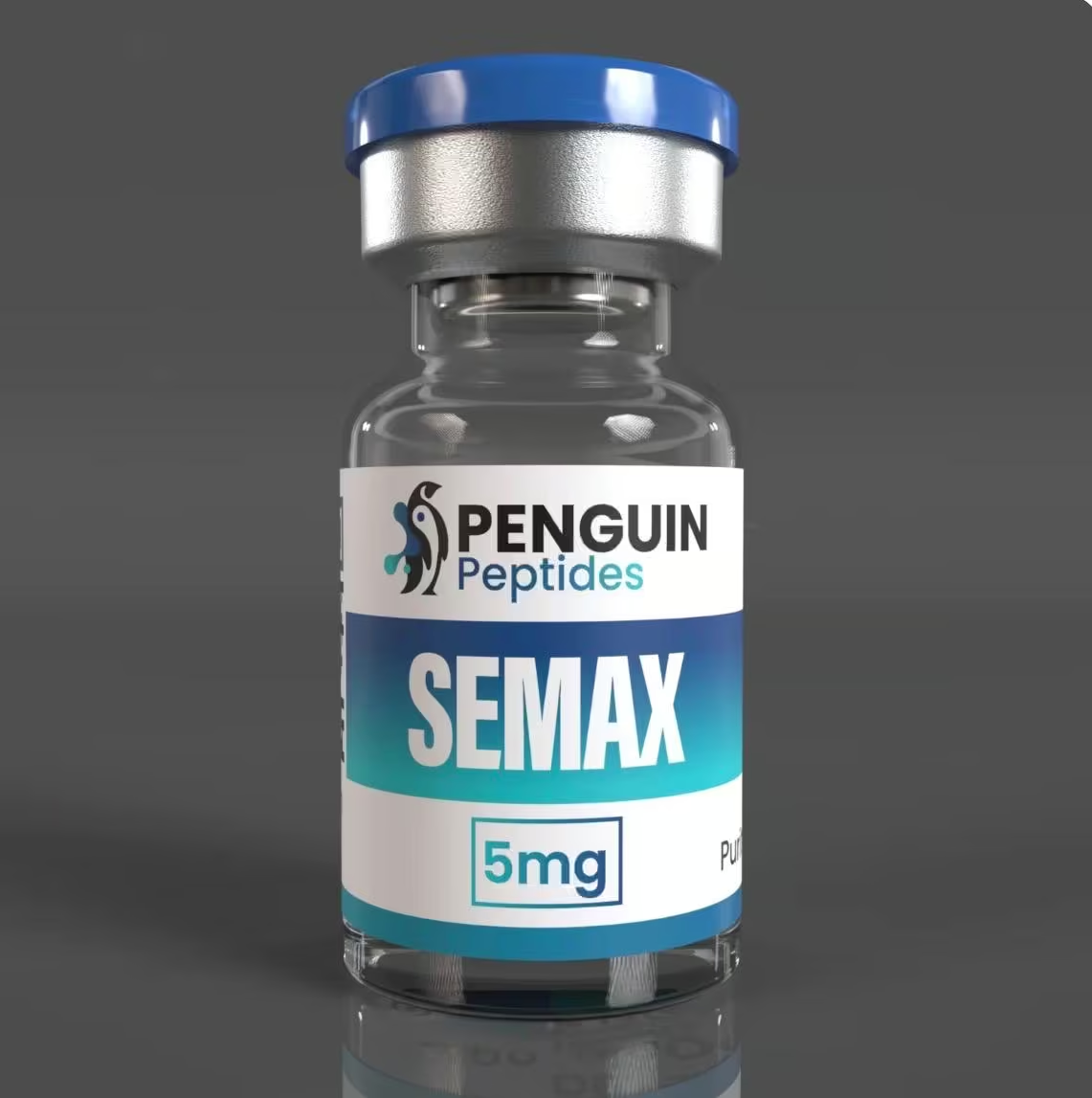
Buy Semax – Premium Research Grade Nootropic Peptide
Product Overview
Semax is a synthetic heptapeptide analog of adrenocorticotropic hormone (ACTH) fragment 4–7, extended with a C-terminal Pro-Gly-Pro tripeptide. When researchers buy Semax for laboratory use, they are seeking a compound that has been studied extensively for its neuroprotective and nootropic properties. Semax is registered as a prescription pharmaceutical in Russia for ischemic stroke, cognitive disorders, and optic nerve disease, but is not FDA-approved in the United States.
The peptide’s chemical identity is documented in the FDA Global Substance Registration System under UNII code I5FAL2585H, with molecular formula C₃₇H₅₁N₉O₁₀S and molecular weight of approximately 813.9 Da.
Despite its derivation from ACTH, Semax lacks the HFRW motif required for melanocortin receptor activation. It does not induce melanogenesis and does not activate MC1R–MC5R at therapeutic doses—making it pharmacologically distinct from melanocortin agonists. Researchers who buy Semax for neuropeptide studies should note this key distinction.
Important Notice: This product is supplied for research purposes only and is not intended for human consumption or clinical use. The FDA has not approved Semax for any indication.
Product Specifications
| Feature | Specification |
|---|---|
| Peptide Name | Semax (ACTH(4-7)PGP) |
| Sequence | Met-Glu-His-Phe-Pro-Gly-Pro |
| Molecular Formula | C₃₇H₅₁N₉O₁₀S |
| Molecular Weight | ~813.9 Da |
| Purity | ≥98% (HPLC) |
| Form | Lyophilized powder |
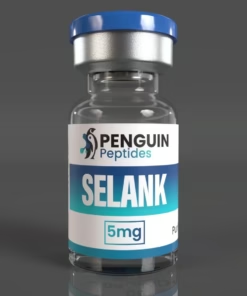
| Vial Size | 10mg |
| Storage | -20°C (long-term), 2–8°C (short-term) |
| Solubility | Soluble in sterile water or bacteriostatic water |
| For Research Use Only | Not for human or clinical use |
Mechanism of Action
BDNF/TrkB Upregulation
The primary documented molecular action of Semax is upregulation of brain-derived neurotrophic factor (BDNF) and its receptor TrkB in the hippocampus and cortex. Single intranasal administration in rats produced a maximal 1.4-fold increase in BDNF protein levels and enhanced TrkB tyrosine phosphorylation, correlating with improved avoidance learning. Research published in Acta Naturae demonstrated that Semax significantly reduced amyloid plaque formation in an Alzheimer’s disease mouse model, with a 2.8-fold reduction in the cerebral cortex compared to controls.
For those looking to buy Semax for BDNF research, this mechanism represents the most well-characterized pathway.
Neuroimmune Modulation
Studies indexed in the NIH PubMed Central database show that Semax predominantly enhances expression of immune-system-related genes, particularly those involved in antigen presentation and neuroimmune crosstalk, at 3–24 hours post-ischemia. Research published in Mendeley confirmed that Semax shifts neuromediatory balance toward anti-inflammatory mediators, increasing IL-10 relative to pro-inflammatory cytokines in acute stroke.
Monoaminergic System Activation
Microdialysis studies have shown that Semax potentiates dopamine release when combined with D-amphetamine and increases serotonin turnover in the striatum, suggesting nootropic effects may involve monoamine system modulation. Researchers who buy Semax for cognitive studies often cite this monoaminergic component as a secondary mechanism of interest.
Research Applications
Neuroprotection and Stroke Research
Semax has been studied extensively in models of cerebral ischemia. Research using the National Institutes of Health database examined transcriptomic responses in rat brain regions after middle cerebral artery occlusion, revealing that Semax modulates multiple cell death pathways including apoptosis, pyroptosis, and ferroptosis.
Cognitive Function and Nootropic Research
Human volunteer studies published in Wiley Online Library demonstrated that intranasal Semax (0.25–1.0 mg) produced nootropic-like effects on EEG and improved work efficiency for 20–24 hours post-administration. Research published in ScienceDirect proposed Semax as a potential research tool for ADHD and Rett syndrome due to its ability to stimulate central BDNF synthesis.
Alzheimer’s Disease Research
A study in Acta Naturae found that Semax improved cognitive function in a mouse model of Alzheimer’s-type pathology and reduced amyloid load in both the cerebral cortex and hippocampus. The peptide’s effect persisted for 1.5 months post-administration. Scientists who buy Semax for neurodegenerative research frequently reference this long-lasting effect.
Quality and Purity
Each batch of Penguin Peptides Semax undergoes rigorous quality control:
-
≥98% purity verified by HPLC
-
Correct molecular weight confirmed by mass spectrometry
-
Third-party tested with Certificates of Analysis (COA) available
-
Sterility and mycoplasma tested
Independent testing has revealed that approximately 30% of sampled peptide products from unregulated sources may have mislabeling, dosing errors, or contamination issues. For researchers looking to buy Semax, verifying COA documentation from reputable suppliers is essential for ensuring product integrity and experimental reproducibility.
Regulatory Context
The FDA’s Pharmacy Compounding Advisory Committee voted in July 2026 to recommend adding Semax to the 503A compounding bulk substance list. However, this recommendation is nonbinding and does not change the legal status of Semax. The FDA must still complete formal notice-and-comment rulemaking before any change takes effect, a process that could take a year or more. FDA scientists have historically opposed compounding of these peptides, citing a lack of safety and efficacy evidence. Those who buy Semax for research purposes should remain aware of this evolving regulatory landscape.
Frequently Asked Questions
What is Semax?
Semax is a synthetic heptapeptide analog of ACTH(4-7) with a C-terminal Pro-Gly-Pro extension. It is studied for its neuroprotective and nootropic properties.
What is the mechanism of action of Semax?
The primary documented mechanism is BDNF/TrkB upregulation in the hippocampus and cortex, supporting neuronal survival and synaptic plasticity.
What purity level can I expect?
Our Semax is provided at ≥98% purity, verified by HPLC with third-party testing.
What research applications is Semax used for?
Semax is studied in neuroprotection, stroke research, cognitive function studies, Alzheimer’s disease models, and neurotrophin signaling research.
How should Semax be stored?
Store lyophilized powder at -20°C for long-term stability. Reconstituted material should be stored at 2–8°C and used promptly following standard laboratory protocols.
Where can I buy Semax for research?
You can buy Semax directly from Penguin Peptides Lab. Every order includes third-party COA documentation.
Is this product suitable for human use?
No. This product is supplied for research purposes only and is not intended for human consumption or clinical application. Semax is not FDA-approved for any indication.
Conclusion
Semax represents a valuable research tool for investigating neuroprotection, BDNF-mediated signaling, and cognitive function. With its high-purity formulation and comprehensive quality documentation, this 10mg vial enables researchers to study the peptide’s diverse neurotrophic effects. When you buy Semax from Penguin Peptides Lab, you receive a compound backed by full analytical transparency. The established pharmacology of Semax—including BDNF upregulation, neuroimmune modulation, and amyloid plaque reduction—provides a strong foundation for meaningful scientific inquiry across multiple research disciplines.
Ready to Advance Your Research?
Order premium Semax (10mg) for your laboratory today. Contact our team for COA requests or technical inquiries.
| mg | 10, 5 |
|---|
Be the first to review “Semax”
Related products
Neuro Research Compound
Neuro Research Compound
Reviews
There are no reviews yet.