
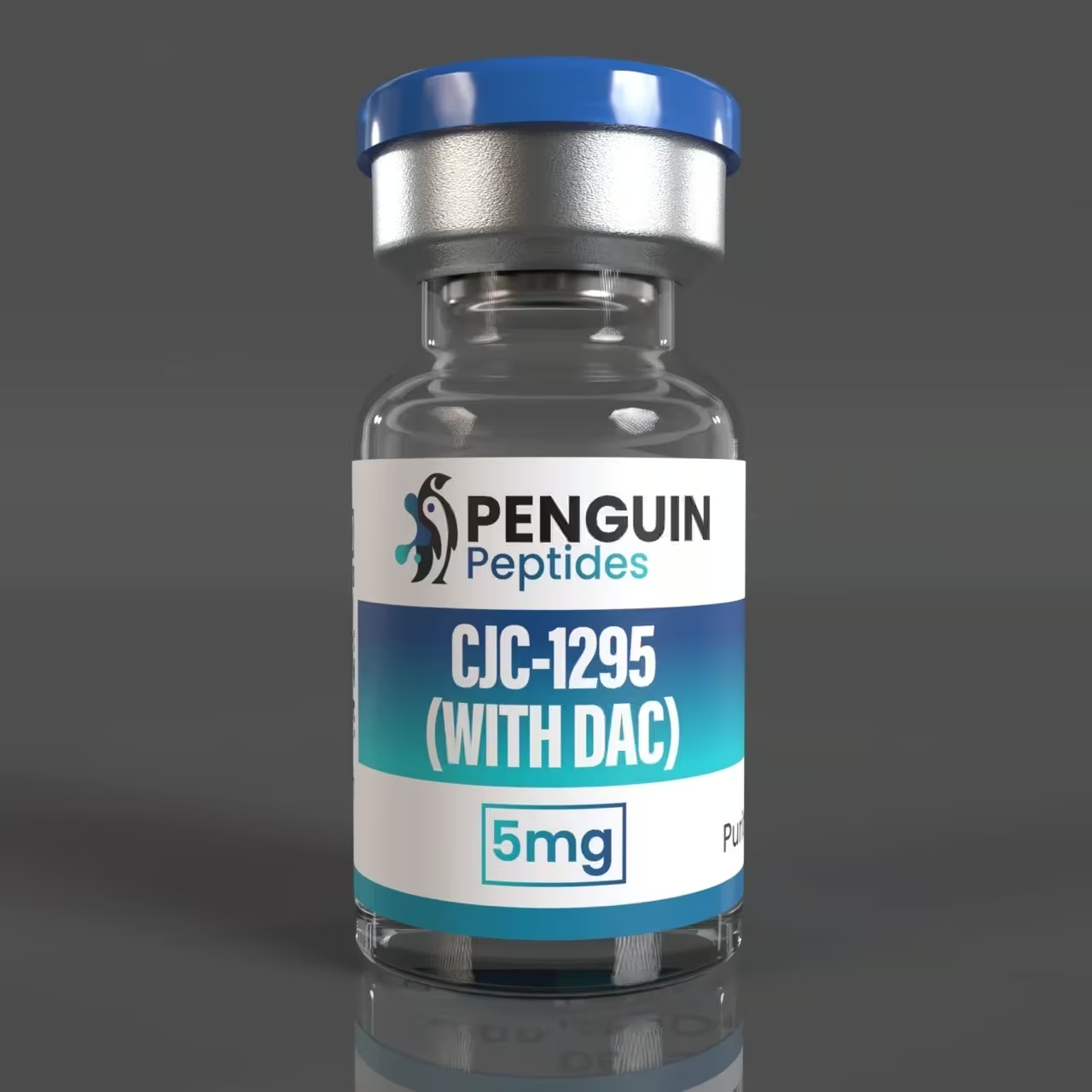
CJC Peptides 1295 (With DAC)
Original price was: $57.00.$55.00Current price is: $55.00.
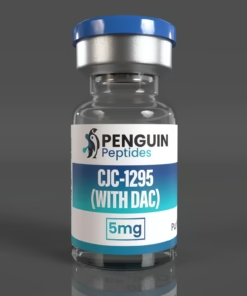
🧪 10mg Per Vial – CJC-1295 (With DAC)
✅ ≥99% Purity – HPLC verified with COA available
🧊 Free Bac Water – Included with every order
📦 10 Vials – Per order for extended research
🚚 Fast Shipping – Discreet packaging with tracking
🔬 Research Grade – Strict quality control protocols
⚠️ Research Use Only – Not for human consumption
CJC Peptides 1295 (With DAC) – Premium Research Peptide
What Is CJC Peptide 1295?
CJC Peptide 1295 is a synthetic, long-acting analog of growth hormone-releasing hormone (GHRH) designed for research into the somatotropic axis. As a modified GHRH analog, this CJC Peptide 1295 incorporates four amino acid substitutions that render the compound more resistant to enzymatic degradation than native GHRH.
The defining feature of CJC Peptide 1295 with DAC (Drug Affinity Complex) is its albumin-binding technology. After administration, the maleimido group on the biotin linker reacts with the free thiol on cysteine-34 of circulating albumin to form a stable thioether bond. Since albumin has a plasma half-life of approximately 19 days, the peptide is protected from renal filtration and proteolytic clearance.
According to pharmacokinetic data from the FDA, CJC Peptide 1295 with DAC has an estimated half-life of 5.8 to 8.1 days in humans, supporting a sustained duration of action not achievable with shorter-acting GHRH analogs.
Product Specifications
| Feature | Specification |
|---|---|
| Peptide Name | CJC-1295 (With DAC) |
| Amino Acid Count | 30 |
| Molecular Weight | ~3,647 Da |
| Purity | ≥99% (HPLC) |
| Form | Lyophilised powder |
| Available Dosage | 10mg per vial |
| Storage | -20°C (long-term) |
| For Research Use Only | Not for human consumption or clinical use |
Research Applications
Sustained GH and IGF-1 Elevation
The most direct human evidence for CJC Peptides 1295 comes from the 2006 Phase 1 program by Teichman and colleagues, published in the Journal of Clinical Endocrinology and Metabolism via PubMed. Single doses produced 2- to 10-fold increases in mean GH concentration lasting up to 6 days, while IGF-1 levels increased 1.5- to 3-fold and remained elevated for 6 to 14 days after a single injection.
This sustained elevation profile distinguishes CJC Peptide 1295 from shorter-acting GHRH analogs and makes it valuable for research protocols requiring prolonged GH axis stimulation.
Pulsatile GH Secretion Preserved
A critical question in CJC Peptides 1295 research is whether sustained GHRH receptor stimulation produces tonic rather than pulsatile GH release. Research by Ionescu and Frohman in 2006, available through PubMed, addressed this directly. Deconvolution analysis of 24-hour GH secretion profiles showed that GH pulse frequency and amplitude were unaltered, while trough GH concentrations rose approximately 7.5-fold and mean 24-hour GH increased approximately 46%.
This finding is significant because it suggests that CJC Peptide 1295 enhances GH output without disrupting the natural pulsatile pattern of secretion.
Trophic Effects on Somatotrophs
Research using the GHRH knockout mouse model, published in the American Journal of Physiology, has demonstrated that CJC Peptides 1295 has important trophic effects on GH-secreting cells of the pituitary. A once-daily injection was sufficient to maintain normal growth parameters and body composition, suggesting that GHRH is an ideal and more physiological treatment when growth hormone deficiency is due to hypothalamic dysfunction rather than primary pituitary disease.
Metabolic and Body Composition Research
Growth hormone drives lipolysis, particularly in visceral adipose tissue, by upregulating hormone-sensitive lipase and promoting fatty acid mobilization. Published Phase 1 and Phase 2 human trials have demonstrated that even low weekly doses of CJC Peptide 1295 produce dose-dependent, sustained increases in both GH and IGF-1 levels in healthy adults, with no observed desensitization of the pituitary gland over time.
Comparison with Shorter-Acting Analogs
CJC Peptides 1295 with DAC has a significantly longer half-life than sermorelin (11-12 minutes) or CJC-1295 without DAC (approximately 30 minutes), producing more sustained GH elevation. The choice between these research tools depends on the specific pharmacokinetic profile required for a given study design.
Public health research published via PubMed has examined usage patterns of synthetic growth hormone compounds including CJC Peptides 1295, providing context for understanding how these research tools are utilized in non-clinical settings.
Quality and Purity
Each batch of CJC Peptide 1295 undergoes rigorous quality control testing to ensure:
-
≥99% purity verified by HPLC
-
Correct molecular weight confirmed by mass spectrometry
-
Consistent peptide content validated by amino acid analysis
Certificates of Analysis (COA) are available upon request, providing full transparency for research applications.
Frequently Asked Questions
What is CJC Peptide 1295?
CJC Peptides 1295 is a synthetic, long-acting analog of growth hormone-releasing hormone (GHRH) with four amino acid substitutions that increase resistance to enzymatic degradation. The DAC (Drug Affinity Complex) variant binds to albumin, extending its half-life to approximately 6-8 days.
What is the difference between CJC-1295 with and without DAC?
CJC Peptide 1295 with DAC binds to albumin, extending its half-life to 5.8-8.1 days. The version without DAC has a half-life of approximately 30 minutes. Both forms stimulate GH release, but the DAC variant provides more sustained elevation.
How does CJC Peptides 1295 work?
CJC Peptide 1295 mimics the action of endogenous GHRH at the pituitary, stimulating somatotroph cells to produce and release growth hormone. The sustained receptor activation leads to elevated GH and downstream IGF-1 levels.
What dosage is available?
Our CJC Peptides 1295 is available in 10mg per vial, providing sufficient material for extended research protocols.
What purity level can I expect?
Our CJC Peptide 1295 is provided at ≥99% purity, verified by HPLC.
How should CJC Peptide 1295 be stored?
CJC Peptides 1295 should be stored at -20°C for long-term stability. Lyophilised powder should be reconstituted according to standard laboratory protocols.
Is CJC Peptides 1295 FDA-approved?
No. CJC Peptides 1295 is not FDA-approved and is sold strictly for research purposes. As noted by the BSCG, CJC-1295 is classified as a developmental drug not approved for human use and is listed as a prohibited substance by WADA.
How long does CJC Peptide 1295 stay in your system?
The half-life of CJC Peptides 1295 with DAC is approximately 5.8 to 8.1 days, meaning it remains active in the system significantly longer than shorter-acting GHRH analogs.
References
-
PubMed: Prolonged stimulation of growth hormone (GH) and insulin-like growth factor I secretion by CJC-1295 – Teichman et al. 2006, Phase 1 clinical trial data
-
PubMed: Pulsatile secretion of growth hormone persists during continuous stimulation by CJC-1295 – Ionescu and Frohman 2006, GH pulsatility study
-
American Physiological Society: Once-daily administration of CJC-1295 normalizes growth in GHRH knockout mouse – Preclinical trophic effects research
-
FDA: CJC-1295 Safety and Pharmacokinetic Data – Regulatory documentation on half-life and adverse events
-
PubMed: Netnography of Female Use of the Synthetic Growth Hormone CJC-1295 – Public health research on usage patterns
-
BSCG: CJC-1295 Use in Sports and Military Rules Explained – WADA prohibited list and regulatory status
Conclusion
CJC Peptide 1295 with DAC represents a well-characterized research tool for investigating sustained growth hormone axis modulation. Its extended half-life of 5.8-8.1 days and demonstrated ability to preserve GH pulsatility while elevating trough and mean GH levels make it valuable for studies on the somatotropic axis, IGF-1 dynamics, and metabolic research.
When searching for CJC Peptides 1295 for research purposes, prioritize suppliers offering third-party tested products with verified purity and transparent documentation. Penguin Peptides Lab provides lab-tested compounds with Certificates of Analysis available upon request, with 10mg vials offering excellent value for extended research applications.
Ready to Advance Your Research?
Order premium CJC Peptide 1295 for your research today. Contact our team for COA requests or technical inquiries.
Be the first to review “CJC Peptides 1295 (With DAC)”
Related products
Regenerative Research Compound
Regenerative Research Compound
Regenerative Research Compound
Regenerative Research Compound
Regenerative Research Compound
Regenerative Research Compound
Regenerative Research Compound
Regenerative Research Compound
Reviews
There are no reviews yet.