
Delta Sleep Inducing Peptide
Original price was: $40.00.$37.00Current price is: $37.00.
DSIP (Delta Sleep-Inducing Peptide)
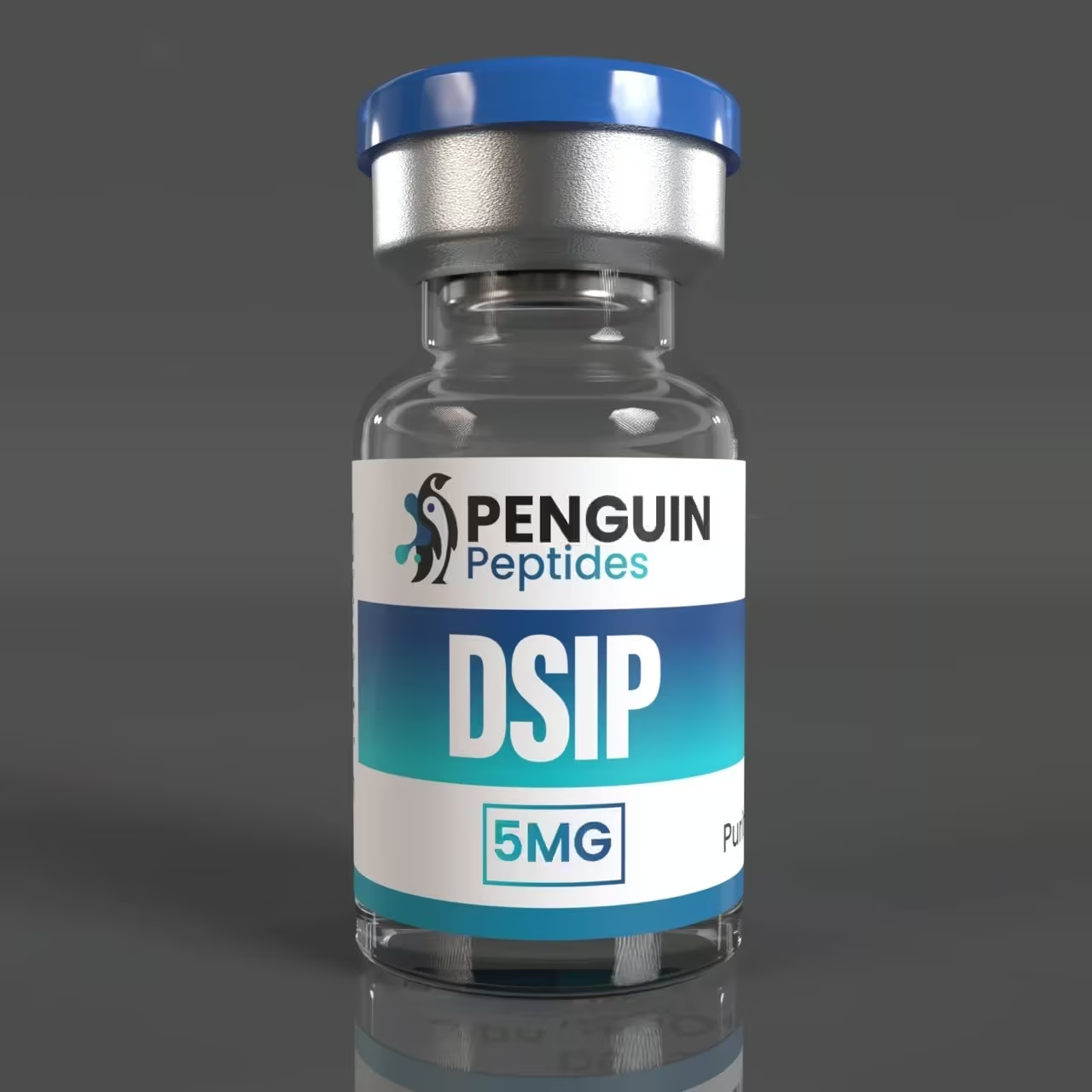
DSIP (Delta Sleep-Inducing Peptide) – 5mg (Lyophilized Powder) – For Research Use Only
DSIP is a naturally occurring neuropeptide studied for its potential role in sleep regulation, stress response, and neuroendocrine function. Originally isolated from the brain, DSIP is of particular interest in research on sleep patterns, circadian rhythm modulation, and stress adaptation mechanisms.
Studies have also explored its potential influence on hormone release, oxidative stress, and neuroprotection.
Product Details:
Peptide: DSIP (Delta Sleep-Inducing Peptide)
Purity: >98%
Form: Lyophilized powder
Quantity: 5mg per vial
Storage: Store at -4°F (-20°C). After reconstitution, refrigerate at 36–46°F (2–8°C) and use within 30 days.
Grade: For research purposes only. Not for human consumption, therapeutic, or diagnostic use.
Potential Research Applications:
Sleep regulation and circadian rhythm studies
Stress adaptation and cortisol modulation research
Neuroprotection and oxidative stress models
Endocrine system and hormone balance investigations
For laboratory research only. This product is not intended to diagnose, treat, cure, or prevent any disease.
THIS IS NOT FOR HUMAN CONSUMPTION. SOLD FOR RESEARCH ONLY!
Delta Sleep Inducing Peptide buy: Ultimate Guide to DSIP Research
In contemporary neuroscience, chronobiology, and cellular biology, understanding the biochemical factors regulating sleep-wake cycles and stress mitigation remains a high priority. Among the most intriguing compounds isolated within this discipline is Delta Sleep-Inducing Peptide (DSIP).
First discovered in 1977 by Swiss researchers, this unique neuromodulator was isolated from the cerebral venous blood of rabbits kept in a state of induced slow-wave sleep. It continues to captivate laboratory environments worldwide.
Unlike traditional sedatives that broad-spectrum suppress the central nervous system, DSIP interacts with subtle, endogenous regulatory networks. It promotes slow-wave delta sleep rhythms without inducing dependency or disrupting natural physiological architecture.
For neurological research facilities, behavioral study programs, and in vitro laboratories investigating advanced sleep physiology, making a structured Delta Sleep Inducing Peptide buy is the foundational step toward achieving stable, reproducible experimental results. This guide provides a detailed analysis of the biochemical properties, primary research applications, and exact handling protocols necessary for high-integrity research.
What is Delta Sleep-Inducing Peptide?
Delta Sleep-Inducing Peptide is a naturally occurring nonapeptide found within the mammalian brain, peripheral tissues, and plasma. Its specific amino acid sequence is Trp-Ala-Gly-Gly-Asp-Ala-Ser-Gly-Glu ($M_w = 848.34 \text{ Da}$).
Biochemically, DSIP exists in both free and bound forms within the organism. As documented in foundational literature archived on PubMed, it exhibits a distinct, U-shaped dose-response curve. This means its biological efficacy peaks at a precise physiological range and diminishes at over-saturated concentrations.
A critical biological characteristic of DSIP is its capacity to cross the blood-brain barrier (BBB). Studies show it utilizes a high-affinity, saturable transport mechanism to pass through the luminal interface of the BBB. This dynamic allows it to exert direct regulatory actions on central neural structures even after peripheral introduction.
Primary Research Applications of DSIP
The persistent motivation to initiate a Delta Sleep Inducing Peptide buy across academic institutions is driven by the peptide’s diverse, extra-sleep physiological actions. While named for its sleep-inducing effects, it operates globally as a homeostatic stabilizer.
1. Slow-Wave Sleep Modulation and Circadian Rhythm Stability
The primary focus of DSIP research centers on its ability to induce delta-rhythm electroencephalographic (EEG) activity. In animal models, the administration of DSIP enhances the duration and quality of slow-wave sleep (SWS) and rapid eye movement (REM) sleep depending on the target species.
Furthermore, DSIP actively modulates the nocturnal production of N-acetyltransferase (NAT) activity inside the pineal gland. Because NAT is the rate-limiting enzyme in melatonin synthesis, DSIP serves as a critical upstream model for studying the adjustment of mammalian circadian clocks.
2. Neuroendocrine Stress Mitigation and HPA Axis Regulation
Beyond sleep regulation, DSIP behaves as a potent anti-stress agent. When an organism encounters a severe physiological stressor, the hypothalamic-pituitary-adrenal (HPA) axis activates. This triggers an immediate release of Corticotropin-Releasing Hormone (CRH) and subsequent adrenocorticotropic hormone (ACTH).
Research demonstrates that DSIP acts as an endogenous brake on this system, downregulating stress-induced ACTH secretion and normalizing systemic cortisol levels. For laboratories evaluating [[INTERNAL LINK: peptide research benefits]], this makes DSIP a core compound for modeling stress tolerance and resilience.
3. Geroprotective Activity and Antioxidant Defense
Advanced preclinical research indicates that DSIP possesses strong geroprotective (anti-aging) and antioxidant properties. Chronic administration of the peptide in aging rodent models has shown to suppress lipid peroxidation by significantly reducing levels of malondialdehyde (MDA) across blood plasma and vital organ tissues.
Additionally, it stimulates the native activities of superoxide dismutase (SOD), catalase, and ceruloplasmin. These synchronized antioxidant adjustments demonstrate a structural stabilization of cellular membranes during later stages of life, leading to observed lifespan extension in model groups.
Mechanism of Action: The Structural Dynamics of DSIP
To structure efficient experimental assays, researchers must understand the specific molecular networks influenced by the presence of DSIP. The nonapeptide primarily modulates central neurotransmission through interactions with the adrenergic and glutamatergic systems.
| Stage of Action | Biochemical Mechanism | Physiological Observation |
| 1. BBB Permeation | Utilizes saturable, high-affinity transport across the blood-brain barrier. | Rapid central accumulation after peripheral introduction. |
| 2. Receptor Modulation | Interacts with alpha 1-adrenergic receptors and modulates GABAergic tone. | Reduction of hyper-arousal states and suppression of excitatory inputs. |
| 3. Enzyme Induction | Modulates pineal N-acetyltransferase (NAT) and upstream HPA axis signaling. | Balancing of melatonin production and suppression of excess ACTH release. |
| 4. Cellular Defense | Triggers transcriptional upregulation of primary antioxidant enzymes. | Neutralization of reactive oxygen species (ROS) and systemic lipid protection. |
Sourcing Metrics: Factors to Verify Before a Delta Sleep Inducing Peptide buy
When preparing to execute a Delta Sleep Inducing Peptide buy for analytical testing, verifying chemical purity and manufacturing quality control is paramount. Truncated chains or contamination by residual synthetic reagents can entirely alter binding kinetics.
Essential Quality Control Specifications
Before selecting an online chemical vendor, ensure that your laboratory procurement documentation verifies these exact parameters:
-
Sequence Verification: Confirmed by Mass Spectrometry (MS) to read exactly H-Trp-Ala-Gly-Gly-Asp-Ala-Ser-Gly-Glu-OH.
-
Purity Threshold: A minimum purity of 95% (ideally $\ge 98\%$) verified via High-Performance Liquid Chromatography (HPLC).
-
Counter-Ion Profile: Standardly provided as a trifluoroacetate (TFA) salt. For sensitive cell culture lines, researchers should confirm a low residual TFA content to prevent baseline cellular toxicity.
-
Physical State: Provided as a sterile, lyophilized (freeze-dried) white powder inside an airtight glass vial.
For comprehensive information on tracking quality batches, review our standard guide on buying peptides for research
Proper Storage, Reconstitution, and Laboratory Handling
Neuropeptides like DSIP are highly sensitive to thermal fluctuations, ambient moisture, and intense physical agitation. Improper handling can cause rapid cleavage of the fragile tryptophan residue, rendering the molecule biologically inert.
Environment Storage Parameters
Lyophilized DSIP powder exhibits excellent short-term stability during shipping at room temperature, but must be transferred to cold storage immediately upon arrival. Store the dry powder at 0°C to 5°C for immediate experimental use (up to six months) or at -20°C for long-term storage.
Reconstitution Instructions
To safely transition the lyophilized cake into an active liquid reagent, adhere to strict laboratory practices:
-
Acclimatization: Allow the vial to come completely to room temperature before breaking the vacuum seal to prevent ambient moisture condensation.
-
Fluid Introduction: Reconstitute using sterile, deionized ultrapure water or a sterile normal saline solution ($0.9\% \text{ NaCl}$). Run the fluid slowly down the interior glass wall.
-
Dissolution Method: Gently roll the vial between your palms. Never shake or vortex the vial, as intense mechanical stress can shear the peptide chain.
-
Utilization Lifecycle: Once liquid, store stock solutions at 4°C for no more than 5 days. For extended studies, divide the solution into single-use aliquots and freeze at -20°C for up to 3 months. Avoid repeated freeze-thaw cycles.
For related biochemical protocol adjustments, refer to our overview on handling research peptides
Conclusion: Advancing Chronobiology with DSIP
The Delta Sleep-Inducing Peptide continues to serve as an indispensable molecular tool for exploring the complex pathways of slow-wave sleep, stress adaptation, and cellular longevity. By offering a natural regulatory dynamic rather than a heavy sedative action, it gives researchers a precise lens into endogenous homeostatic controls.
When configuring your procurement channels for a Delta Sleep Inducing Peptide buy, demanding transparent, independent HPLC and MS verification remains your primary safeguard against experimental errors, ensuring your scientific conclusions are robust, stable, and publishable.
Frequently Asked Questions
What is the exact molecular weight and structure of DSIP?
DSIP is a cyclic-acting nonapeptide with the chemical sequence Trp-Ala-Gly-Gly-Asp-Ala-Ser-Gly-Glu and a molecular weight of $848.34 \text{ Da}$. It features a tryptophan residue at its N-terminal, which is critical for its interaction with target cellular systems.
Does DSIP cross the blood-brain barrier during animal studies?
Yes. Unlike many larger regulatory proteins, DSIP can cross the blood-brain barrier via a high-affinity, saturable carrier-mediated transport mechanism, as confirmed by laboratory models recorded by the National Institutes of Health.
What is the ideal purity when completing a Delta Sleep Inducing Peptide buy?
For precise in vitro or in vivo biological evaluation, laboratories should exclusively purchase DSIP featuring a certified purity level of 95% or higher. Lower grades contain uncoupled amino acid variants that can create conflicting binding affinities.
Why does DSIP show a U-shaped dose-response curve?
As outlined in multi-species reviews on ScienceDirect, DSIP functions as an endogenous neuromodulator. At oversaturated levels, it triggers receptor desensitization or compensatory counter-regulatory pathways, rendering higher concentrations less effective than lower, targeted physiological doses.
Is DSIP safe for human consumption or over-the-counter clinical use?
No. Any compound sourced under a laboratory Delta Sleep Inducing Peptide buy classification is intended strictly for scientific research, in vitro assays, and animal testing models. It has not received approval from major health authorities like the FDA for human clinical application, sleep aid therapies, or medical administration.
Reviews
There are no reviews yet.