
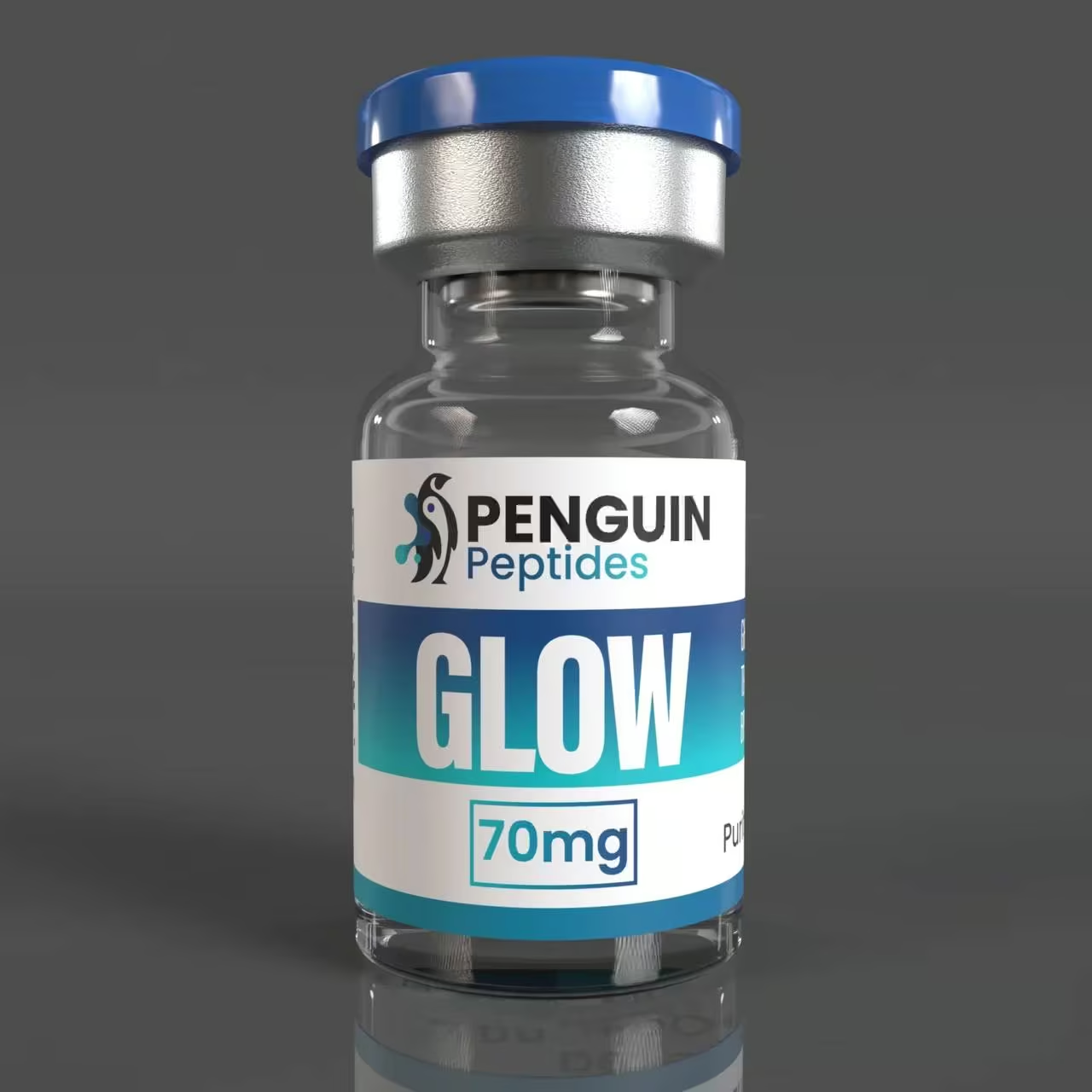
glow peptide 70mg
Original price was: $122.00.$115.00Current price is: $115.00.
🧪 70mg Per Vial – BPC-157, TB-500 & GHK-Cu blend
✅ ≥98% Purity – HPLC verified with COA available
🧊 Free Bac Water – Included with every order
📦 10 Vials – Per order for extended research
🚚 Fast Shipping – Discreet packaging with tracking
🔬 Research Grade – Strict quality control protocols
⚠️ Research Use Only – Not for human consumption
Glow Peptide – Premium Research Peptide Blend
What Is Glow Peptide?
Glow peptide refers to a research-grade peptide blend containing three well-characterized compounds: BPC-157, TB-500 (Thymosin Beta-4 fragment), and GHK-Cu (Copper Peptide). This multi-component formulation is designed for advanced laboratory investigation into tissue biology, extracellular matrix remodeling, and cellular repair pathways.
This blend combines compounds with complementary mechanisms of action. BPC-157 is studied for its role in angiogenesis and inflammatory signaling modulation, TB-500 for actin dynamics and cell migration, and GHK-Cu for copper transport and matrix remodeling. Together, these peptides address multiple pathways involved in tissue repair and regeneration research.
Product Specifications
| Feature | Specification |
|---|---|
| Product Name | Glow Peptide Blend |
| Total Peptide Content | 70mg per vial |
| Composition | BPC-157 (10mg), TB-500 (10mg), GHK-Cu (50mg) |
| Purity | ≥98% (HPLC Verified) |
| Form | Lyophilised powder |
| Storage | -20°C (long-term), protected from light |
| For Research Use Only | Not for human consumption or clinical use |
Research Applications
Tissue Repair and Regenerative Pathways
The glow peptide blend is designed for research into multi-peptide interactions affecting cellular regeneration pathways. Studies examine how the combined compounds influence tissue modeling and peptide synergy in vitro.
Extracellular Matrix Research
GHK-Cu, the primary component of this formulation, is studied for its role in collagen, elastin, and proteoglycan synthesis in fibroblast models. Research also examines its modulation of matrix metalloproteinases (MMPs) and their tissue inhibitors (TIMPs), which govern matrix turnover.
Angiogenesis and Vascular Research
BPC-157 and TB-500 components of the glow peptide are studied for their roles in angiogenesis. BPC-157 drives angiogenesis through VEGF upregulation, while TB-500 contributes through endothelial cell migration. A 2026 review in the Journal of the American Academy of Orthopaedic Surgeons Global Research & Reviews noted that wound-healing peptides such as BPC-157, TB-500, and GHK-Cu promote angiogenesis, integrin-mediated extracellular matrix remodeling, and fibroblast activation.
Cellular Migration and Cytoskeletal Dynamics
TB-500 research examines G-actin/F-actin equilibrium regulation and its influence on cell migration rates, lamellipodia formation, and directional migration required for tissue remodeling.
Quality and Purity
Each batch of glow peptide undergoes rigorous quality control testing to ensure:
-
≥98% purity verified by HPLC
-
Correct molecular weight confirmed by mass spectrometry
-
Batch-specific COA available for traceability
The Certificate of Analysis for this blend should include product identification, lot number, identity testing, purity result, test method, testing laboratory, and test date. Researchers should verify that the batch number on the COA matches the batch number on the vial received.
Frequently Asked Questions
What is glow peptide?
Glow peptide is a research-grade peptide blend containing BPC-157, TB-500, and GHK-Cu in a single vial. It is designed for laboratory research into tissue repair, extracellular matrix remodeling, and cellular regeneration pathways.
What is the composition of glow peptide?
The blend typically contains BPC-157 (10mg), TB-500 (10mg), and GHK-Cu (50mg) for a total peptide content of 70mg per vial.
What purity level can I expect?
Our glow peptide is provided at ≥98% purity, verified by HPLC with mass spectrometry confirmation.
How should glow peptide be stored?
The glow peptide should be stored at -20°C for long-term stability, protected from light and moisture. Lyophilised powder should be reconstituted with bacteriostatic water according to standard laboratory protocols.
Is glow peptide FDA-approved?
No. This product is supplied for research purposes only. None of its components are FDA-approved. All are preclinical research compounds.
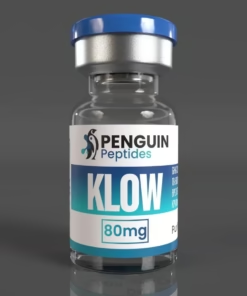
What is the difference between glow peptide and KLOW peptide?
KLOW peptide contains all three components of this blend plus KPV, a tripeptide studied for inflammatory signaling. The addition of KPV addresses a different research question focused on inflammation pathways.
References
-
Ento Key: GLOW vs KLOW Peptide Blend – Composition and Comparison – Component breakdown and research role comparison
-
Ento Key: Where to Buy Glow Blend Online – COA Reading Guide – Batch verification and supplier documentation
-
Radiology Key: Glow Peptide Stack – GHK-Cu, BPC-157, TB-500 Research – Clinical study status and safety information
-
Lone Star Peptide Co.: GLOW Blend Research – Combined Pathway Studies – Mechanistic details for each component
-
PubMed: Therapeutic Peptides in Orthopaedics – Review noting angiogenesis and fibroblast activation mechanisms
-
NovaVitality: Glow 70 Product Specifications – Composition ratios and purity specifications
-
Power Peptides: GLOW Peptide Blend Specifications – HPLC verification and batch traceability
-
PForm Labs: GLOW Research Peptide Blend – Safety profile and regulatory status
-
Peptides Academy: Vetting Research Peptides – COAs and Testing – COA verification checklist
Conclusion
The glow 70mg peptide is a well-characterized multi-component research blend for investigators studying tissue repair pathways, extracellular matrix biology, and cellular migration mechanisms. Its combination of BPC-157, TB-500, and GHK-Cu enables research into complementary mechanisms that address angiogenesis, cytoskeletal dynamics, and matrix remodeling simultaneously.
For researchers requiring a reliable, high-purity glow peptide for their studies, Penguin Peptides Lab provides lab-tested compounds with Certificates of Analysis available upon request.
Ready to Advance Your Research?
Order premium glow peptide for your research today. Contact our team for COA requests or technical inquiries.
Be the first to review “glow peptide 70mg”
Related products
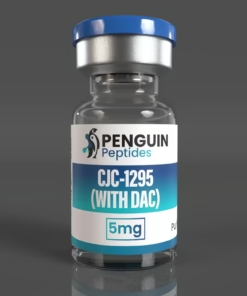
Regenerative Research Compound
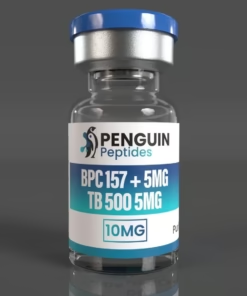
Regenerative Research Compound
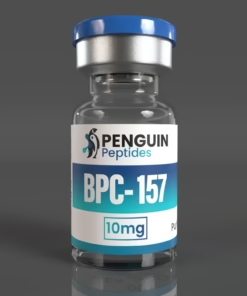
Regenerative Research Compound
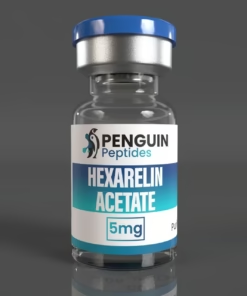
Regenerative Research Compound
Regenerative Research Compound
Regenerative Research Compound
Regenerative Research Compound
Regenerative Research Compound
Reviews
There are no reviews yet.