

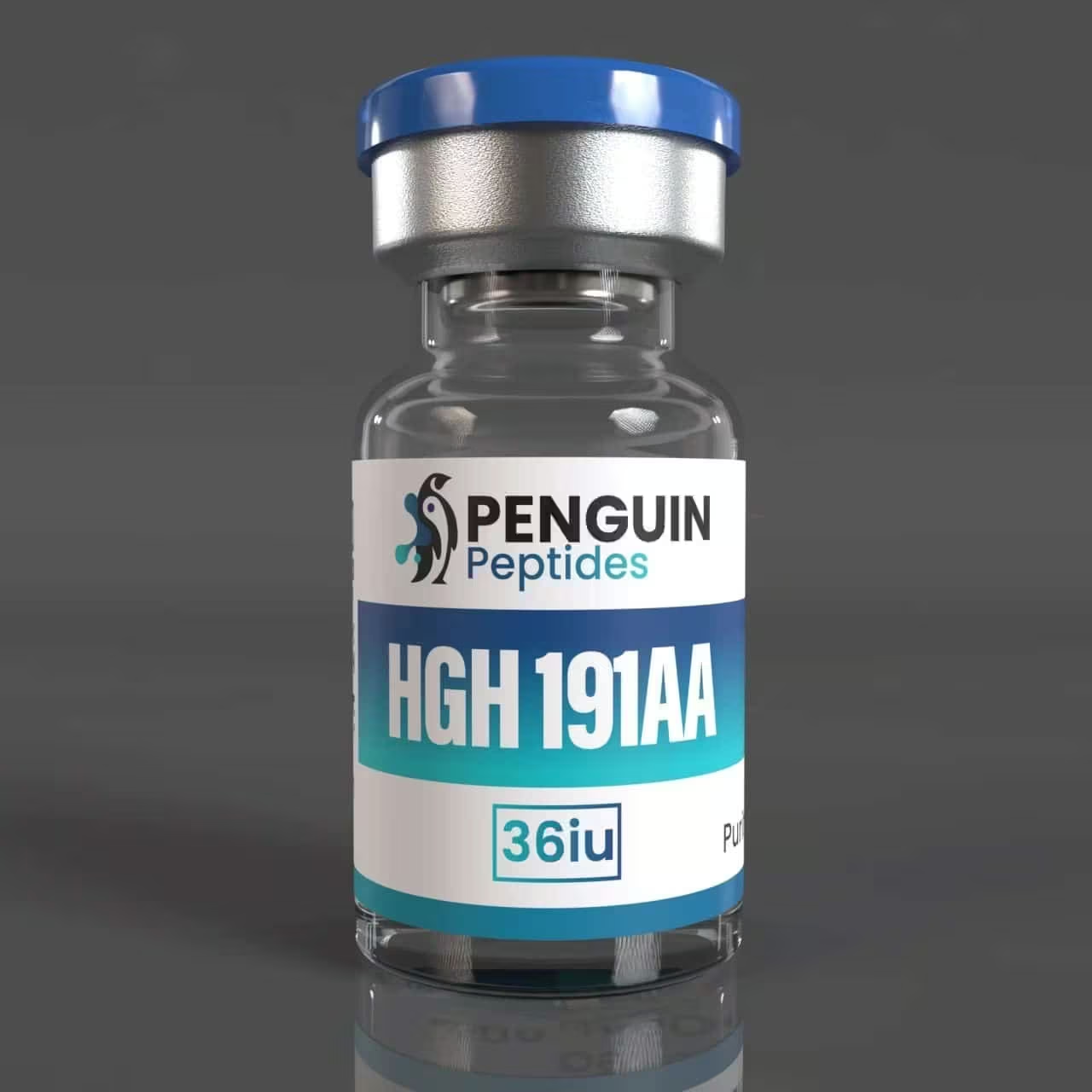
hgh 191aa
Price range: $50.00 through $102.00
HGH 191AA (Human Growth Hormone, somatropin)
HGH 191aa – 15IU (Lyophilized Peptide) – For Research Use Only
HGH 191AA (191 amino acid sequence) is a synthetic form of human growth hormone identical to naturally occurring GH produced in the pituitary gland. It is widely researched for its potential roles in cell regeneration, muscle growth, fat metabolism, and anti-aging studies.
The 191aa sequence is considered the gold standard for HGH research due to its full biological activity and low risk of immunogenic response compared to 192aa analogs.
Product Details:
Peptide: HGH 191aa (Somatropin)
Quantity: 15IU per vial
Purity: >98%
Form: Lyophilized powder
Storage: Store at -4°F (-20°C). After reconstitution, refrigerate at 36–46°F (2–8°C) and use within 30 days.
Grade: For research purposes only. Not for human use, medical, or diagnostic applications.
Potential Research Applications:
Muscle growth and recovery studies
Fat loss and metabolic rate modeling
Anti-aging and cellular regeneration research
GH receptor signaling exploration
This product is intended for laboratory research use only. Not for human consumption or therapeutic use.
THIS IS NOT FOR HUMAN CONSUMPTION. SOLD FOR RESEARCH ONLY!
hgh 191aa: Ultimate Somatropin Peptide Research Guide
In molecular biology, endocrinology, and cellular kinetics, understanding pituitary protein synthesis is critical.
Among the most heavily investigated macromolecules in this domain is Human Growth Hormone (hGH), specifically in its hgh 191aa structural form. This specific configuration represents the exact amino acid sequence naturally synthesized and secreted by human somatotroph cells in the anterior pituitary gland.
When analyzing cellular growth pathways, tissue repair models, or metabolic regulation loops, ensuring absolute structural accuracy is paramount. Utilizing truncated variants or incorrect amino acid lengths can completely alter receptor binding affinities and trigger severe immune responses in experimental models.
For academic laboratories, biomedical research groups, and validation testing facilities, securing an ultra-pure source of hgh 191aa is the foundational step toward achieving stable, reproducible experimental results.
This comprehensive guide details the precise biochemistry of somatropin, its underlying physiological mechanisms of action, and the specific laboratory handling protocols needed to maintain compound stability.
What is hgh 191aa?
Human Growth Hormone is a single-chain polypeptide containing exactly 191 amino acids, stabilized by two internal disulfide bridges. Its precise molecular weight is $22,124 \text{ Da}$ ($22 \text{ kDa}$).
Biochemically, the term hgh 191aa is used to distinguish authentic, biologically identical human growth hormone from historical or altered variants. In early recombinant engineering, suppliers frequently manufactured a 192-amino-acid variant containing an extra N-terminal methionine residue (methionyl-hGH or somatrem).
However, modern research standards demand the true 191-amino-acid sequence (somatropin). The extra methionine in older versions was found to significantly increase the rate of antibody formation in test subjects, skewing biological data and causing unwanted immunogenic reactions.
Modern production utilizes advanced recombinant DNA technology (rDNA). The expression takes place in mammalian or bacterial cell cultures (such as Escherichia coli), engineered to secret the precise 191-amino-acid sequence directly into the periplasmic space, ensuring identical folding to endogenous human growth hormone.
Physiological Mechanisms and Receptor Activation
To design effective experimental assays, researchers must understand how hgh 191aa interacts with cellular structures. The molecule functions through two primary pathways: direct receptor interaction and indirect growth-factor signaling.
                  ┌──────────────────────────────┐
                  │      hgh 191aa Peptide       │
                  └──────────────┬───────────────┘
                                 │
         ┌───────────────────────┴───────────────────────┐
         ▼                                               ▼
┌─────────────────┐                             ┌─────────────────┐
│ Direct Pathway  │                             │Indirect Pathway │
└────────┬────────┘                             └────────┬────────┘
         │ (Binds hGHR on Adipocytes)                    │ (Stimulates Hepatocytes)
         ▼                                               ▼
┌─────────────────┐                             ┌─────────────────┐
│   Lipolysis &   │                             │  Hepatic IGF-1  │
│ Glycogenolysis  │                             │   Production    │
└─────────────────┘                             └────────┬────────┘
                                                         │
                                                         ▼
                                                ┌─────────────────┐
                                                │ Cellular Repair │
                                                │ & Hypertrophy   │
                                                └─────────────────┘
1. Direct Cellular Signaling
When introduced into a biological system, the peptide binds directly to specific Human Growth Hormone Receptors (hGHR) on target cell membranes. This binding induces receptor dimerization, which activates the intracellular JAK2/STAT signaling pathway.
On adipocytes (fat cells), this direct activation upregulates hormone-sensitive lipase (HSL), triggering lipolysis and turning fat into free fatty acids. Simultaneously, it limits the uptake of circulating lipids, altering overall body composition models.
2. Indirect IGF-1 Mediated Pathways
The majority of the anabolic, tissue-repair properties associated with the peptide are indirect. Once hgh 191aa travels to the liver, it drives the transcription and systemic release of Insulin-Like Growth Factor 1 (IGF-1).
IGF-1 binds to its own receptor (IGF-1R) on skeletal muscle, bone, and cartilage tissues. This secondary cascade upregulates the PI3K/Akt pathway, driving protein synthesis, nitrogen retention, and cellular hypertrophy.
Primary Research Applications of Somatropin
The persistent motivation to source authentic hgh 191aa across scientific institutions stems from the peptide’s broad biological footprint. It serves as an essential control compound across several distinct fields.
1. Cellular Regeneration and Wound Healing Models
In tissue engineering assays, somatropin is utilized to analyze cell migration and extracellular matrix deposition. By upregulating localized IGF-1, it accelerates fibroblast proliferation and collagen synthesis. This pathway makes it a primary asset for tracking the acceleration of deep wound healing, tendon repair, and bone fracture recovery models.
2. Protein Sparing and Muscle Wasting Mitigation
In chronic cachexia or severe catabolic muscle-wasting models, hgh 191aa functions as a potent counter-measure. It alters systemic nitrogen balances, forcing cells to pull amino acids from circulating pools directly into skeletal muscle tissue.
This dynamic allows researchers to study preservation strategies for cellular mass during extreme caloric deficits or induced disease states.
3. Lipid Metabolism and Metabolic Syndrome Profiles
Because hGH acts as a counter-regulatory hormone to insulin, it plays a vital role in blood glucose regulation and lipid turnover.
Laboratories utilize the peptide to investigate glucose transporter (GLUT4) down-regulation and full-body fatty acid oxidation, providing essential data for mapping out the mechanics of metabolic syndrome, obesity, and type 2 diabetes development.
Sourcing Metrics: Verifying hgh 191aa Quality
In preclinical testing, minor contaminants or sequence alterations can ruin months of cell-culture data. Sub-par synthesis often introduces bacterial host-cell proteins or truncated 20 kDa variants that yield false positives or cause acute cellular toxicity.
Essential Technical Benchmarks
Before choosing a supplier for your hgh 191aa allocations, ensure the chemical documentation satisfies these exact criteria:
-
Sequence Integrity: Confirmed by Mass Spectrometry (MS) to feature exactly 191 amino acids with a molecular mass matching $22.1 \text{ kDa}$.
-
Purity Threshold: A minimum purity of 95% (ideally $\ge 98\%$) verified via High-Performance Liquid Chromatography (HPLC) and Sodium Dodecyl Sulfate-Polyacrylamide Gel Electrophoresis (SDS-PAGE).
-
Endotoxin Limits: Total endotoxins must measure below $0.1 \text{ EU/mg}$ to protect sensitive cell lines from acute inflammatory responses.
-
Dimer Percentage: High-quality somatropin should display a high monomer content ($> 98\%$). Aggregated dimers or polymers reduce receptor binding efficiency and increase immunogenicity.
Storage, Reconstitution, and Laboratory Handling
As a large, complex protein, somatropin is highly fragile. Exposure to heat, light, or aggressive mechanical shaking will break its delicate disulfide bonds, permanently denaturing the protein structure.
Preservation Environments
Lyophilized powder must be protected from ambient light and stored continuously in a cold environment.
Keep the dry vials at 2°C to 8°C for immediate experimental scheduling (up to six months). For long-term archiving, transfer the dry powder to a deep freeze at -20°C or -80°C to halt structural degradation completely.
Reconstitution Instructions
-
Acclimatization: Let the frozen vial stand on the benchtop until it naturally reaches room temperature before breaking the seal. This prevents internal condensation and premature peptide hydrolysis.
-
Fluid Choice: Reconstitute using sterile physiological saline ($0.9\% \text{ NaCl}$) or sterile bacteriostatic water. The benzyl alcohol in bacteriostatic water acts as a preservative to extend the solution’s stability.
-
Introduction: Inject the liquid slowly, letting it slide down the interior glass wall. Avoid a direct, pressurized stream onto the lyophilized cake.
-
Dissolution: Slowly roll the vial between your palms until the powder completely dissolves. Never shake or vortex the container, as high shear forces can shear the protein backbone and generate micro-foam, causing rapid denaturation.
-
Liquid Shelf Life: Once dissolved, the liquid mixture should be stored continuously at 4°C and used within 14 days (if using bacteriostatic water) or within 24 hours (if using sterile plain water).
Conclusion: Driving Innovations in Growth Signaling
The hgh 191aa sequence remains an irreplaceable tool for investigating cellular growth cascades, metabolic shifts, and tissue repair networks. By delivering a true 191-amino-acid architecture, it mirrors natural biological pathways with absolute precision.
When establishing procurement pipelines for your research facility, emphasizing independent HPLC purity testing, monomer percentages, and low endotoxin certifications is the single most effective way to eliminate experimental variables and secure high-integrity data.
Frequently Asked Questions
What is the precise structural difference between 191aa and 192aa hGH?
The 191aa variant is identical to natural human growth hormone. The 192aa variant (somatrem) contains an additional methionine amino acid at the N-terminal. This extra residue is recognized by mammalian immune systems as a foreign body, triggering antibody production that can compromise research validity.
Why is a high monomer percentage critical when sourcing hgh 191aa?
Monomers are single, correctly folded protein molecules that fit perfectly into growth hormone receptors. If a batch contains high levels of dimers or polymers (molecules fused together due to poor manufacturing or heat damage), the compound loses its potency and fails to trigger normal signaling pathways.
How does hgh 191aa influence insulin sensitivity in laboratory models?
Somatropin acts as an insulin antagonist. It suppresses glucose uptake in peripheral tissues and increases hepatic glucose output (glycogenolysis). Prolonged or high-dose administration in animal models can lead to elevated blood glucose levels, making it a valuable tool for studying insulin resistance.
Can reconstituted somatropin be frozen for extended storage?
No. Freezing a liquid protein solution causes the formation of microscopic ice crystals. These sharp crystals exert extreme physical stress on the complex folded structure of hgh 191aa, breaking its disulfide bonds and rendering the solution inactive upon thawing.
Is hgh 191aa sourced from research catalogs approved for human use?
No. Any product found under a standard laboratory hgh 191aa listing is legally classified strictly for in vitro assays, biochemical profiling, and animal testing models. It does not possess approval from the Food and Drug Administration (FDA) or other major health authorities for human clinical therapies or athletic performance enhancement.
| iu | 15iu, 36iu |
|---|
Be the first to review “hgh 191aa”
Related products
Regenerative Research Compound
Regenerative Research Compound
Regenerative Research Compound
Regenerative Research Compound
Regenerative Research Compound
Regenerative Research Compound
Regenerative Research Compound
Regenerative Research Compound
Reviews
There are no reviews yet.