
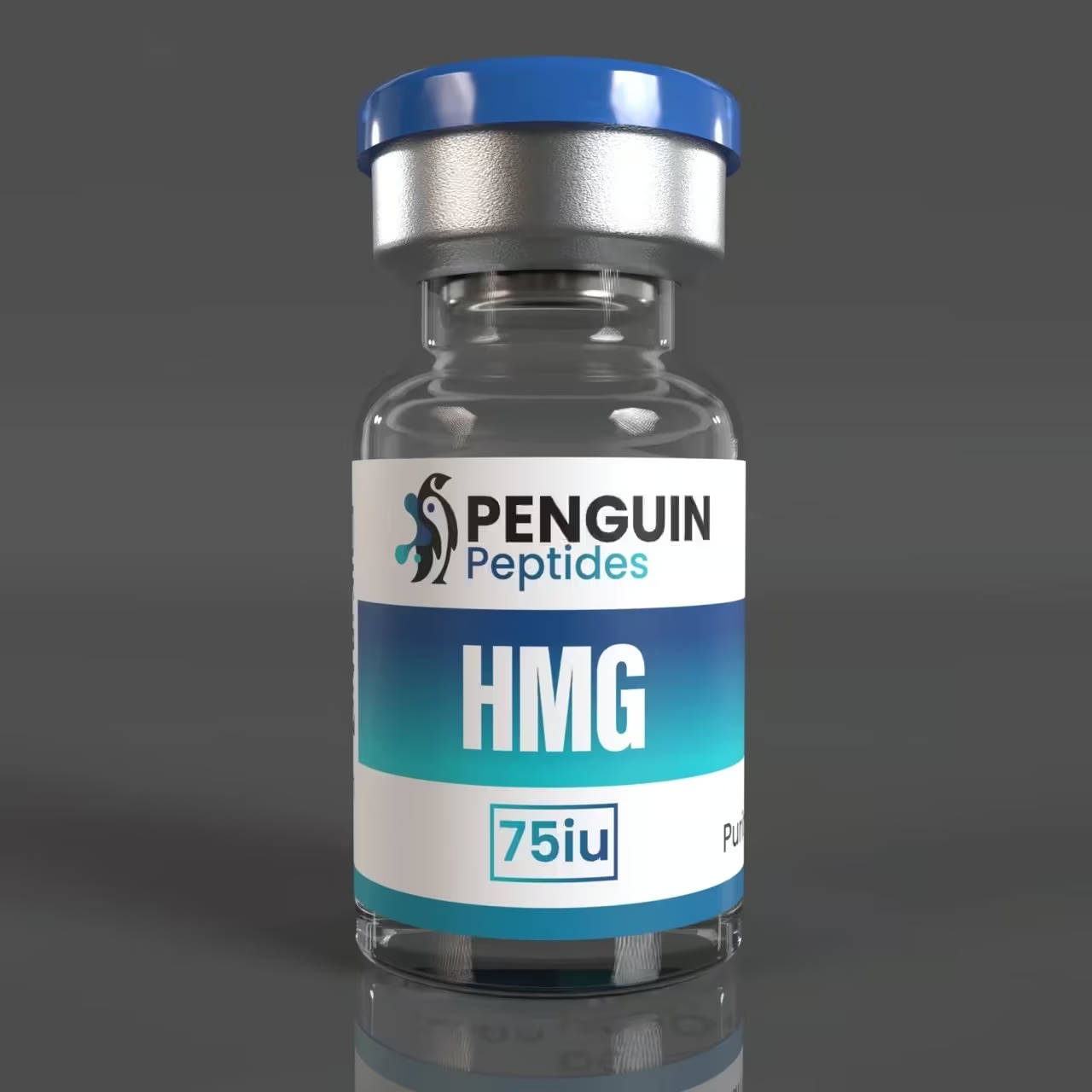
HMG
Original price was: $60.00.$58.00Current price is: $58.00.
🧪 HMG 75IU – FSH and LH bioactive components
✅ ≥98% Purity – HPLC verified with COA available
🧊 Free Bac Water – Included with every order
📦 10 Vials – Per order for extended research
🚚 Fast Shipping – Discreet packaging with tracking
🔬 Research Grade – Strict quality control protocols
⚠️ Research Use Only – Not for human consumption
HMG FOR SALE 75IU – Premium Research Peptide
What Is HMG 75IU?
HMG 75IU refers to human menopausal gonadotropin, a research-grade hormone complex containing both follicle-stimulating hormone (FSH) and luteinizing hormone (LH) bioactive components. Supplied in lyophilised form, this compound is used for investigating endocrine signalling, receptor-based interactions, and hormonal pathway modelling in vitro .
Human menopausal gonadotropin (hMG), also known as menotropin, is an active substance from the group of gonadotropins consisting of luteinizing hormone (LH) and follicle-stimulating hormone (FSH) . Each vial contains 75 IU of this research-grade hormone complex with ≥98% purity, batch-tested and supplied for research use only .
For researchers seeking HMG for sale for laboratory applications, this product provides a well-characterized tool for gonadotropin receptor pathway studies.
Product Specifications
| Feature | Specification |
|---|---|
| Compound Name | HMG (Human Menopausal Gonadotropin) |
| Amount | 75 IU per vial |
| Active Components | FSH and LH |
| Purity | ≥98% (HPLC verified) |
| Form | Lyophilised powder |
| Appearance | White lyophilised powder |
| Solubility | Soluble in bacteriostatic water |
| Storage | 2–8°C or -20°C (recommended) |
| Documentation | COA available upon request |
| For Research Use Only | Not for human or veterinary use |
Research Applications
Gonadotropin Receptor Activity Studies
HMG for sale enables researchers to investigate the interaction between FSH and LH with their respective receptors. FSH binds to receptors causing maturation and growth of follicles, while LH ensures that the mature egg reaches the fallopian tube . This dual-component nature makes HMG valuable for studying both receptor pathways simultaneously.
Endocrine Signalling Pathway Research
The FSH and LH components of HMG activate distinct intracellular signalling cascades. FSH stimulates increased estrogen production and prepares the uterus for implantation by changing the endometrium and uterine muscles . Researchers use HMG 75IU to model these hormonal pathways in vitro.
In Vitro Hormonal Response Modelling
Studies have demonstrated significant variation in the biologic and biochemical characteristics of human menopausal gonadotropin lots . Research using HMG for sale can investigate these variations, including the distribution of FSH and LH isohormones across different preparations.
Peptide-Hormone Receptor Interaction Studies
The FSH component of HMG displays five immunoreactive isohormones, while LH displays nine isohormones when subjected to chromatofocusing . This complexity makes HMG 75IU a valuable tool for detailed receptor interaction research.
Quality and Purity
Each batch of HMG 75IU undergoes rigorous quality control testing to ensure:
-
≥98% purity verified by HPLC
-
Correct hormone content confirmed by analytical testing
-
Consistent FSH and LH bioactivity validated through batch testing
Batch-specific Certificates of Analysis (COA) are available upon request, providing full transparency for research applications .
Reconstitution & Handling
-
Reconstitute with bacteriostatic water
-
Gently swirl until dissolved; avoid agitation
-
Store unopened vials at 2–8°C or -20°C (recommended)
Frequently Asked Questions
What is HMG 75IU?
HMG 75IU is human menopausal gonadotropin, a research-grade hormone complex containing FSH and LH bioactive components supplied in 75 IU lyophilised vials for in vitro laboratory research .
What are the active components of HMG?
HMG contains both follicle-stimulating hormone (FSH) and luteinizing hormone (LH) as active components .
What purity level can I expect?
Our HMG for sale is provided at ≥98% purity, verified by HPLC .
How should HMG 75IU be stored?
Unopened vials should be stored at 2–8°C or -20°C (recommended). Protect from light .
Is HMG 75IU suitable for clinical use?
No. HMG 75IU is supplied for research purposes only and is not intended for human consumption, veterinary use, diagnostic procedures, or therapeutic purposes .
What research applications is HMG used for?
HMG for sale is used for studying gonadotropin receptor activity, endocrine signalling pathways, in vitro hormonal response modelling, and peptide-hormone receptor interaction studies .
References
-
Europe PMC: Induction of ovulation with subcutaneous pulsatile administration of human menopausal gonadotropin – Clinical research on HMG administration
-
PubMed: Variation in the biologic and biochemical characteristics of human menopausal gonadotropin – Lot differences and biochemical analysis of HMG
-
FDA: MENOTROPINS UNII Record – FDA substance registration for menotropins
-
Springer: A review of luteinising hormone and human chorionic gonadotropin – Molecular comparison of LH and hCG in HMG
-
Reproduction and Fertility: Clinical efficacy and safety of human menopausal gonadotropins – Clinical studies on HMG efficacy
Conclusion
HMG 75IU is a research-grade hormone complex containing both FSH and LH bioactive components for investigating gonadotropin receptor pathways, endocrine signalling, and hormonal response modelling in vitro. With ≥98% purity and batch-specific COA documentation, this compound provides a reliable tool for laboratory research applications.
For researchers seeking HMG for sale for their laboratory studies, this product offers consistent quality and comprehensive documentation to support meaningful scientific inquiry.
Ready to Advance Your Research?
Order premium HMG 75IU for your research today. Contact our team for COA requests or technical inquiries.
Be the first to review “HMG”
Related products
Specialized Research Compound
Specialized Research Compound
Specialized Research Compound
Reviews
There are no reviews yet.