
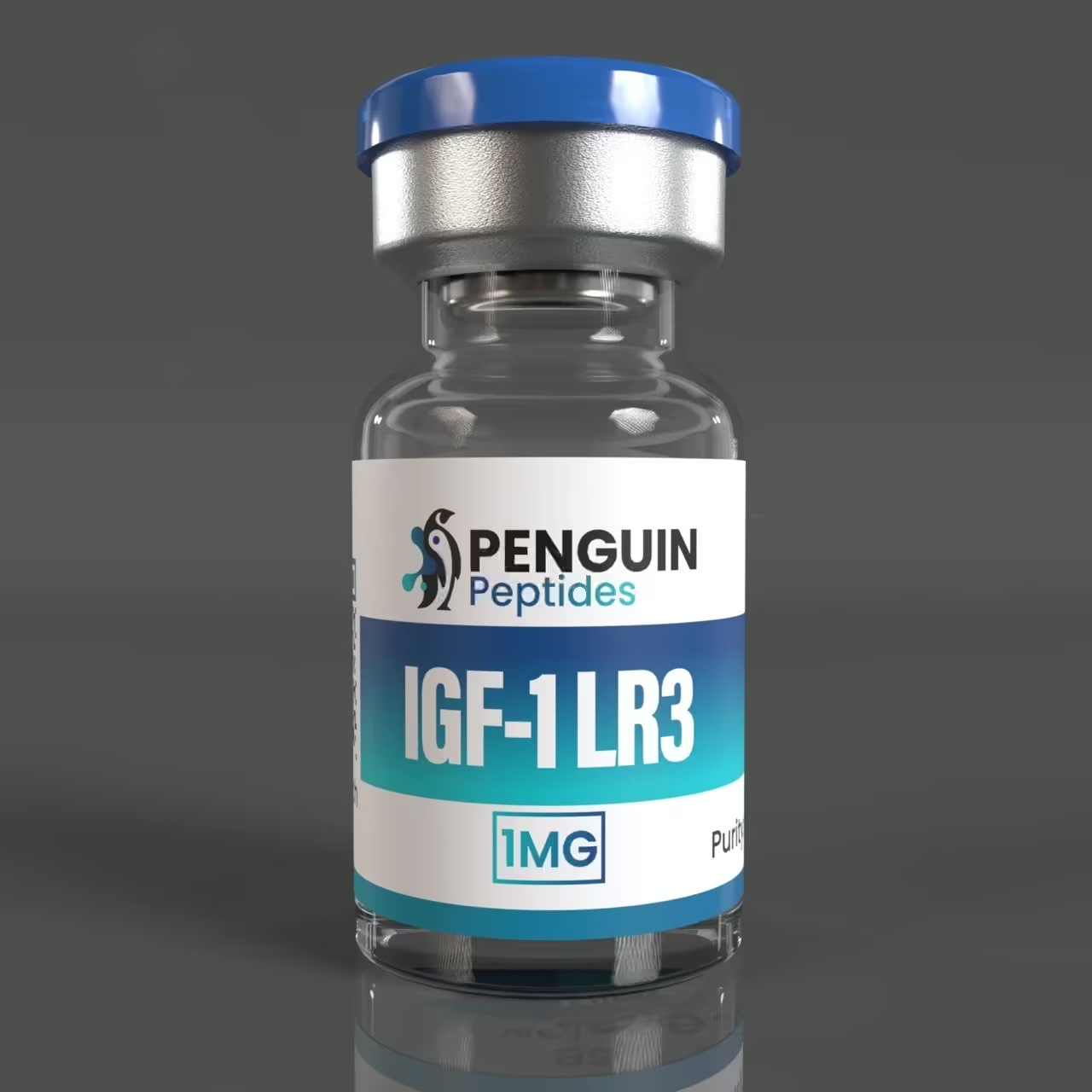
IGF1 LR3 (1MG)
Original price was: $67.00.$64.00Current price is: $64.00.
🧪 1mg Per Vial – IGF1 LR3 (Long Arginine 3-IGF-1)
✅ ≥95% Purity – HPLC verified with COA available
🧊 Free Bac Water – Included with every order
📦 10 Vials – Per order for extended research
🚚 Fast Shipping – Discreet packaging with tracking
🔬 Research Grade – Strict quality control protocols
⚠️ Research Use Only – Not for human consumption
IGF1 LR3 (1MG) – Premium Research Peptide
What Is IGF1 LR3?
IGF1 LR3 (Long Arginine 3-IGF-1) is a synthetic protein and lengthened analogue of human insulin-like growth factor 1 (IGF-1). It differs from native IGF-1 in that it possesses an arginine instead of a glutamic acid at the third position in its amino acid sequence, and also has an additional 13 amino acids at its N-terminus, for a total of 83 amino acids compared to the 70 found in native IGF-1, as documented in the Wikipedia entry on IGF-1 LR3.
The consequences of these structural modifications are significant for research applications. IGF1 LR3 retains the pharmacological activity of IGF-1 as an agonist of the IGF-1 receptor, but has very low affinity for the insulin-like growth factor-binding proteins (IGFBPs), and has improved metabolic stability. As a result, it is approximately three times more potent than IGF-1, and possesses a significantly longer half-life of about 20–30 hours relative to IGF-1’s half-life of about 12–15 hours.
For researchers investigating muscle growth, cell proliferation, and metabolic pathways, IGF1 LR3 represents a well-characterized research compound with enhanced bioavailability compared to native IGF-1.
Product Specifications
| Feature | Specification |
|---|---|
| Peptide Name | IGF1 LR3 (Long Arginine 3-IGF-1) |
| CAS Number | 946870-92-4 |
| Molecular Formula | C400H625N111O115S9 |
| Molecular Weight | 9117.5 g/mol |
| Amino Acid Count | 83 |
| Purity | ≥95% (HPLC) |
| Form | Lyophilised powder |
| Available Size | 1mg per vial |
| Storage | -20°C (long-term) |
| For Research Use Only | Not for human consumption or clinical use |
Research Applications
Muscle Growth and Cell Proliferation
IGF-1 LR3 binds to cell receptors in muscle cells and activates cell communication, which then improves the growth rate of muscles. Research indicates that IGF-1 LR3 obstructs the movement of glucose into the body’s cells, facilitating fat burning and the use of fat for energy production. The extended half-life of 20-30 hours means IGF-1 LR3 can enhance muscle growth throughout the day.
Insulin Sensitivity and Metabolism
In muscle tissue, IGF-1 LR3 forces the muscle to be more sensitive to insulin’s effects, such as the decrease of fat storage. Research has demonstrated that IGF-1 LR3 infusion can lower plasma insulin and glucose concentrations in experimental models. A growing body of peer-reviewed literature on IGF-1 LR3 is indexed on PubMed, covering metabolic regulation, glucose homeostasis, and receptor signalling pathways.
Cell Culture Applications
IGF-1 LR3 was developed specifically for supplementation of mammalian cell culture to support the survival and proliferation of cells. As detailed by Thermo Fisher Scientific, the peptide is engineered to have a higher biological potency than native IGF-I or IGF-II and has several advantages over recombinant insulin. It is ideal for both research and large-scale culturing applications.
Stability in Research Conditions
Recent stability studies published by Qkine have shown that IGF-1 LR3 remains stable and bioactive under cell culture conditions for up to 7 days, with no degradation observed in SDS-PAGE gels. This stability profile makes IGF1 LR3 an excellent choice for extended research protocols.
Mechanism of Action
The mechanism of action and reported research findings for IGF-1 LR3 are summarised by ChemicalBook, including its interaction with the IGF-1 receptor and downstream effects on cell growth and differentiation.
Quality and Purity
Each batch of IGF-1 LR3 undergoes rigorous quality control testing to ensure:
-
≥95% purity verified by HPLC
-
Correct molecular weight confirmed by mass spectrometry
-
Consistent amino acid sequence validated by Edman degradation and MS-MS
-
Low endotoxin levels confirmed by LAL testing, as documented in a publicly available Certificate of Analysis for IGF-1 LR3
Certificates of Analysis (COA) are available upon request, providing full transparency for research applications.
Frequently Asked Questions
What is IGF1 LR3?
IGF-1 LR3 is a synthetic analogue of human insulin-like growth factor 1 with an arginine substitution at position 3 and a 13-amino acid N-terminal extension. It is used in research for its enhanced stability and reduced binding to IGF-binding proteins.
How does IGF1 LR3 differ from native IGF-1?
IGF1 LR3 has approximately three times the potency of native IGF-1 and a significantly longer half-life of 20-30 hours compared to IGF-1’s 12-15 hours. These differences result from reduced binding to IGF-binding proteins and improved metabolic stability.
What is the molecular weight of IGF1 LR3?
IGF1 LR3 has a molecular weight of approximately 9117.5 g/mol (9.1 kDa) and contains 83 amino acid residues.
What purity level can I expect?
Our IGF1 LR3 is provided at ≥95% purity, verified by HPLC and mass spectrometry.
How should IGF1 LR3 be stored?
IGF1 LR3 should be stored at -20°C for long-term stability. Lyophilised powder should be reconstituted according to standard laboratory protocols.
Is IGF1 LR3 suitable for clinical use?
No. IGF1 LR3 is supplied for research purposes only and is not intended for human consumption or clinical application.
Conclusion
IGF1 LR3 is a well-characterized research peptide for investigators studying muscle growth, cell proliferation, metabolic regulation, and insulin sensitivity. With its extended half-life of 20-30 hours and reduced binding to IGF-binding proteins, IGF1 LR3 offers enhanced bioavailability compared to native IGF-1.
For researchers requiring a reliable, high-purity IGF1 LR3 for their studies, Penguin Peptides Lab provides lab-tested compounds with Certificates of Analysis available upon request. Our 1mg vials offer excellent value for research applications.
Ready to Advance Your Research?
Order premium IGF1 LR3 for your research today. Contact our team for COA requests or technical inquiries.
Be the first to review “IGF1 LR3 (1MG)”
Related products
Regenerative Research Compound
Regenerative Research Compound
Regenerative Research Compound
Regenerative Research Compound
Regenerative Research Compound
Regenerative Research Compound
Regenerative Research Compound
Regenerative Research Compound
Reviews
There are no reviews yet.