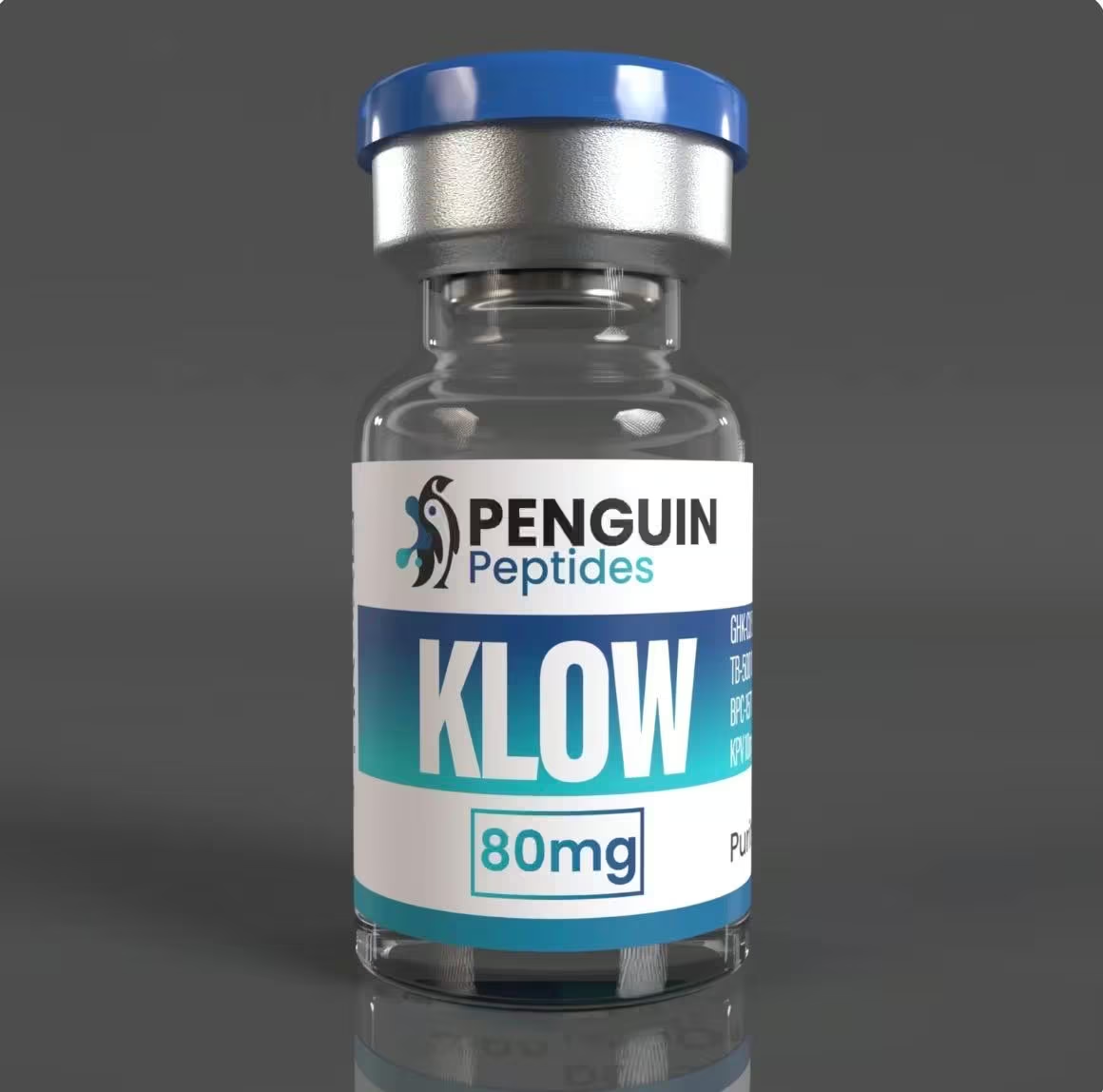
KLOW 80
Original price was: $155.00.$130.00Current price is: $130.00.
🧪 80mg Per Vial – GHK-Cu, BPC-157, TB-500 & KPV
✅ ≥99% Purity – HPLC verified with COA available
🧊 Free Bac Water – Included with every order
📦 10 Vials – Per order for extended research
🚚 Fast Shipping – Discreet packaging with tracking
🔬 Research Grade – Strict quality control protocols
⚠️ Research Use Only – Not for human consumption
Klow 80 – Premium Research Peptide Blend
What Is Klow 80?
Klow 80 is a lyophilized research peptide blend containing four distinct peptides: GHK-Cu, BPC-157, TB-500, and KPV, combined in a 50mg / 10mg / 10mg / 10mg format for a total of 80mg per vial. This multi-component formulation is designed for laboratory research exploring tissue repair pathways, collagen signaling, cellular migration, and inflammatory response mechanisms.
The blend represents a layered approach to research design. Each peptide component targets a different biological pathway: GHK-Cu is studied for copper-peptide signaling and collagen-associated mechanisms, BPC-157 for tissue recovery pathways, TB-500 for cellular migration and remodeling, and KPV for inflammation-related signaling. Together, these compounds make this formulation relevant for studies involving soft tissue recovery, wound-healing models, skin barrier support, and regenerative biology.
For researchers investigating multi-pathway repair models, this product provides a defined analytical reference blend with documented identity and purity for each component.
Product Specifications
| Feature | Specification |
|---|---|
| Product Name | Klow 80 |
| Format | Lyophilized Peptide Blend |
| Components | GHK-Cu, BPC-157, TB-500, KPV |
| Vial Composition | 50mg GHK-Cu / 10mg BPC-157 / 10mg TB-500 / 10mg KPV |
| Total Mass | 80mg |
| Purity | ≥99% (HPLC verified per component) |
| Form | Lyophilised powder |
| Storage | -20°C (long-term) |
| For Research Use Only | Not for human or animal consumption |
Research Applications
Tissue Repair and Remodeling
The Klow 80 formulation is studied for its potential role in tissue repair research. GHK-Cu, the largest component by mass, is a copper-binding tripeptide studied for its effects on collagen synthesis, decorin, and matrix metalloproteinase gene expression in dermal fibroblasts. According to research published in PubMed on copper-GHK keratinocyte effects, GHK-Cu has demonstrated measurable effects on keratinocyte activity and wound-healing signaling.
BPC-157 is a synthetic pentadecapeptide studied extensively in preclinical models for gut lining repair, tendon and ligament healing, and broader tissue-regeneration pathways. Studies indexed through PubMed on BPC-157 angiogenesis research have examined its role in vascular formation and tissue recovery mechanisms.
Skin Health and Collagen Research
The Klow 80 blend includes GHK-Cu at 50mg, the same concentration found in the GLOW blend. GHK-Cu is studied for collagen support, skin barrier integrity, and extracellular matrix activity. A PubMed review on GHK-Cu skin permeation examined collagen synthesis pathways and dermal penetration characteristics of the copper peptide.
Research models exploring dermal fibroblast activity and wound-healing signaling frequently employ copper-peptide compounds for mechanistic studies. The Frontiers journal has published reviews on therapeutic peptides in aging research, including mechanisms relevant to these components.
Inflammation and Barrier Models
KPV, a tripeptide fragment of alpha-melanocyte-stimulating hormone, distinguishes the Klow 80 blend from other repair-focused formulations. KPV is studied for anti-inflammatory activity independent of the pigmentation effects associated with the full-length hormone, with research focused on inflammatory signaling and epithelial barrier behavior. Studies have examined KPV’s effects on inflammatory cytokines including IL-1β and TNF-α, with observed inhibition in preclinical models as documented in PubMed research on KPV keratinocyte signaling.
Cellular Repair and Angiogenesis
BPC-157 in the Klow 80 blend is studied for its role in angiogenesis and repair signaling in preclinical models. TB-500, a synthetic peptide related to thymosin beta-4, is studied for cell migration, actin regulation, and wound-healing processes, particularly in models involving tissue and vascular repair. Synthesis and characterization studies are indexed through PubMed on TB-500 thymosin beta 4 research.
A review in Quality in Sport examined BPC-157 and GHK-Cu in wound healing applications, summarizing the clinical efficacy and safety considerations of both compounds.
Multi-Pathway Research Design
The combination logic behind the Klow 80 formulation is mechanistic layering rather than validated human synergy. Each peptide acts on a different part of the repair sequence in preclinical models: GHK-Cu for collagen synthesis and gene-expression effects, BPC-157 for angiogenesis and tissue repair, TB-500 for cell migration, and KPV for inflammation. Researchers studying combined repair activity use this product to examine how these distinct pathways interact when studied together.
Quality and Purity
Each batch of the Klow 80 blend undergoes rigorous quality control testing to ensure:
-
≥99% purity verified by HPLC for each component
-
Correct molecular weight confirmed by mass spectrometry
-
Consistent peptide content validated by amino acid analysis
-
Endotoxin screening using LAL testing methodology
Certificates of Analysis (COA) are available upon request, providing lot-specific documentation for each component in the Klow 80 blend. For four-component blends, documentation is especially important because one vial represents four separate analytical identities. Lot-specific COAs help laboratories confirm that the vial on the bench matches the tested batch and that all four components are accounted for.
The regulatory framework for synthetic peptides is outlined in the European Medicines Agency guideline on development and manufacture, which provides relevant context for researchers working with multi-component peptide formulations.
Frequently Asked Questions
What is the Klow 80 blend?
The Klow 80 blend is a research peptide formulation containing GHK-Cu (50mg), BPC-157 (10mg), TB-500 (10mg), and KPV (10mg) in a single lyophilized vial, totaling 80mg.
What does the Klow 80 blend contain?
It contains four peptides: GHK-Cu, a copper-binding tripeptide; BPC-157, a synthetic pentadecapeptide; TB-500, related to thymosin beta-4; and KPV, a tripeptide fragment of alpha-MSH. Each component has been individually characterized in published research, as documented through Ento Key’s GLOW vs KLOW comparison.
How is the Klow 80 blend different from GLOW?
GLOW contains GHK-Cu, BPC-157, and TB-500. The Klow 80 blend adds KPV, which is studied for inflammation-related pathways. The addition of KPV makes it relevant for research models that include an inflammatory component.
Is the Klow 80 blend FDA-approved?
No. The Klow 80 blend is not approved by the FDA as a combination, and none of the four individual compounds is currently FDA-approved for human use. It is supplied for research purposes only.
How should the Klow 80 blend be stored?
Store the Klow 80 blend at -20°C for long-term stability. Lyophilised powder should be reconstituted according to standard laboratory protocols. Bacteriostatic water is compatible for reconstitution.
What purity level can I expect?
The Klow 80 blend is provided at ≥99% purity for each component, verified by HPLC.
Is there direct human research on the Klow 80 blend as a combination?
No published human clinical trial has tested GHK-Cu, BPC-157, TB-500, and KPV together as a combined blend. All research applications described are extrapolated from individual-compound studies.
Conclusion
The Klow 80 blend is a well-characterized four-peptide research formulation for laboratories investigating multi-pathway repair models. With GHK-Cu, BPC-157, TB-500, and KPV combined in a defined 50/10/10/10mg format, it enables studies on collagen signaling, tissue repair, cellular migration, and inflammatory response pathways in a single research tool.
For researchers requiring a reliable, high-purity Klow 80 blend for their studies, Penguin Peptides Lab provides lab-tested compounds with Certificates of Analysis available upon request.
Ready to Advance Your Research?
Order premium Klow 80 for your research today. Contact our team for COA requests or technical inquiries.
2 reviews for KLOW 80
Add a review
Related products
Regenerative Research Compound
Regenerative Research Compound
Regenerative Research Compound
Regenerative Research Compound
Regenerative Research Compound
Regenerative Research Compound
Regenerative Research Compound
Regenerative Research Compound
Rain –
Perfect peptide blend for results
Chris –
Ordered today and received within 48 hours