
ll-37 peptide for sale: Ultimate Researchers Guide to Human Cathelicidin
In the ongoing global race to overcome multi-drug resistant (MDR) pathogens, traditional antibiotics are rapidly losing their efficacy. Researchers worldwide are pivoting toward the innate immune system for answers, specifically targeting host defense peptides (HDPs). At the absolute forefront of this biochemical frontier is the human cathelicidin peptide, LL-37.
As a primary effector of human innate immunity, this multi-functional biomolecule does far more than just destroy bacterial cell walls—it actively orchestrates cellular repair, neutralizes toxic bacterial components, and modulates complex inflammatory pathways.
For laboratory environments investigating advanced immunology, biofilm disruption, or wound-healing cascades, finding a premium, high-purity source of ll-37 peptide for sale is critical to securing reproducible, high-integrity data. This comprehensive guide covers the biochemical mechanics, primary research applications, and crucial sourcing requirements for utilizing LL-37 in in vitro and in vivo studies.
What is the LL-37 Peptide?
LL-37 is a 37-residue, amphipathic, cationic antimicrobial peptide (AMP). It is the only known member of the cathelicidin family naturally produced by humans. Synthesized primarily by neutrophils, monocytes, and epithelial cells at barrier surfaces like the skin and gastrointestinal tract, LL-37 serves as an immediate first line of defense against invading pathogens.
The peptide is cleaved from its 18 kDa precursor protein, human cationic antimicrobial protein 18 (hCAP18), by proteinase 3 during inflammatory stimulation. This specific processing mechanism has been documented in detail by structural biologists in studies published by PubMed. Structurally, LL-37 features an alpha-helical conformation with a net positive charge of +6. This distinct biochemical architecture allows the peptide to selectively target and interact with the negatively charged lipids found on microbial cell membranes.
Primary Research Applications of LL-37
The surge in demand for ll-37 peptide for sale stems directly from its diverse, non-traditional mechanisms of action. Unlike narrow-spectrum agents, LL-37 possesses broad-spectrum antimicrobial properties alongside potent systemic modulation capabilities.
1. Broad-Spectrum Antimicrobial and Anti-Biofilm Action
Research archived by the National Institutes of Health demonstrates that LL-37 displays moderate to high antimicrobial activity against both Gram-negative and Gram-positive bacteria. This includes critical pathogens from the Pseudomonas, Escherichia, Staphylococcus, and Enterococcus genera.
Beyond floating planktonic bacteria, LL-37 possesses the unique ability to disrupt established bacterial biofilms—the sticky, matrix-enclosed communities that shield bacteria from standard medical counter-measures. By penetrating these extracellular barriers, LL-37 destabilizes the underlying bacterial community, making it highly valuable in chronic infection models, such as those studying the persistent cystic forms found in advanced Lyme disease.
2. Accelerated Wound Healing and Angiogenesis
LL-37 plays a profound role in structural tissue regeneration. In wounded tissue, the expression of LL-37 naturally spikes to coordinate re-epithelialization. Comprehensive data regarding these structural mechanics can be found on NCBI, showing how the peptide actively stimulates:
-
Keratinocyte Migration: Accelerating the closure of physical wounds via epidermal growth factor receptor (EGFR) transactivation.
-
Angiogenesis: Promoting the proliferation of endothelial cells to sprout new blood vessels, a process vital for delivering oxygenated blood to recovering tissues.
-
Fibroblast Proliferation: Encouraging structural collagen deposition to rebuild cellular matrices.
Conversely, chronic wounds, such as diabetic ulcers, frequently display a severe deficiency in natural LL-37 levels, making synthetic supplementation a major focal point in regenerative medicine assays.
3. Immunomodulation and Toxin Neutralization
While direct microbial lysis is impressive, LL-37 also acts as an immune conductor. It exhibits strong chemotactic properties, actively recruiting neutrophils, monocytes, and T-cells directly to the site of an infection or tissue injury.
Crucially, LL-37 balances the body’s inflammatory response. As highlighted in a clinical review via Frontiers in Immunology, it binds directly to lipopolysaccharides (LPS)—the highly toxic endotoxins shed by Gram-negative bacteria—thereby neutralizing them and preventing dangerous, runaway inflammatory cascades like sepsis.
Mechanisms of Action: How LL-37 Works
Understanding how LL-37 functions requires looking at its structural charge dynamics. Because eukaryotic cell membranes are rich in zwitterionic (neutrally charged) phospholipids and cholesterol, LL-37 leaves healthy animal cells largely untouched at physiological concentrations.
However, its net +6 positive charge creates a powerful electrostatic attraction to the negatively charged lipopolysaccharides (Gram-negative) and teichoic acids (Gram-positive) on bacterial surfaces.
| Phase of Action | Biochemical Process |
| 1. Electrostatic Binding | Cationic LL-37 binds to anionic bacterial outer membranes. |
| 2. Hydrophobic Insertion | The amphipathic alpha-helix inserts itself directly into the lipid bilayer. |
| 3. Membrane Disruption | Transmembrane pores are formed via toroidal or carpet mechanisms, inducing immediate cell lysis. |
| 4. Intracellular Targeting | Translocated peptides enter the cell to inhibit bacterial RNA, DNA, and protein synthesis. |
Crucial Sourcing Metrics for ll-37 peptide for sale
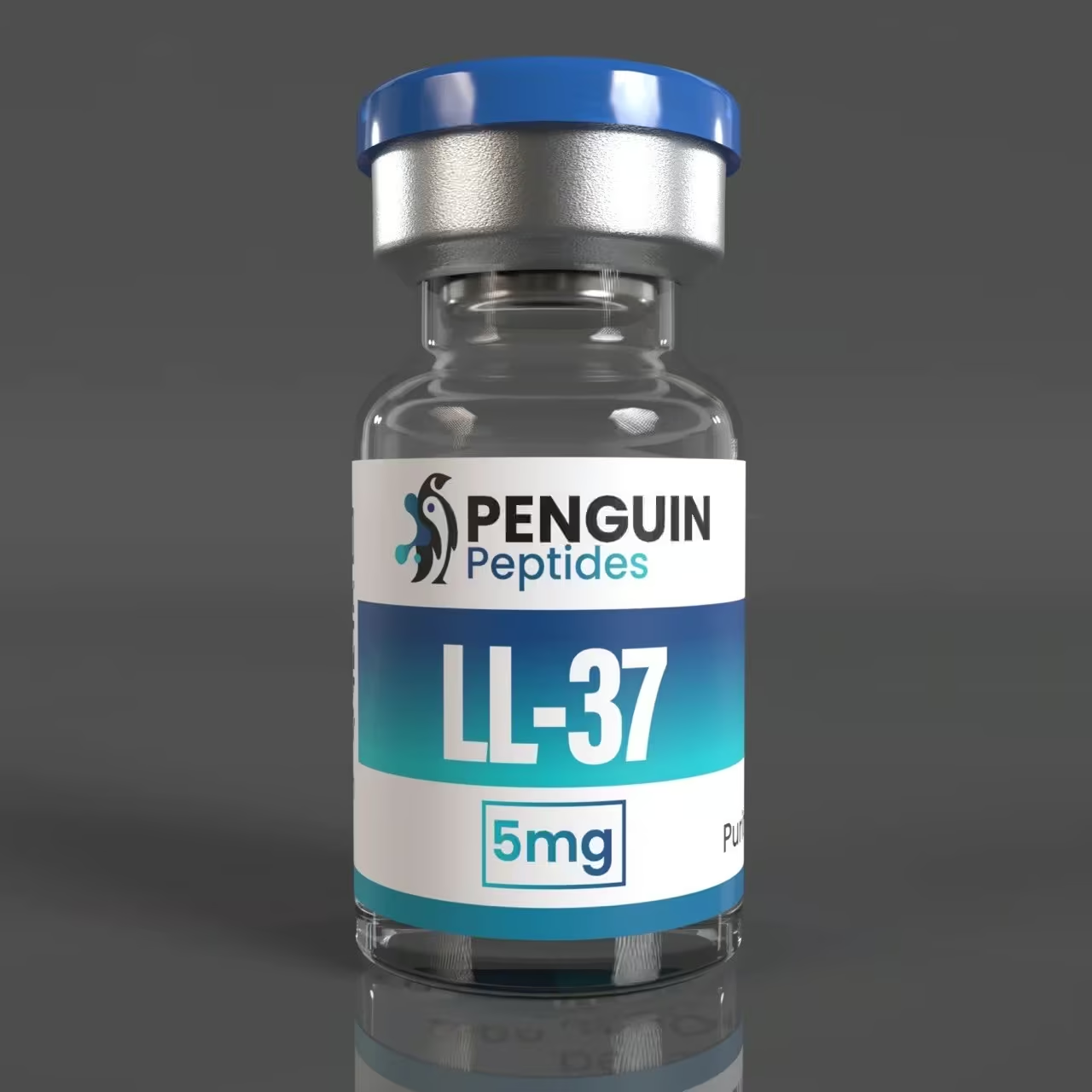
When evaluating options for ll-37 peptide for sale for experimental research, chemical purity and formulation stability are paramount. Sub-par peptide synthesis can alter the delicate amphipathic structure, rendering the peptide inactive or introducing high cytotoxicity.
Chemical Specifications for High-Integrity Research
To safeguard the validity of your assays, verify that the compound matches these strict quality control criteria:
-
Sequence Integrity: H-Leu-Leu-Gly-Asp-Phe-Phe-Arg-Lys-Ser-Lys-Glu-Lys-Ile-Gly-Lys-Glu-Phe-Lys-Arg-Ile-Val-Gln-Arg-Ile-Lys-Asp-Phe-Leu-Arg-Asn-Leu-Val-Pro-Arg-Thr-Glu-Ser-OH.
-
Purity: Greater than 95% (ideally >98%) as verified by High-Performance Liquid Chromatography (HPLC) and Mass Spectrometry (MS).
-
Counter-Ion Content: Typically supplied as a trifluoroacetate (TFA) salt. For sensitive in vitro cell culture assays where TFA toxicity could skew data, researchers should actively source an acetate or HCl salt variation.
-
Physical State: Provided as a sterile, lyophilized (freeze-dried) powder to maximize structural shelf-life.
Proper Storage, Reconstitution, and Laboratory Handling
Because peptides are prone to rapid degradation when handled incorrectly, adhering to strict laboratory storage protocols is essential.
Storage Protocols
Lyophilized LL-37 is highly stable at room temperature for short-term shipping but must be moved to a stable environment immediately upon arrival. Store the dry powder at -20°C to minimize any risk of ambient moisture absorption and subsequent peptide degradation.
Reconstitution Instructions
When you are ready to prepare stock solutions, follow these steps to maintain optimal peptide activity:
-
Temperature Equilibration: Allow the vial to warm to room temperature before opening to prevent condensation inside the container.
-
Solvent Choice: Reconstitute with sterile, deionized ultrapure water or a mild acetic acid solution if specified by your protocol. Avoid heavy alkaline buffers initially, as LL-37 dissolves best under neutral or slightly acidic conditions.
-
Mixing: Gently swirl the vial. Never shake or vortex the solution vigorously, as intense mechanical stress can shear the fragile alpha-helical structure and denature the peptide.
-
Aliquoting: Divide the reconstituted liquid into single-use aliquots and freeze them back down to -20°C. Repeated freeze-thaw cycles rapidly destroy peptide chains via structural fracturing.
Conclusion: Sourcing Quality ll-37 peptide for sale
The human cathelicidin LL-37 represents a powerful paradigm shift in how science approaches pathogen defense and tissue repair. By combining direct membrane disruption with advanced immunomodulation, cellular migration, and biofilm eradication, it provides a versatile, multi-pronged counter to complex bacterial strategies.
Securing a high-grade option when looking for ll-37 peptide for sale from a certified, transparent vendor ensures that your laboratory has the molecular precision required to unlock the full therapeutic potential of this exceptional host defense molecule.
Frequently Asked Questions
What is the primary function of the LL-37 peptide?
LL-37 serves as a key effector of the human innate immune system. Its main roles include destroying bacterial cell membranes, dismantling bacterial biofilms, neutralizing inflammatory endotoxins, and accelerating tissue repair and blood vessel formation at sites of injury.
What is the ideal purity level when looking for ll-37 peptide for sale?
For academic, clinical, and laboratory research, you should only source options for ll-37 peptide for sale that feature a verified purity level of 95% or higher. Lower purities contain chemical byproducts that can compromise experimental accuracy and cause unexplained cellular toxicity.
Is LL-37 effective against viruses and fungi?
Yes. While heavily studied for its anti-bacterial actions, LL-37 is a broad-spectrum antimicrobial peptide. Research shows it can disrupt the lipid envelopes of certain viral pathogens and destabilize the fungal cell walls of species like Candida albicans.
Why is LL-37 supplied as a lyophilized powder?
Lyophilization removes all water from the compound without altering its chemical structure. This process dramatically extends the shelf life of the peptide, making it highly resistant to ambient degradation during international shipping and long-term storage.
Can LL-37 be used for human consumption or clinical therapy?
No. Synthetic versions available through any commercial ll-37 peptide for sale listing are strictly designated for laboratory research and in vitro/in vivo scientific evaluation. It is not approved by regulatory bodies for direct human clinical use, injections, or over-the-counter therapeutic application.
Be the first to review “Ll-37”
Related products
Immunology Researcg Compound
Reviews
There are no reviews yet.