
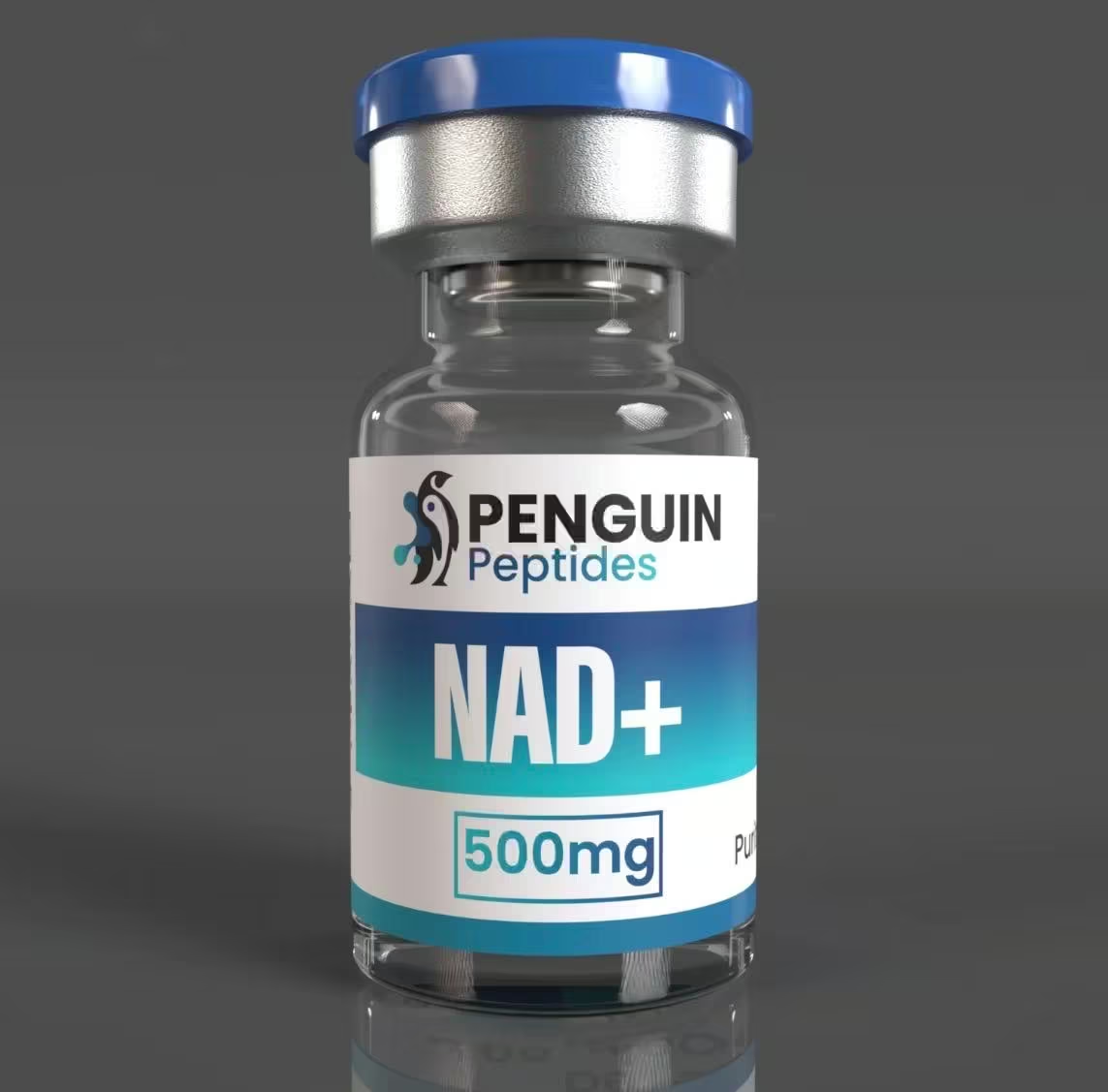
NAD+
Price range: $64.00 through $95.00
🧪 NAD+ Research Compound – Cellular metabolism and aging research
✅ ≥99% Purity – HPLC verified with COA available
🧊 Free Bac Water – Included with every order
📦 10 Vials – Per order for extended research
🚚 Fast Shipping – Discreet packaging with tracking
🔬 Research Grade – Strict quality control protocols
⚠️ Research Use Only – Not for human consumption
NMN vs NAD: Best NAD+ Injection Research Guide
Understanding the NMN vs NAD Debate
The comparison of NMN vs NAD begins with understanding that these are fundamentally different molecules with distinct roles in cellular metabolism. NAD+ (nicotinamide adenine dinucleotide) is a critical coenzyme found in every living cell, essential for converting food into energy, repairing DNA, and supporting immune function. In contrast, NMN (nicotinamide mononucleotide) is a direct precursor that the body converts into NAD+.
The NMN vs NAD distinction matters because oral NAD+ has poor bioavailability—it is digested and excreted rather than absorbed intact. NMN, as a precursor, bypasses this limitation by entering cells and being enzymatically converted to NAD+. This fundamental difference shapes all research into NMN vs NAD supplementation strategies, and it is why researchers approach these two compounds with entirely different experimental designs.
What Is NAD+?
NAD+ is a coenzyme central to mitochondrial ATP production, redox reactions, and DNA repair processes. According to the Wikipedia entry on nicotinamide adenine dinucleotide, it exists in two forms: the oxidized form (NAD+) and the reduced form (NADH), cycling between these states to carry electrons in metabolic reactions. As a substrate for sirtuins and PARPs, NAD+ influences gene expression, inflammation, and cellular repair mechanisms.
Age-associated decline in NAD+ levels has generated significant research interest in NAD+-augmenting strategies. However, recent large-scale human data complicate the narrative that has driven commercial interest in NMN vs NAD products. A Nature Metabolism study on differential impact of NAD+ boosters found that whole-blood NAD+ concentrations do not decline with healthy aging per se, challenging long-held assumptions in the field.
What Is NMN?
Nicotinamide mononucleotide (NMN) is a naturally occurring nucleotide found in foods such as broccoli, cucumbers, and edamame. As a direct NAD+ precursor, NMN is studied for its potential to elevate cellular NAD+ levels. A 12-week randomized, double-blind, placebo-controlled trial published in J-Stage on the potential of NMN for vascular rejuvenation showed that daily NMN supplementation (250 mg) was safe, with serum analysis revealing significant increases in nicotinamide levels, indicating enhanced NAD+ metabolism.
Vascular assessment in that trial demonstrated that brachial-ankle pulse wave velocity decreased by 25.1 cm/s in the NMN group versus +6.4 cm/s in the placebo group, corresponding to approximately a 2-year reduction in vascular age. Subgroup analysis showed significant improvements in participants with higher BMI and glucose levels, suggesting that metabolic status may influence responses to NMN supplementation.
NMN vs NAD: Key Differences
| Feature | NMN | NAD+ |
|---|---|---|
| Molecular Role | Direct precursor to NAD+ | Active coenzyme |
| Oral Bioavailability | Absorbed and converted to NAD+ | Poor oral absorption; digested and excreted |
| Research Focus | Precursor supplementation | Direct coenzyme function |
| Human Clinical Evidence | Limited but growing RCT data | Insufficient for injected forms |
Best NAD+ Injection: What Research Shows
The search for the best NAD+ injection requires understanding that injectable NAD+ is fundamentally different from oral precursors. A narrative review published in DOAJ on intravenous NAD+ in wellness medicine concluded that current evidence regarding IV NAD+ therapy remains preliminary and insufficient to support routine clinical or wellness use.
Reported adverse effects of IV NAD+ include nausea, cramping, flushing, and chest discomfort, while long-term safety data are lacking. The review noted that short-term IV NAD+ or NMN administration has been associated with transient increases in circulating NAD+ levels and changes in selected biomarkers, but the clinical significance of these findings remains uncertain due to small sample sizes, lack of placebo controls, and short follow-up durations.
For researchers evaluating the best NAD+ injection protocols, this evidence gap is critical. Despite widespread commercial marketing, no large-scale randomized controlled trial has established clinical efficacy for injectable NAD+ in any indication.
The Evidence Gap in NMN vs NAD Research
A systematic review with meta-analysis examining oral NMN supplementation on glucose and lipid metabolism, indexed in the BVS health database, found that although NMN supplementation significantly elevated blood NAD levels, most clinically relevant outcomes were not significantly different between NMN and control groups. The authors concluded that an exaggeration of the benefits of NMN supplementation may exist in the field.
This finding is critical for researchers evaluating NMN vs NAD strategies. While both approaches aim to elevate NAD+ levels, the translation from biomarker changes to clinical outcomes remains unproven. A 2025 expert opinion from more than 25 researchers, reported through EurekAlert on NAD+ research consensus, emphasized that larger and longer-term clinical studies are needed to validate clinical efficacies before any conclusions can be drawn about the NMN vs NAD question.
NAD+ vs NMN: Bioavailability and Conversion
An important consideration in the NMN vs NAD comparison is how each compound is processed by the body. According to a comparison of NR and NMN pathways on iHerb, isotope tracing studies have shown that NMN is dephosphorylated to nicotinamide riboside (NR) before cellular uptake, challenging assumptions about direct NMN transport into cells.
Regulatory status also differs between these compounds. As noted in Bolt Pharmacy’s guidance on NAD supplements, NR has stronger human clinical evidence and is authorised as a novel food in some regions, while NMN’s human bioavailability remains less well-established. A German health insurer analysis from AOK similarly concluded that NADH, NAD+, and NMN supplements make large promises without proven efficacy, reinforcing the need for rigorous research.
Product Specifications
| Feature | Specification |
|---|---|
| Product Name | NAD+ (Nicotinamide Adenine Dinucleotide) |
| CAS Number | 53-84-9 |
| Molecular Formula | C₂₁H₂₇N₇O₁₄P₂ |
| Molecular Weight | 663.43 g/mol |
| Purity | ≥99% (HPLC) |
| Form | Lyophilised powder |
| Storage | -20°C (long-term) |
| For Research Use Only | Not for human consumption or clinical use |
Research Applications
Cellular Energy Metabolism
NAD+ is essential for glycolysis, the TCA cycle, and oxidative phosphorylation. Research models examining mitochondrial function and ATP production rely on accurate NAD+ measurement and supplementation protocols, making high-purity research-grade NAD+ essential for reproducible results.
DNA Repair and Sirtuin Activation
As a substrate for PARP enzymes and sirtuins, NAD+ is studied in the context of DNA damage response and epigenetic regulation. These pathways are central to research on cellular aging and stress resistance, and they represent the mechanistic foundation underlying the NMN vs NAD research question.
NMN vs NAD Comparative Studies
Researchers comparing NMN vs NAD mechanisms examine how precursor availability versus direct coenzyme supplementation affects cellular NAD+ pools. These comparative studies require both compounds at high purity to ensure that observed effects reflect biological mechanisms rather than analytical variability.
Quality and Purity
Each batch of NAD+ undergoes rigorous quality control testing to ensure:
-
≥99% purity verified by HPLC
-
Correct molecular weight confirmed by mass spectrometry
-
Consistent coenzyme content validated by enzymatic assay
Certificates of Analysis (COA) are available upon request, providing full transparency for research applications.
Frequently Asked Questions
What is the difference between NMN vs NAD?
NMN vs NAD describes the relationship between a precursor and its active coenzyme form. NMN is converted to NAD+ inside cells, while NAD+ itself has poor oral bioavailability and is primarily studied as an injectable research compound.
Which is better for raising NAD+ levels, NMN or NAD?
Research on NMN vs NAD suggests that oral NMN effectively raises blood NAD+ levels, while oral NAD+ is poorly absorbed. Injectable NAD+ directly increases circulating levels but lacks robust clinical evidence for health outcomes.
What is the best NAD+ injection?
There is no established “best” NAD+ injection. A 2026 narrative review concluded that IV NAD+ therapy remains preliminary and insufficient to support routine clinical use, with reported adverse effects including nausea, cramping, and chest discomfort.
Is NAD+ injection FDA-approved?
No. Injectable NAD+ is not FDA-approved for anti-aging or wellness purposes. In some jurisdictions, regulatory agencies have explicitly stated that NAD+ injections are unlicensed and that marketing claims about anti-aging are misleading and unsupported by scientific studies.
How does NMN compare to NR?
NMN and NR are both NAD+ precursors. Research suggests NR has stronger human clinical evidence and is authorised as a novel food in some regions, while NMN’s human bioavailability remains less well-established. Isotope studies indicate NMN is converted to NR before cellular uptake.
Conclusion
The NMN vs NAD comparison reveals that both molecules are central to NAD+ research, but through different mechanisms. NMN functions as an oral precursor with documented ability to raise blood NAD+ levels, while NAD+ itself is studied primarily as an injectable compound with limited clinical evidence for health outcomes. The search for the best NAD+ injection remains unresolved, with recent reviews concluding that current evidence is preliminary and insufficient to support routine use.
For researchers investigating NAD+ metabolism, cellular energy, and the biology of aging, both NMN and NAD+ provide valuable tools—with the understanding that clinical translation remains an active area of investigation. The NMN vs NAD question will ultimately be answered by larger, longer-term trials that measure clinical endpoints rather than biomarker changes alone.
Ready to Advance Your Research?
Order premium NAD+ for your research today. Contact our team for COA requests or technical inquiries.
| mg | 1000, 500 |
|---|
Be the first to review “NAD+”
Related products
Regenerative Research Compound
Regenerative Research Compound
Regenerative Research Compound
Regenerative Research Compound
Regenerative Research Compound
Regenerative Research Compound
Regenerative Research Compound
Regenerative Research Compound
Reviews
There are no reviews yet.