
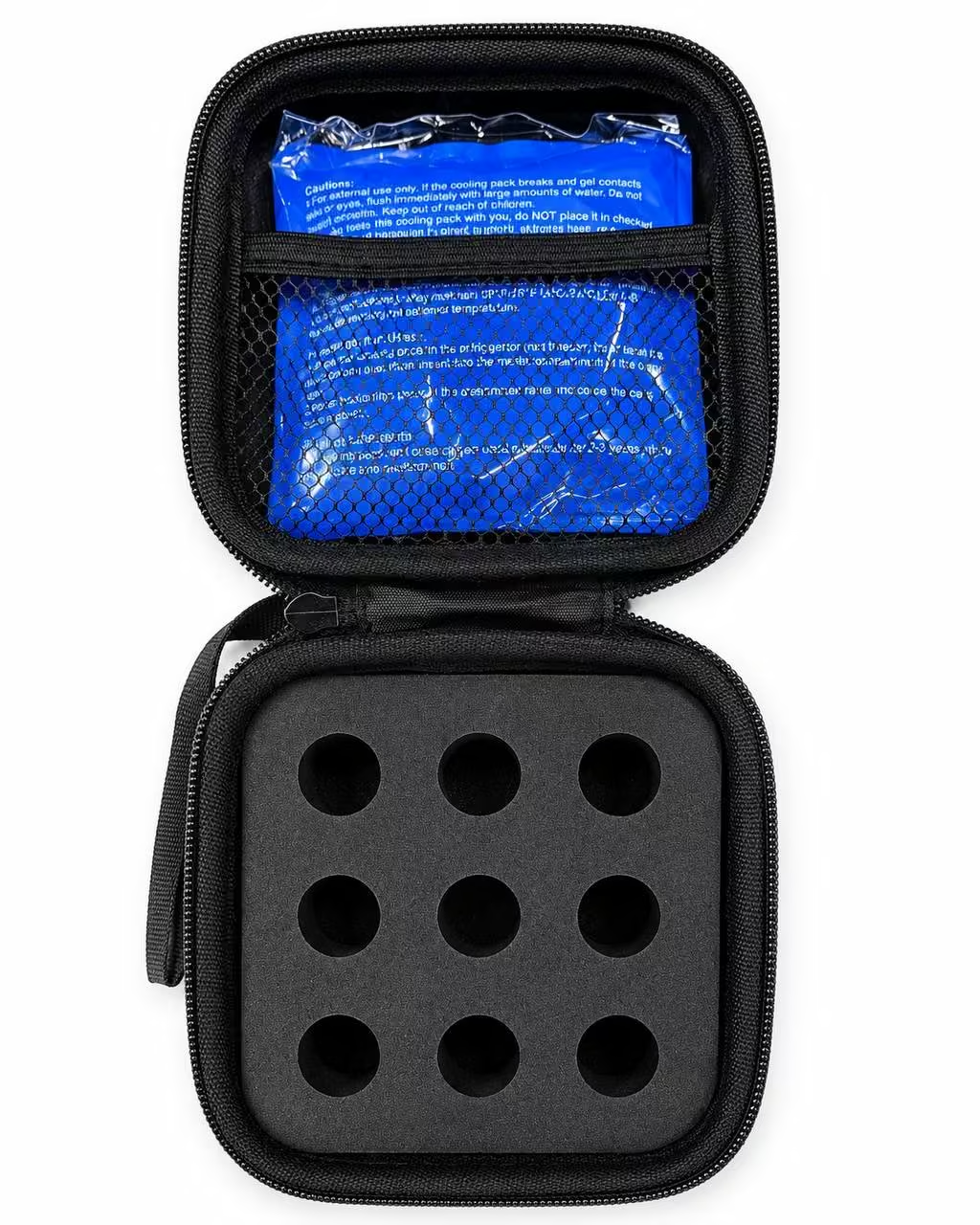
peptide storage case
$15.00 Original price was: $15.00.$10.00Current price is: $10.00.
The Essential Peptide Storage Case Guide: Protect Every Vial Like a Pro
If you’re investing in research peptides, the way you store them matters as much as the compounds themselves. A quality peptide storage case is not a nice-to-have accessory — it’s a functional requirement. Without proper physical protection, peptides are exposed to light, temperature fluctuations, and physical damage that silently destroy potency before a vial is ever used.
This guide covers everything you need to know: what to look for in a peptide storage case, how case choice connects to stability science, common mistakes researchers make, and how to match the right case to your specific storage environment.
Why a Dedicated Peptide Storage Case Is Non-Negotiable
Most researchers spend significant time evaluating peptide sequences, sourcing suppliers, and planning protocols — and then store their vials loosely in a refrigerator drawer or a zip-lock bag. This is a meaningful oversight.
Peptides are sensitive molecules. Heat, moisture, light, oxygen, and repeated temperature changes can all cause degradation, oxidation, or loss of potency. A storage case addresses several of these risks simultaneously: it blocks ambient light, cushions against physical shock, keeps vials upright and organized, and in insulated versions, buffers against minor temperature swings when moving samples between environments. Bluewell Peptides
For researchers running active protocols valued at $200–$500 per month in peptides, a properly chosen case in the $30–$60 range is a rational investment in protecting that inventory.
The Four Environmental Threats to Peptide Stability
Understanding why a storage case matters starts with understanding what actually degrades peptides:
Heat: Hydrolysis, oxidation, deamidation, and aggregation are the four primary degradation pathways, all of which accelerate exponentially above 8°C. Real Peptides
Light: UV light induces oxidation of aromatic amino acids — tryptophan, tyrosine, phenylalanine — and accelerates free radical formation. Lyophilized peptides should be stored in amber or opaque vials, and if the supplier provides clear vials, they should be stored inside an opaque secondary container. Real Peptides
Moisture: Lyophilized peptides are specifically designed for stability — removing moisture greatly slows degradation. However, once water is introduced, peptide stability changes significantly. Xcel Peptides
Physical shock: Vials left loose in a refrigerator can tip, knock together, and crack. Broken seals allow atmospheric moisture and oxygen in, accelerating degradation regardless of temperature.
A dedicated peptide storage case controls all four of these risks at the physical handling level.
Key Features to Look for in a Peptide Storage Case
Not all cases are equal. Here’s what to evaluate before purchasing:
Hard Shell vs. Soft Pouch
Hard-shell cases with molded or foam-cut inserts are the correct choice for peptide storage in almost every situation. A hard-shell case with molded slots is ideal for refrigerator use — it won’t compress or shift when other items are placed nearby. Soft pouches offer minimal protection against physical shock and provide no rigidity to keep vials upright. Vialcase
Insert Material and Cold-Temperature Performance
This is a detail most buyers overlook. PLA (Polylactic Acid), a popular plant-based plastic often used in budget 3D-printed cases, becomes extremely brittle in cold environments. If stored in a refrigerator at 2–8°C, PLA cases are prone to snapping or cracking over time. PETG is the recommended material for long-term sample integrity. Biogenixpeptides
For freezer storage at −20°C, this becomes even more critical. The case and insert material must tolerate sustained cold without becoming fragile.
Light-Blocking Capability
The case should be fully opaque. Even brief, repeated exposure to ambient light during fridge access accumulates UV damage over weeks and months. Cases with solid lids not mesh or transparent panels are preferred.
Secure Latch Mechanism
A secure latch keeps the case sealed during transport and prevents accidental opening inside the refrigerator. Dual latches provide redundancy. Avoid cases that rely only on friction-fit lids.
Vial Capacity and Slot Configuration
Most researchers working with multiple compounds benefit from cases holding 12–24 standard-sized vials (typically 2mL or 10mL). Labeled slot configurations or cases that accommodate labels on individual inserts improve organization and reduce handling errors particularly important when managing multiple peptide compounds simultaneously. For multi-compound workflows like a GLP peptide family stack,provides essential context on handling each vial type correctly once it comes out of storage.
Matching Your Storage Case to Your Environment
Different storage scenarios have genuinely different requirements. The right case for a laboratory bench shelf is not the same as the right case for travel or long-term freezer storage.
Refrigerator Storage (2–8°C) Active-Use Peptides
This is the most common configuration for reconstituted peptides currently in use. Peptide solutions are generally stable for up to 30 days when refrigerated at 4°C. For this environment, you need a compact hard-shell case with secure slots, opaque walls, and a latch closure. Priority is organization and light protection. Bluewell Peptides
Freezer Storage (−20°C) — Lyophilized Peptides
Lyophilized peptides stored at −20°C in opaque, airtight containers remain stable for 18–36 months, depending on sequence and moisture exclusion. The case must tolerate sustained freezer temperatures without becoming brittle — which rules out PLA and many standard plastic organizers. PETG or polypropylene cases are appropriate here. Keep in mind that BPC-157 storage and handling covers the specific sensitivity profile of some of the most commonly stored peptides and how case selection interacts with individual compound stability. Real Peptides
Ultra-Long-Term Storage (−80°C)
For long-term storage beyond 36 months, lyophilized peptides can be transferred to a −80°C ultra-low temperature freezer, where degradation is effectively halted. This is standard practice in research institutions storing peptide libraries. Cases for this environment must use materials rated for extreme cold. Standard consumer-grade cases are not appropriate. Real Peptides
Travel and Transport
Moving peptides between locations introduces significant risk. Temperature excursions, physical shock, and light exposure during transit are all real concerns. For travel, an insulated hard-shell case with an ice pack compartment or pre-chilled gel insert is the correct choice. The case should seal fully and hold vials immobile regardless of orientation.
Peptide Storage Case Comparison: Key Parameters
| Feature | Budget Soft Pouch | Standard Hard Case | Premium Insulated Case |
|---|---|---|---|
| Physical shock protection | Low | High | High |
| Light blocking | Partial | Full | Full |
| Cold-temp material stability | Variable | Good (PETG) | Good |
| Insulation | None | None | Yes |
| Best use case | Temporary transit | Fridge/freezer | Travel/transport |
| Approximate cost | $5–$15 | $25–$60 | $40–$90 |
Common Mistakes That Undermine Peptide Storage
Even with a good case, these errors compromise peptide integrity:
Storing reconstituted peptides at −20°C. Reconstituted peptides should not be frozen. If a reconstituted solution is accidentally frozen, performance may be compromised. Always verify whether a vial contains lyophilized powder or reconstituted solution before placing it in the freezer. Xcel Peptides
Ignoring freeze-thaw cycles. A single freeze-thaw cycle can reduce peptide activity by 15–25%. Aliquot reconstituted solutions before freezing to eliminate the need to refreeze partially used vials. Real Peptides
Assuming a storage case replaces proper vial sealing. A case provides physical and environmental protection — it does not compensate for an improperly sealed vial. Peptide storage containers should be airtight and low-binding to prevent peptides from sticking to surfaces and reduce material loss. Cernum Biosciences
Using clear vials without a light-blocking case. If a supplier provides clear vials, the contents should be transferred to an amber vial or the original vial stored inside an opaque secondary container. A fully opaque storage case functions as that secondary container. Real Peptides
Mislabeling or not labeling at all. In multi-compound inventories, unlabeled vials lead to dosing errors and wasted materials. Use a case with enough clearance to apply labels to each slot or vial cap.
For researchers building out a full storage protocol,how to reconstitute peptides outlines the correct procedure for introducing bacteriostatic water to lyophilized peptides — the step where most handling errors actually occur.
What the Research Says About Peptide Stability and Storage
The stability science here is well established. To prevent or minimize peptide degradation, the standard recommendation is to store peptide in lyophilized form at −20°C or −80°C. Once in solution, the peptide should be stored frozen in individual aliquots to avoid freeze-thaw cycles, prolonged exposure to pH above 8 should be avoided, and prolonged exposure of lyophilized peptides to atmospheric oxygen should be minimized. Sigma-Aldrich
Research published in PubMed on peptide degradation kinetics demonstrates that temperature, pH, and oxygen exposure are the primary controllable variables in peptide breakdown. A storage case directly controls the physical environment that influences two of these: temperature buffering during handling and oxygen/moisture exclusion through a sealed enclosure.
A Sigma-Aldrich technical guide on peptide stability reinforces that lyophilized forms are significantly more stable than reconstituted solutions and that storage format choices compound over time.
For researchers working with GLP-class compounds, a PubMed study on semaglutide stability shows how temperature stress conditions at even 25°C accelerate impurity formation — underscoring why consistent cold storage with proper case insulation matters even for short transit periods.
The NIH National Library of Medicine also documents how peptide conformation and degradation are sensitive to environmental exposure during storage, with hydrolytic fragmentation occurring at even physiological temperatures without proper handling protocols.
Peptide Storage Case FAQ
What is the best material for a peptide storage case? PETG or polypropylene are the most reliable materials. Both tolerate refrigerator and freezer temperatures without becoming brittle. Avoid PLA, which cracks at sustained cold temperatures and is not suitable for long-term fridge or freezer storage.
Can I use a regular pill organizer or craft box to store peptide vials? Not recommended. Standard organizers are rarely opaque, often have no secure latch, and are not designed to hold cylindrical vials upright. They also offer no protection against moisture ingress. A purpose-built peptide storage case is significantly more reliable.
How many vials should my storage case hold? For most single-user research protocols running 3–6 compounds, a 12-slot case is sufficient. Researchers managing broader stacks or maintaining reserve stock alongside active vials benefit from 24-slot configurations.
Does a peptide storage case provide enough insulation for travel? A standard hard-shell case provides physical protection and light blocking but no meaningful thermal insulation. For travel, use a case specifically designed with insulated walls and a gel pack compartment to maintain temperature during transit.
Should I store lyophilized and reconstituted peptides in the same case? You can, but they should be kept in clearly separated sections and at different temperatures where possible. Reconstituted solutions belong at 2–8°C and should never be frozen. Lyophilized powders can go to −20°C. A case with dividers or dual-compartment configuration helps maintain this separation.
How do I know if my peptide storage case is cold enough? A storage case itself does not regulate temperature — your refrigerator or freezer does. The case’s job is to maintain consistent organization, block light, and protect vials from physical damage. Use a calibrated refrigerator thermometer to confirm your fridge is operating at 2–8°C and your freezer at or below −20°C.
This article is written for informational and research purposes only. All peptides referenced are sold strictly for laboratory research use and are not intended for human consumption, clinical use, or diagnostic purposes.
Reviews
There are no reviews yet.