

Tesamorelin vs Ipamorelin – Research Grade Peptides
Product Overview
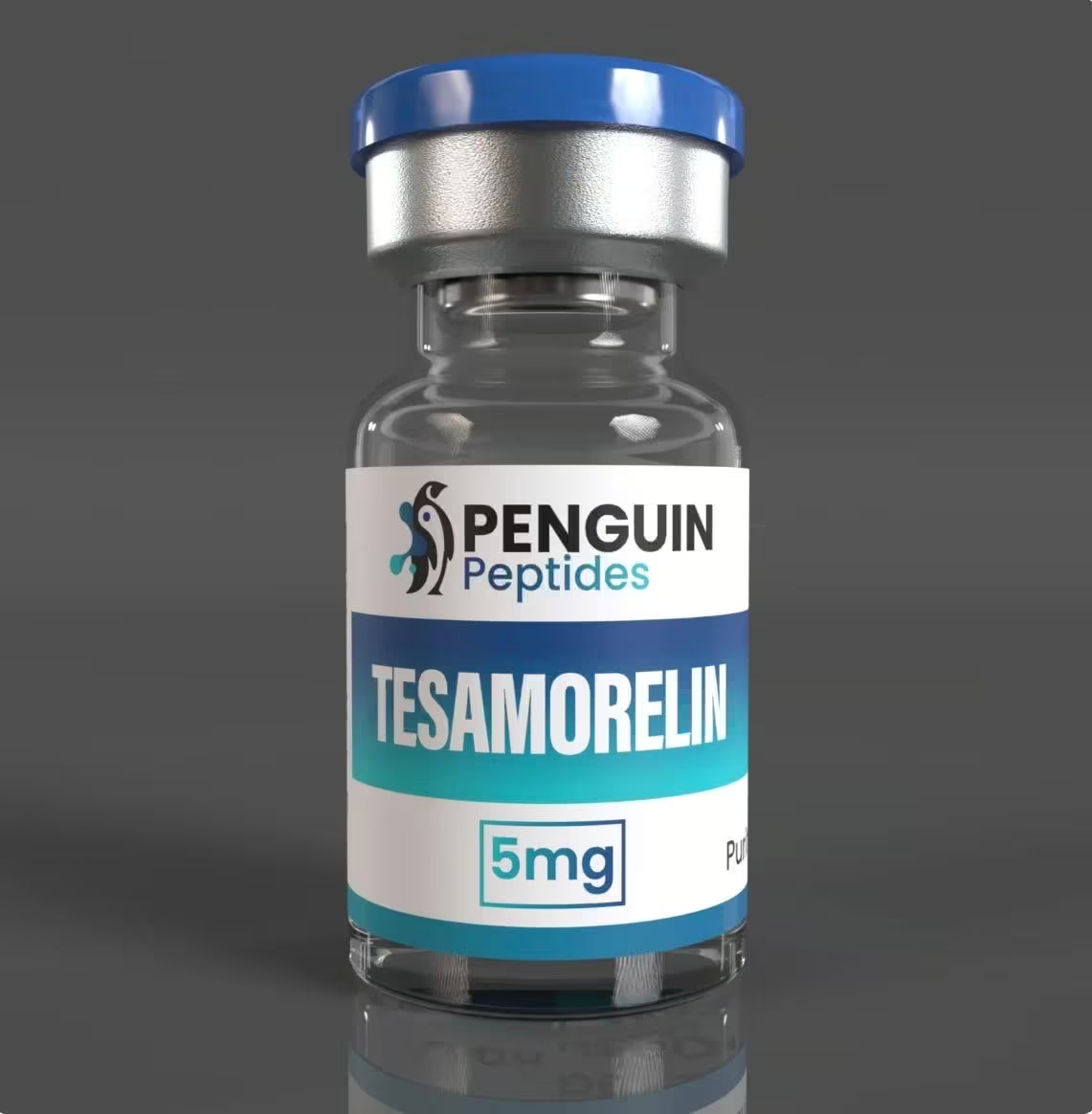
Tesamorelin vs ipamorelin is one of the most frequently researched comparisons in the growth hormone peptide field. Both compounds stimulate endogenous growth hormone (GH) release, but the tesamorelin vs ipamorelin distinction lies in their fundamentally different receptor pathways and distinct clinical profiles. Understanding the tesamorelin vs ipamorelin differences is essential for researchers designing GH-axis studies, metabolic investigations, or body composition protocols.
Tesamorelin is a synthetic analog of growth hormone-releasing hormone (GHRH) that binds directly to GHRH receptors on the anterior pituitary. It is FDA-approved under the brand name Egrifta for the treatment of visceral adiposity in HIV-associated lipodystrophy, as documented in the FDA Drugs@FDA database. Multiple randomized controlled trials have documented its efficacy in reducing visceral fat by approximately 20% over 26 weeks, with findings published in the New England Journal of Medicine.
Ipamorelin is a selective pentapeptide ghrelin receptor agonist (GHS-R1a) that triggers pulsatile GH release without significantly elevating cortisol, prolactin, or aldosterone. The International Union of Pharmacology has designated GHS-R1a as the ghrelin receptor. Unlike tesamorelin, ipamorelin is not FDA-approved and remains an investigational compound used in research settings, as noted in the FDA Orange Book. This tesamorelin vs ipamorelin regulatory distinction shapes how each peptide is used in laboratory research.
For researchers comparing tesamorelin vs ipamorelin, this page provides a comprehensive breakdown of mechanism, evidence base, dosing, and research applications to support experimental design.
Important Notice: This product is supplied for research purposes only and is not intended for human consumption or clinical use.
Product Specifications
| Feature | Tesamorelin | Ipamorelin |
|---|---|---|
| Peptide Class | GHRH Analog | Ghrelin Receptor Agonist (GHRP) |
| Receptor Target | GHRH Receptor | GHS-R1a (Ghrelin Receptor) |
| Amino Acid Count | 44 | 5 |
| Molecular Weight | ~5,135 Da | ~711.9 Da |
| Half-Life | ~26–38 minutes | ~2 hours |
| FDA Status | Approved (Egrifta) | Not approved |
| Purity | ≥98% (HPLC) | ≥98% (HPLC) |
| Form | Lyophilized powder | Lyophilized powder |
| Storage | -20°C (long-term) | -20°C (long-term) |
| For Research Use Only | Not for human use | Not for human use |
The tesamorelin vs ipamorelin specification table above highlights the structural and regulatory contrasts between these two GH peptides.
Mechanism of Action
Tesamorelin: GHRH Receptor Agonism
Tesamorelin binds to GHRH receptors on pituitary somatotroph cells, amplifying endogenous GHRH signaling and stimulating pulsatile GH release. According to the FDA Division Director Review, tesamorelin acetate is a synthetic analog of human GH releasing factor comprised of the identical 44 amino acid sequence as the naturally occurring hormone but with a hexenoyl moiety attached to the tyrosine residue at the N-terminal part of the molecule. This mechanism is tissue-specific to the pituitary and does not cause GH desensitization with continued use.
Ipamorelin: Selective Ghrelin Receptor Agonism
Ipamorelin activates the ghrelin receptor (GHS-R1a) in the hypothalamus and anterior pituitary, triggering GH release through a distinct downstream pathway. According to research published in the European Journal of Endocrinology, the sequence Aib-His-D-2Nal-D-Phe-Lys was specifically engineered for GHS-R1a selectivity. Its key research advantage is selectivity: ipamorelin does not significantly stimulate prolactin, cortisol, or aldosterone, unlike earlier GHRPs such as GHRP-6. The primary signaling pathway involves Gq/11 protein activation, phospholipase C, IP3 generation, intracellular calcium release, and GH exocytosis from pituitary somatotrophs, as detailed in Molecular Endocrinology.
Synergistic Research Potential
Because tesamorelin and ipamorelin act on different receptor families—GHRH and ghrelin—their concurrent study may engage multiple regulatory nodes within the hypothalamic-pituitary axis. The tesamorelin vs ipamorelin combination represents a dual-pathway research model that could produce additive or synergistic GH release, offering a more nuanced model for studying growth, repair, and metabolic regulation, as discussed in Frontiers in Endocrinology.
Research Applications
Growth Hormone Axis Studies
Both peptides serve as foundational tools for investigating pulsatile GH secretion. Tesamorelin’s GHRH mechanism is well-characterized through Phase III clinical trials, providing a robust evidence baseline. Ipamorelin offers a selective ghrelin-pathway model with minimal off-target hormonal effects, with receptor characterization documented in Endocrine Reviews. The tesamorelin vs ipamorelin choice depends on whether the research question targets GHRH or ghrelin receptor signaling.
Metabolic and Body Composition Research
Tesamorelin has documented efficacy in reducing visceral adipose tissue, making it a primary research tool for lipodystrophy and visceral fat studies. A PubMed review confirmed that tesamorelin improves visceral fat adiposity with relatively little effect on subcutaneous fat, with improvement in triglycerides and belly appearance distress. Ipamorelin is studied for broader metabolic support, lean muscle preservation, and body composition modulation. The tesamorelin vs ipamorelin metabolic profiles differ substantially.
Lipodystrophy and Visceral Fat Research
Tesamorelin remains the only FDA-approved peptide for HIV-associated lipodystrophy, with multiple RCTs confirming visceral fat reduction. The FDA approval was based on two pivotal studies demonstrating significant reductions in visceral adipose tissue. Ipamorelin has no FDA indication in this area but is explored in research contexts for metabolic optimization. In tesamorelin vs ipamorelin lipodystrophy research, tesamorelin remains the established reference standard.
Gastrointestinal Motility Research
Ipamorelin has been investigated in clinical trials for postoperative ileus management. A Phase 2 randomized study published in the International Journal of Colorectal Disease evaluated ipamorelin at 0.03 mg/kg twice daily in bowel resection patients. While the study was well-tolerated, it did not show significant differences from placebo in the key efficacy endpoint of time to first tolerated meal. A separate Phase 2 trial (NCT01280344) registered on ClinicalTrials.gov evaluated multiple dose levels of ipamorelin for recovery of gastrointestinal function following bowel resection.
Cognitive Function Research
Emerging research has explored tesamorelin’s effects on neurocognitive performance. A Phase 2 trial (NCT02572323) investigated tesamorelin for cognition in aging HIV-infected persons, measuring neurocognitive change via a summary regression-based change score, as registered on ClinicalTrials.gov. This represents an expanding area of GH peptide research beyond traditional metabolic endpoints.
Quality and Purity
Each batch of Penguin Peptides tesamorelin and ipamorelin undergoes rigorous quality control:
-
≥98% purity verified by HPLC
-
Correct molecular weight confirmed by mass spectrometry
-
Third-party tested with Certificates of Analysis (COA) available
-
Sterility and mycoplasma tested
For researchers comparing tesamorelin vs ipamorelin, both compounds are supplied with full analytical documentation to support experimental reproducibility.
Frequently Asked Questions
What is the key difference between tesamorelin and ipamorelin?
Tesamorelin stimulates GH via GHRH receptor activation and is FDA-approved for HIV-associated lipodystrophy. Ipamorelin activates ghrelin receptors with broader metabolic effects and lacks FDA approval. The tesamorelin vs ipamorelin distinction centers on receptor pathway and regulatory status.
Which peptide has stronger clinical evidence?
Tesamorelin has completed randomized controlled trials and FDA approval, establishing robust clinical evidence. Ipamorelin has limited clinical trials but stronger research-based evidence of selectivity. This tesamorelin vs ipamorelin evidence gap influences research design decisions.
Are tesamorelin and ipamorelin studied together?
Yes. Because they act on different receptor pathways, their concurrent study is hypothesized to produce synergistic GH release in research models. The tesamorelin vs ipamorelin combination approach is an active area of investigation.
What purity level can I expect?
Our tesamorelin and ipamorelin are provided at ≥98% purity, verified by HPLC with third-party testing.
How should these peptides be stored?
Store lyophilized powder at -20°C for long-term stability. Reconstituted material should be used promptly following standard laboratory protocols.
Is this product suitable for human use?
No. These products are supplied for research purposes only and are not intended for human consumption or clinical application.
Conclusion
The tesamorelin vs ipamorelin comparison highlights two complementary approaches to GH-axis research. Tesamorelin offers a well-characterized GHRH analog with FDA-approved clinical data for visceral adiposity. Ipamorelin provides a selective ghrelin receptor tool with minimal off-target hormonal effects, with receptor pharmacology documented in British Journal of Pharmacology. For researchers investigating pulsatile GH release, metabolic regulation, or synergistic pathway activation, the tesamorelin vs ipamorelin choice depends on the specific receptor pathway under investigation. Both peptides represent valuable reference standards for growth hormone research.
Ready to Advance Your Research?
Order premium tesamorelin and ipamorelin for your laboratory today. Contact our team for COA requests or technical inquiries.
| mg | 10, 5 |
|---|
Be the first to review “Tesamorelin”
Related products
Regenerative Research Compound
Regenerative Research Compound
Regenerative Research Compound
Regenerative Research Compound
Regenerative Research Compound
Regenerative Research Compound
Regenerative Research Compound
Regenerative Research Compound
Reviews
There are no reviews yet.