

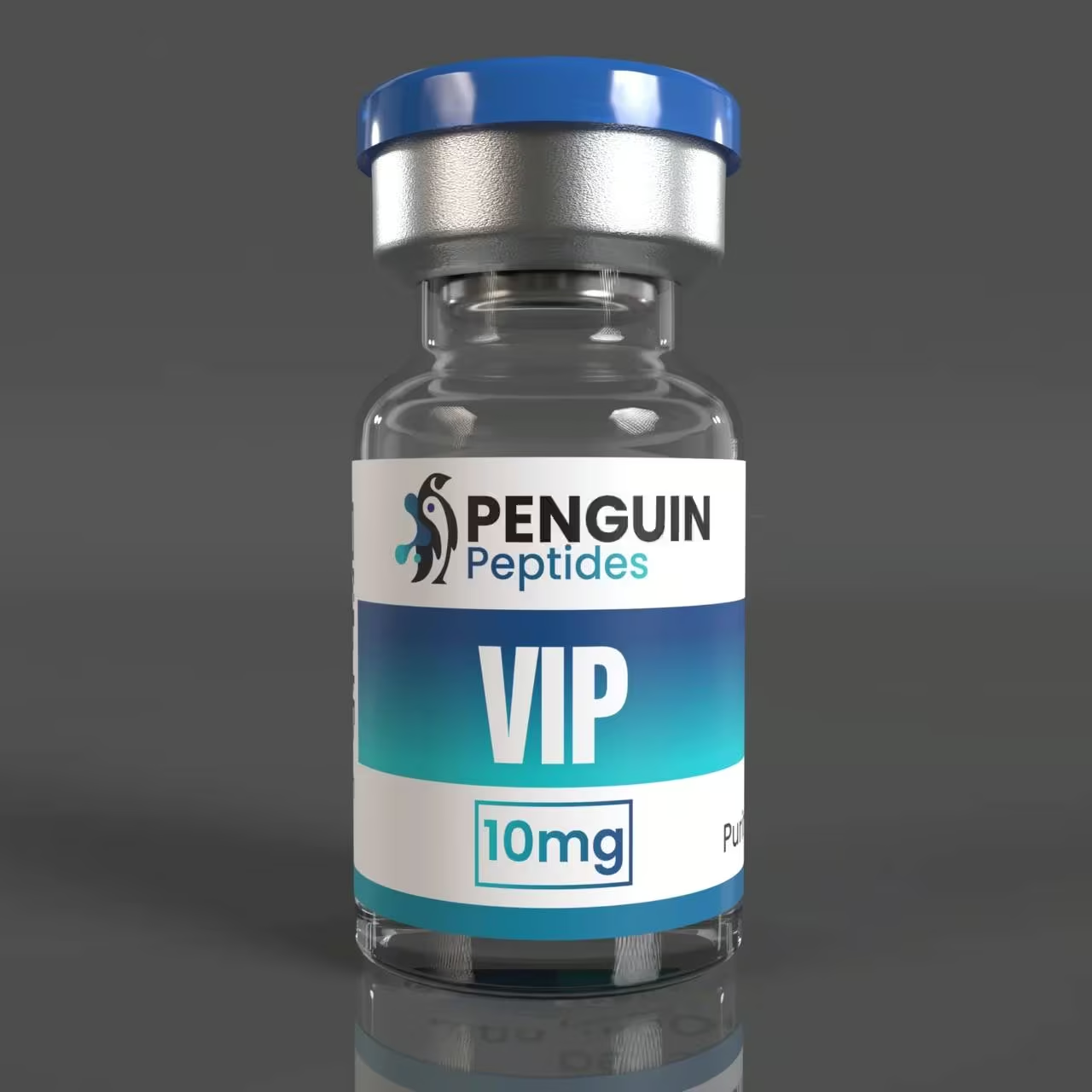
Vasoactive Intestinal Peptide – VIP 10mg
$100.00 Original price was: $100.00.$95.00Current price is: $95.00.
🧬 Vasoactive Intestinal Peptide – 10mg
🔬 High-purity VIP research peptide
✅ ≥98% purity, HPLC tested
📦 10 vials included
💧 Free bacteriostatic water with every order
🧪 For laboratory research only
Order now – 10 vials + free Bac Water! 🚀
Vasoactive Intestinal Peptide – 10mg Research Grade
Product Overview
Vasoactive intestinal peptide is a 28-amino acid neuropeptide first isolated from porcine intestine in 1970 by Said and Mutt . It belongs to the secretin/glucagon superfamily of peptides, which also includes PACAP, secretin, GHRH, and GLP-1 according to the National Institutes of Health. Vasoactive intestinal peptide is widely expressed throughout the central and peripheral nervous systems, the gastrointestinal tract, and immune cells, where it regulates a broad range of physiological functions .
This 10mg research-grade vial of vasoactive intestinal peptide is supplied as a lyophilized powder for laboratory investigation of VIP receptor signaling, neuropeptide biology, and inflammatory pathways. The peptide acts through two class B G protein-coupled receptors—VPAC1 and VPAC2—which are also activated by pituitary adenylate cyclase-activating polypeptide (PACAP) as detailed in Frontiers in Endocrinology. Both receptors couple primarily to Gs proteins, increasing intracellular cAMP and activating downstream signaling cascades .
Researchers searching for vasoactive intestinal peptide often need a reliable reference standard. This product is supplied for research purposes only and is not intended for human consumption or clinical use.
Product Specifications
| Feature | Specification |
|---|---|
| Peptide Name | Vasoactive Intestinal Peptide (VIP) |
| Amino Acid Count | 28 |
| Molecular Formula | C₁₄₇H₂₃₈N₄₄O₄₃S |
| Molecular Weight | ~3,326 Da |
| Purity | ≥98% (HPLC) |
| Form | Lyophilized powder |
| Vial Size | 10mg |
| Storage | -20°C (long-term), 2–8°C (short-term) |
| Solubility | Soluble in sterile water or bacteriostatic water |
| For Research Use Only | Not for human or clinical use |
Mechanism of Action
VPAC Receptor Signaling
Vasoactive intestinal peptide exerts its biological effects through two receptors, VPAC1 and VPAC2, which belong to the class B family of G protein-coupled receptors . These receptors share structural homology with the secretin, glucagon, GLP-1, and GIP receptor families as documented by the NCBI Conserved Domain Database. Upon agonist binding, VPAC receptors undergo conformational changes that promote GDP-for-GTP exchange on the Gα subunit, initiating downstream signaling .
For those studying vasoactive intestinal peptide, understanding the receptor signaling cascade is essential for experimental design. VPAC1 is preferentially coupled to Gs protein, leading to adenylate cyclase activation and increased intracellular cAMP . Depending on cellular location, VPAC1 can also couple to Gq protein, activating phospholipase C and calcium influx . Both VPAC1 and VPAC2 are able to activate phospholipase D through mechanisms that are not G protein-mediated .
Receptor Distribution
VPAC1 and VPAC2 show distinct tissue distribution patterns. VPAC1 is predominantly expressed in the colon relative to the small intestine, and is constitutively expressed on T cells and macrophages . VPAC2 receptors are predominantly expressed in smooth muscles throughout the GI tract and in vascular smooth muscles . In pancreatic islets, VPAC2 but not VPAC1 is expressed, suggesting that VPAC2 transmits the VIP signal to islet endocrine cells .
Research Applications
Neuropeptide and CNS Research
Vasoactive intestinal peptide is found in highest concentrations in hypothalamic nuclei and in bipolar, radially oriented interneurons in the cerebral cortex as reported by ScienceDirect. VIP shows approximately 30% colocalization with GABA and 80% colocalization with acetylcholine in cortical neurons . Research has demonstrated that vasoactive intestinal peptide plays important roles in the control of circadian rhythms and stress responses .
Immune Modulation and Inflammation
Vasoactive intestinal peptide has emerged as a potent anti-inflammatory peptide in animal models of chronic inflammatory diseases including Crohn’s disease, rheumatoid arthritis, and septic shock according to Frontiers Research Topics. The peptide helps preserve the equilibrium between pro-inflammatory and anti-inflammatory responses in both innate and adaptive immunity as detailed in Clinical & Experimental Immunology. VPAC1 is constitutively expressed on T cells and macrophages, while VPAC2 expression can be induced following stimulation .
Gastrointestinal Physiology
Vasoactive intestinal peptide is the dominant inhibitory neurotransmitter in the gastrointestinal tract as documented by F1000Research. It regulates ion secretion, nutrient absorption, and gut motility through VPAC1 and VPAC2 receptors . VIP released from enteric nerves stimulates anion secretion from enterocytes via Gs-coupled VPAC1 activation . Research has also shown that vasoactive intestinal peptide modulates epithelial function and exerts potent vasodilatory effects in the gastric, small intestinal, and colonic mucosa .
Metabolic and Endocrine Research
In pancreatic islets, vasoactive intestinal peptide activates adenylate cyclase through VPAC2R, increasing cAMP formation and enhancing exocytosis as reported by Diabetes In Control. VIP also stimulates glucagon secretion in several species . VPAC2 knockout mice showed significant growth impairment, decreased fat mass, increased lean mass, and increased insulin sensitivity .
Cancer and Cell Proliferation Research
Vasoactive intestinal peptide and its receptors have been studied for their effects on cell proliferation in cancer . The peptide’s role in carcinogenesis and its potential as a therapeutic target in oncology continues to be an active area of investigation .
Quality and Purity
Each batch of Penguin Peptides Vasoactive Intestinal Peptide undergoes rigorous quality control:
-
≥98% purity verified by HPLC
-
Correct molecular weight confirmed by mass spectrometry
-
Third-party tested with Certificates of Analysis (COA) available
-
Sterility and mycoplasma tested
For researchers sourcing vasoactive intestinal peptide, verifying COA documentation is the single most important step. Research-grade peptides differ significantly from FDA-approved pharmaceutical products.
Frequently Asked Questions
What is vasoactive intestinal peptide?
Vasoactive intestinal peptide (VIP) is a 28-amino acid neuropeptide first isolated from porcine intestine in 1970 . It functions as a neurotransmitter, neuromodulator, and anti-inflammatory agent throughout the body.
What receptors does VIP activate?
Vasoactive intestinal peptide activates two class B G protein-coupled receptors: VPAC1 and VPAC2 . Both receptors also bind PACAP with high affinity .
What purity level can I expect?
Our vasoactive intestinal peptide is provided at ≥98% purity, verified by HPLC with third-party testing.
What research applications is VIP used for?
Vasoactive intestinal peptide is studied in neuropeptide signaling, immune modulation, gastrointestinal physiology, metabolic regulation, circadian rhythm research, and cancer biology .
How should VIP be stored?
Store lyophilized powder at -20°C for long-term stability. Reconstituted material should be stored at 2–8°C and used promptly following standard laboratory protocols.
Is this product suitable for human use?
No. This product is supplied for research purposes only and is not intended for human consumption or clinical application.
Conclusion
Vasoactive intestinal peptide represents a foundational research tool for investigating neuropeptide signaling, immune modulation, and gastrointestinal physiology. With its high-purity formulation and comprehensive quality documentation, this 10mg vial enables researchers to study VIP receptor pharmacology, VPAC1/VPAC2 signaling pathways, and the peptide’s diverse physiological effects .
For scientists sourcing vasoactive intestinal peptide, this research-grade compound offers a reliable reference standard. Another common research need involves bulk quantities for multi-arm studies, which this product supports through consistent purity across batches. The established pharmacology of vasoactive intestinal peptide and its receptors provides a strong foundation for meaningful scientific inquiry across multiple research disciplines .
Ready to Advance Your Research?
Order premium Vasoactive Intestinal Peptide (10mg) for your laboratory today. Contact our team for COA requests or technical inquiries.
Reviews
There are no reviews yet.