

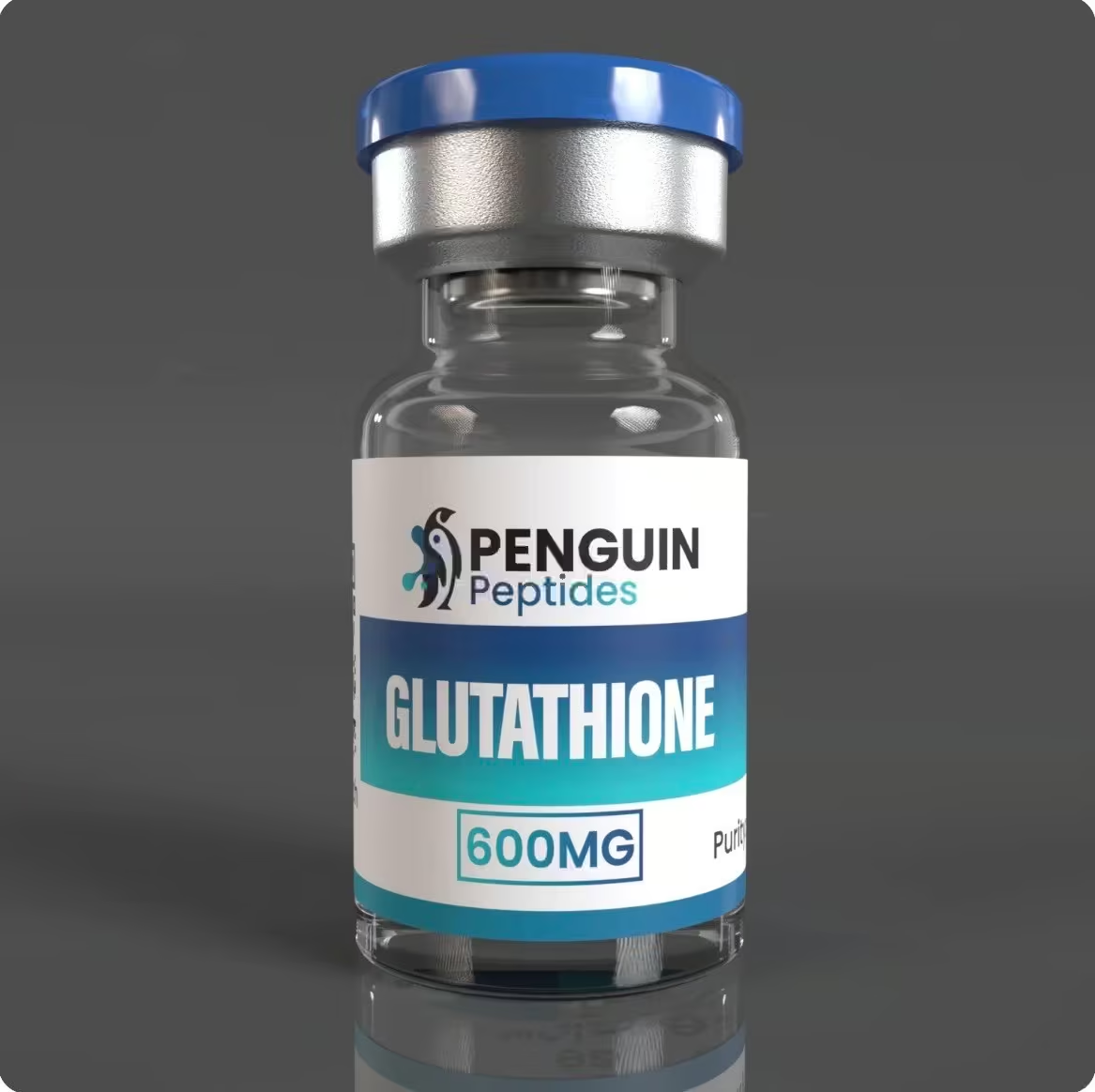
Best time to take Glutathione
Price range: $40.00 through $70.00
🧪 600/1500mg Per Vial – Glutathione (GSH)
✅ ≥99% Purity – HPLC verified with COA available
🧊 Free Bac Water – Included with every order
📦 10 Vials – Per order for extended research
🚚 Fast Shipping – Discreet packaging with tracking
🔬 Research Grade – Strict quality control protocols
⚠️ Research Use Only – Not for human consumption
Best Time to Take Glutathione (600mg) – Premium Research Peptide
What Is Glutathione?
Glutathione (GSH) is a tripeptide composed of glutamic acid, cysteine, and glycine. It is often referred to as the body’s “master antioxidant,” playing a critical role in cellular defense against oxidative stress, detoxification pathways, and immune system function. According to the National Institutes of Health (NIH) Office of Dietary Supplements, glutathione has demonstrated antioxidant activity in laboratory and animal studies and appears to have antiviral and antimicrobial effects, while also enhancing natural killer cell and neutrophil activity.
As a research compound, glutathione is studied extensively for its role in redox homeostasis, its involvement in the glutathione system as a drug target in neuroimmune disorders, and its potential applications in age-related research. Research published in MDPI Nutrients indicates that glutathione may improve several hallmarks and risk factors of aging in older adults, though definitive human evidence for disease prevention or lifespan extension remains an area of ongoing study.
Product Specifications
| Feature | Specification |
|---|---|
| Compound Name | Glutathione (GSH) |
| Dosage | 600mg per vial |
| Molecular Formula | C₁₀H₁₇N₃O₆S |
| Molecular Weight | 307.32 g/mol |
| Purity | ≥99% (HPLC) |
| Form | Lyophilised powder |
| Storage | -20°C (long-term) |
| For Research Use Only | Not for human consumption or clinical use |
Best Time to Take Glutathione: Research Insights
Morning Administration on an Empty Stomach
Research suggests that the best time to take glutathione is in the morning on an empty stomach to maximize absorption for most applications. According to PlexusDx, glutathione absorption peaks within 30–60 minutes of oral ingestion, with peak plasma levels occurring 2–4 hours post-dose. Morning dosing on an empty stomach (30 minutes before food) typically yields higher bioavailability because food compounds—especially cysteine-rich proteins—compete for intestinal absorption pathways and reduce glutathione uptake by approximately 20–35%.
A study published in PubMed evaluated an innovative orobuccal formulation of glutathione and found that absorption through the oral mucosa occurred rapidly, with measurable increases in blood glutathione levels after 30 and 60 minutes.
Evening Dosing for Circadian Support
Evening dosing offers an alternative advantage: glutathione supports nighttime cellular repair and circadian antioxidant cycles. Some research models with elevated nighttime inflammatory markers benefit from evening protocols. According to Metagenics UK, the best time to take glutathione may be in the evening, 1–2 hours before a meal or 2–3 hours after a meal for optimal absorption and efficacy.
Biomarker-Guided Timing
Individual oxidative stress biomarkers—including 8-OHdG (DNA oxidative damage), malondialdehyde (MDA), and protein carbonyls—can inform whether morning or evening supplementation better addresses specific research objectives. Research indicates that glutathione metabolism follows circadian patterns, with peak synthesis occurring in early morning and declining through evening. Dosing between 6–8 AM and again at 2–4 PM may align with natural antioxidant defense cycles, making this a key consideration when determining the best time to take glutathione.
Bioavailability Considerations
Oral glutathione faces significant bioavailability challenges. According to PlexusDx, oral glutathione has notoriously poor bioavailability—only 10–15% reaches systemic circulation due to rapid degradation by intestinal peptidases. A study published in PubMed on proliposome formulations demonstrated that novel delivery systems can enhance the oral bioavailability of glutathione and prolong its duration of action, which researchers should consider when evaluating the best time to take glutathione in controlled studies.
Research Applications
Antioxidant and Redox Research
Glutathione is the most abundant non-protein thiol in mammalian cells, and its ratio of reduced (GSH) to oxidized (GSSG) form is a key indicator of cellular oxidative status. Research explores its role in maintaining redox homeostasis and protecting against oxidative damage. Understanding the best time to take glutathione in experimental protocols is essential for accurate redox measurements.
Immune Function Studies
Adequate glutathione levels are needed for optimal innate and adaptive immune system function, including proper T-cell activation and differentiation. Research has examined glutathione supplementation and its effects on macrophage function and natural killer cell activity.
Neuroimmune and Neurological Research
The glutathione system has been identified as a potential drug target in neuroimmune disorders. Research published in PubMed highlights the role of glutathione in protecting against mitochondrial dysfunction and neurodegeneration associated with oxidative stress.
Detoxification Pathways
Glutathione plays a central role in phase II detoxification, conjugating with reactive electrophiles and facilitating their elimination. Research explores its involvement in hepatic detoxification and cellular protection mechanisms.
Quality and Purity
Each batch of Glutathione (600mg) undergoes rigorous quality control testing to ensure:
-
≥99% purity verified by HPLC
-
Correct molecular weight confirmed by mass spectrometry
-
Consistent peptide content validated by amino acid analysis
Certificates of Analysis (COA) are available upon request, providing full transparency for research applications.
Frequently Asked Questions
What is the best time to take glutathione?
The best time to take glutathione is generally in the morning on an empty stomach (30 minutes before food) for higher bioavailability. However, evening dosing may support circadian repair processes. Individual oxidative stress biomarkers and research objectives should guide timing selection.
How long does glutathione take to absorb?
Glutathione absorption peaks within 30–60 minutes of oral ingestion, with peak plasma levels occurring 2–4 hours post-dose. This rapid absorption is why researchers often ask about the best time to take glutathione relative to study measurements.
Why is oral glutathione bioavailability low?
Oral glutathione has poor bioavailability—only 10–15% reaches systemic circulation—due to rapid degradation by intestinal peptidases and competition with food amino acids for intestinal transport.
Can glutathione be taken with food?
Taking glutathione with food, especially cysteine-rich proteins, can reduce glutathione uptake by approximately 20–35% due to competition for intestinal absorption pathways. This is a key factor in determining the best time to take glutathione for research purposes.
How should glutathione be stored?
Glutathione should be stored at -20°C for long-term stability. Lyophilised powder should be reconstituted according to standard laboratory protocols.
What purity level can I expect?
Our Glutathione (600mg) is provided at ≥99% purity, verified by HPLC.
Is glutathione suitable for clinical use?
No. Glutathione (600mg) is supplied for research purposes only and is not intended for human consumption or clinical application.
References
-
NIH Office of Dietary Supplements: Dietary Supplements for Immune Function – Glutathione antioxidant activity and immune function research
-
PubMed: Bioavailability Study of an Innovative Orobuccal Formulation of Glutathione – Oral mucosa absorption and blood glutathione levels
-
PubMed: Design of novel proliposome formulation for antioxidant peptide, glutathione – Enhanced oral bioavailability and stability
-
MDPI: Glutathione in Our Diet and Its Role in the Body – Disease prevention to anti-aging research
-
PlexusDx: When Is The Best Time To Take Glutathione – Biomarker-guided timing and absorption kinetics
-
PlexusDx: What to Avoid When Taking Glutathione – Interactions, bioavailability, and safety
-
Metagenics UK: Glutathione Supplement – Timing recommendations
Conclusion
Glutathione (600mg) is a well-characterized research peptide for investigating antioxidant defense mechanisms, redox homeostasis, immune function, and neuroprotective pathways. Determining the best time to take glutathione in research settings depends on individual biomarker profiles and study objectives, with morning administration on an empty stomach generally supporting optimal absorption.
For researchers requiring a reliable, high-purity glutathione standard, Penguin Peptides Lab provides lab-tested compounds with Certificates of Analysis available upon request. Understanding the best time to take glutathione is essential for designing accurate and reproducible research protocols.
Ready to Advance Your Research?
Order premium Glutathione (600mg) for your research today. Contact our team for COA requests or technical inquiries.
| mg | 1500mg, 600mg |
|---|
Be the first to review “Best time to take Glutathione”
Related products
Peptide Research Compound
Dermal Research Compounds
Reviews
There are no reviews yet.