

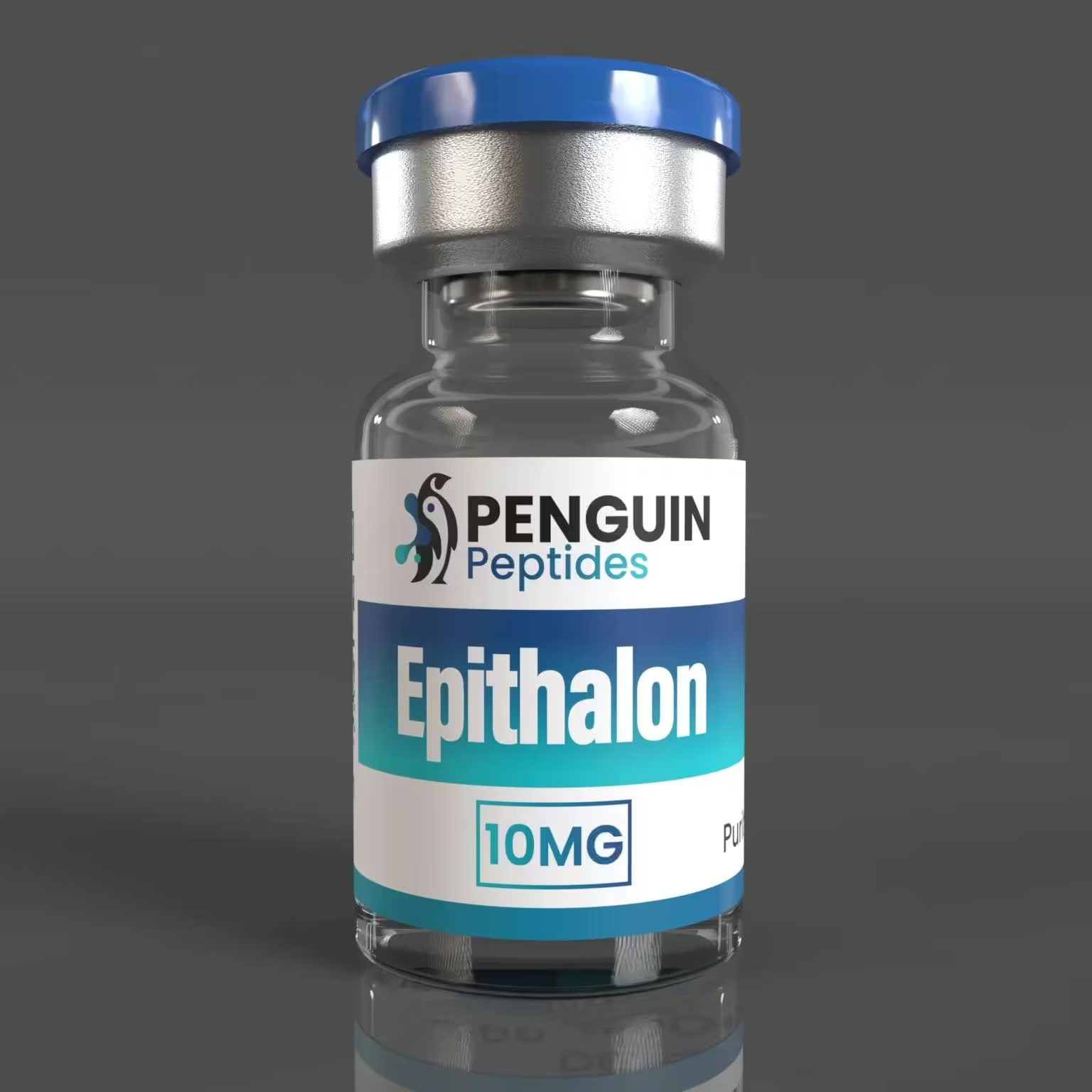
Epithalon 10mg
Original price was: $55.00.$51.00Current price is: $51.00.
🧪 10mg Per Vial – Epithalon (Epitalon) tetrapeptide
✅ ≥99% Purity – HPLC verified with COA available
🧊 Free Bac Water – Included with every order
📦 10 Vials – Per order for extended research
🚚 Fast Shipping – Discreet packaging with tracking
🔬 Research Grade – Strict quality control protocols
⚠️ Research Use Only – Not for human consumption
Epithalon 10mg – Premium Research Peptide
What Is Epithalon?
Epithalon (also spelled Epitalon) is a synthetic tetrapeptide with the amino acid sequence Ala-Glu-Asp-Gly (AEDG), developed as a synthetic analogue of Epithalamin, a polypeptide naturally produced in the pineal gland region. Research has focused on this peptide primarily for its role in telomerase activation and telomere elongation, mechanisms of significant interest in cellular aging and longevity studies.
The peptide was developed in the 1980s by a research team led by Professor Vladimir Khavinson at the St. Petersburg Institute of Bioregulation and Gerontology. Unlike its parent compound Epithalamin, which is a crude polypeptide extract, this tetrapeptide is chemically defined and can be synthesized with high purity and consistency. This distinction is critical for research applications, as findings from Epithalamin studies cannot be directly extrapolated to the synthetic analogue.
Research on Epithalon has explored its effects on telomerase activity, gene expression, melatonin regulation, and antioxidant pathways. A pivotal study by Khavinson et al. demonstrated that the peptide induces telomerase activity and telomere elongation in telomerase-negative human fetal fibroblast cultures, suggesting potential for prolonging cellular lifespan.
Product Specifications
| Feature | Specification |
|---|---|
| Peptide Name | Epithalon (Epitalon) |
| Amino Acid Sequence | Ala-Glu-Asp-Gly (AEDG) |
| Molecular Weight | 390.35 g/mol |
| Purity | ≥99% (HPLC) |
| Form | Lyophilised powder |
| Available Strength | 10mg per vial |
| Storage | -20°C (long-term) |
| For Research Use Only | Not for human consumption or clinical use |
Research Applications
Telomerase Activation and Telomere Elongation
The most extensively studied mechanism of Epithalon involves telomerase activation. Telomerase is the enzyme responsible for maintaining and extending telomeres, the protective DNA sequences at chromosome ends that shorten with each cell division. According to research published in Springer, the peptide has been shown to increase telomere length in human cell lines through telomerase upregulation or alternative lengthening of telomeres (ALT) activity. This finding was independently replicated in 2025, with telomere extension occurring through hTERT/telomerase upregulation in normal cells.
Pineal Gland and Melatonin Regulation
Epithalon research has explored its effects on pineal gland function and melatonin synthesis. According to in vitro studies, the peptide influences the expression of arylalkylamine-N-acetyltransferase (AANAT) and the transcription factor pCREB in pinealocytes, suggesting a regulatory role in melatonin synthesis. In vivo primate studies have examined its effects on circadian rhythms of melatonin and cortisol in aged subjects.
Gene Expression Modulation
Research using DNA-microarray technology has demonstrated that Epithalon modulates gene expression in mouse heart tissue. According to a study published in PubMed, the peptide activated expression of 194 clones (maximally by 6.61 times) and inhibited expression of 48 clones (maximally by 2.71 times), demonstrating specific effects on gene expression.
Antioxidant and Neuroendocrine Effects
Preclinical studies have reported age-dependent neuroendocrine effects and antioxidant-associated activity for Epithalon. In female mice, the peptide did not increase mean lifespan but increased maximum lifespan by 12.3%. Research has also explored its effects on interleukin-2 concentration in hypothalamic structures.
Quality and Purity
Each batch of Epithalon undergoes rigorous quality control testing to ensure:
-
≥99% purity verified by HPLC
-
Correct molecular weight confirmed by mass spectrometry
-
Consistent peptide content validated by amino acid analysis
Certificates of Analysis (COA) are available upon request, providing full transparency for research applications.
Frequently Asked Questions
What is Epithalon?
Epithalon is a synthetic tetrapeptide (Ala-Glu-Asp-Gly) developed as a synthetic analogue of Epithalamin, a pineal-derived polypeptide. It is studied primarily for its role in telomerase activation and cellular aging research.
How does it work?
The peptide is studied for its ability to induce telomerase activity and elongate telomeres in human somatic cells. Telomerase maintains telomere length, supporting continued cell division and the replacement of aging cells.
What is the molecular weight?
Epithalon has a molecular weight of approximately 390.35 g/mol.
What purity level can I expect?
Our product is provided at ≥99% purity, verified by HPLC.
How should it be stored?
The peptide should be stored at -20°C for long-term stability. Lyophilised powder should be reconstituted according to standard laboratory protocols.
Is it FDA-approved?
Epithalon is not FDA-approved as a medicine. The FDA reviewed Epithalon free base and acetate through the 2026 PCAC compounding process, which does not constitute therapeutic approval. FDA has stated there are no clinical data to support the safety of this peptide when used in humans.
What is the regulatory status?
Epithalon is classified as a research chemical in the United States. While the FDA’s Pharmacy Compounding Advisory Committee voted in favor of the peptide for potential inclusion on the 503A Bulks List in July 2026, this recommendation is advisory only and does not change current legality. FDA rulemaking is required before compounding is permitted.
What dosage is available?
Our product is available in 10mg per vial, providing sufficient material for extended research protocols.
References
-
Cenegenics: Longevity Peptide Mechanisms and Clinical Observations – Mechanism overview and clinical observations
-
Scilit: Regenerative and Longevity Medicine Review – Comprehensive review of mechanistic and preclinical evidence
-
BenchChem: Acetate Documentation Hub – Mechanism of action and experimental protocols
-
PubMed: Effects of Vilon and Related Peptides on Gene Expression in Mouse Heart – DNA-microarray study on gene expression
-
Springer: Telomere Length Increase in Human Cell Lines – Telomerase activation and telomere elongation research
-
FDA: 503A Bulks List Review – Regulatory assessment and safety conclusions
-
Pharmacy Times: What the Peptide Vote Actually Changes – Regulatory status clarification
Conclusion
Epithalon is a well-characterized tetrapeptide for researchers investigating telomerase activation, telomere biology, and cellular aging mechanisms. Its defined sequence, documented effects on gene expression and melatonin regulation, and growing body of research make this peptide a valuable tool for laboratory studies in longevity and regenerative science.
For researchers requiring a reliable, high-purity Epithalon for their studies, Penguin Peptides Lab provides lab-tested compounds with Certificates of Analysis available upon request.
Ready to Advance Your Research?
Order premium Epithalon for your research today. Contact our team for COA requests or technical inquiries.
Be the first to review “Epithalon 10mg”
Related products
Peptide Research Compound
Dermal Research Compounds
Reviews
There are no reviews yet.