
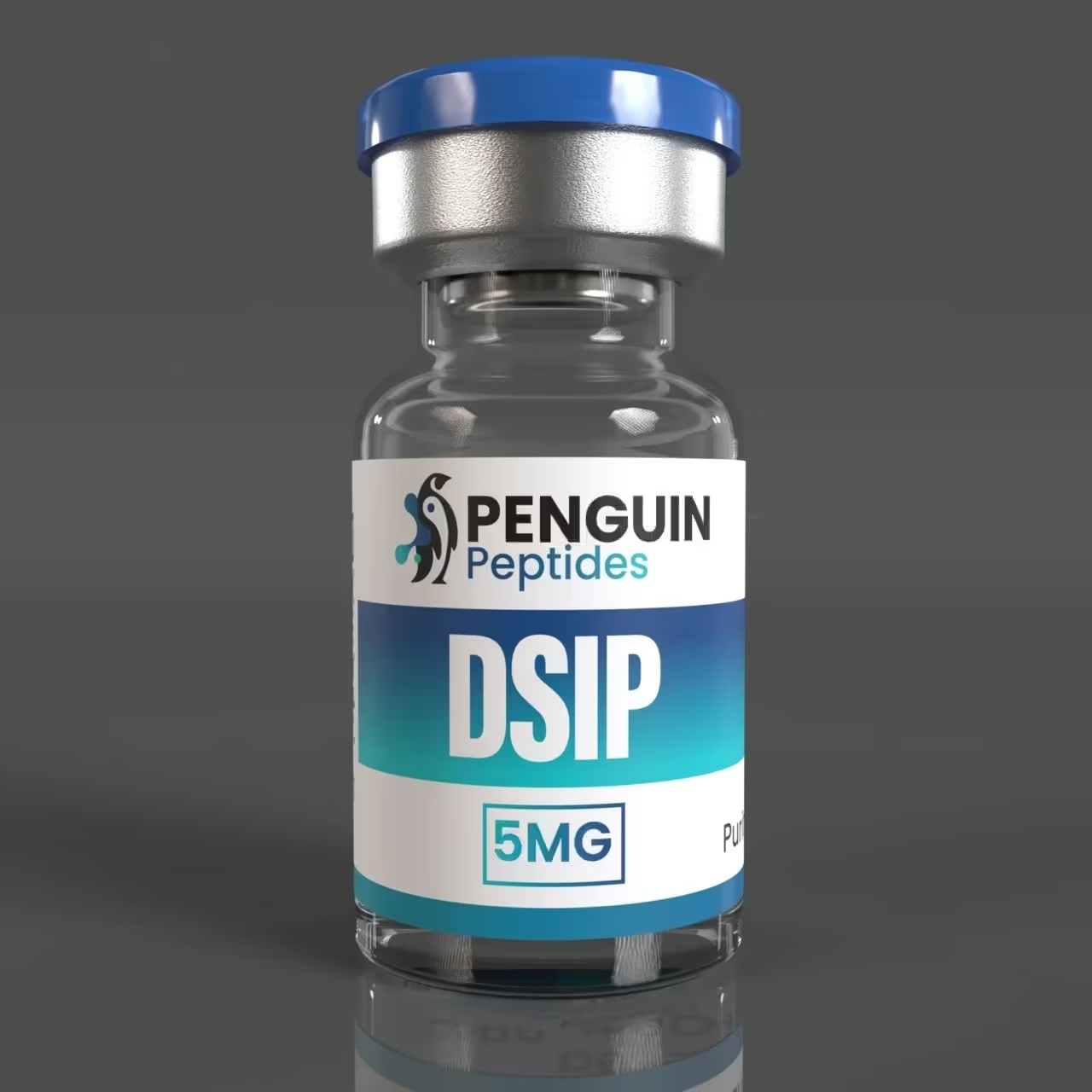
Delta Inducing peptides for sleep (DSIP)
Original price was: $40.00.$37.00Current price is: $37.00.
🧪 DSIP 5mg – Delta Sleep Inducing Peptide
✅ ≥98% Purity – HPLC verified with COA available
🧊 Free Bac Water – Included with every order
📦 10 Vials – Per order for extended research
🚚 Fast Shipping – Discreet packaging with tracking
🔬 Research Grade – Strict quality control protocols
⚠️ Research Use Only – Not for human consumption
Peptides for Sleep – DSIP (Delta Sleep Inducing Peptide) 5mg
What Is DSIP? A Powerful Peptide for Sleep Research
Delta Sleep Inducing Peptide (DSIP) is a naturally occurring nonapeptide and neuromodulator predominantly found in the brain, where it regulates sleep, circadian rhythms, hormone secretion, and stress response. As Cenegenics explains, DSIP crosses the blood-brain barrier readily and has been clinically studied for applications in sleep disorders, chronic pain, low testosterone, and stress-related conditions.
DSIP is a peptide composed of nine amino acids that occurs naturally in the brain and central nervous system. It functions as both a neuromodulator and a natural sleep-promoting compound, with a broad range of physiological roles. Because it easily passes the blood-brain barrier, DSIP can exert central effects following peripheral administration. It is involved in the regulation of sleep patterns, circadian rhythms, adrenocorticotropic hormone (ACTH) secretion, luteinizing hormone (LH) release, and growth hormone (GH) pulsatility. It has also been investigated for its stress-protective properties, antioxidant activity, and potential anti-cancer applications.
For researchers investigating peptides for sleep, DSIP represents one of the most well-characterized and extensively studied compounds available. Among the various peptides for sleep currently being researched, DSIP stands out for its direct modulation of sleep architecture.
Product Specifications
| Feature | Specification |
|---|---|
| Peptide Name | DSIP (Delta Sleep Inducing Peptide) |
| Amino Acid Count | 9 |
| Molecular Formula | C39H54N10O12 |
| Molecular Weight | ~848.9 Da |
| Purity | ≥98% (HPLC) |
| Form | Lyophilised powder |
| Storage | -20°C (long-term) |
| For Research Use Only | Not for human consumption or clinical use |
How Does DSIP Work as a Peptide for Sleep?
DSIP exerts its effects through multiple central and peripheral mechanisms. In the brain, it directly influences the secretion of adrenocorticotropic hormone (ACTH), luteinizing hormone (LH), and growth hormone (GH), modulating the hormonal output of the hypothalamic-pituitary axis. It decreases the production of somatostatin (the hormone that inhibits GH release), which supports natural GH pulsatility.
By reducing cortisol production and somatostatin levels while supporting LH and GH secretion, DSIP creates a hormonal environment more favorable for sleep, recovery, and stress management. It also exhibits a pronounced stress-protective action, reducing stress-induced metabolic and functional disorders, and may play a role in regulating the timing and quality of circadian rhythms.
Research published in Frontiers in Pharmacology demonstrated that DSIP effectively modulates neurotransmitter levels, particularly 5-HT (serotonin), glutamate, dopamine, and melatonin, leading to improved sleep quality. The study showed that DSIP treatment significantly mitigated deficits in locomotor activity and movement time in insomnia models, restoring activity to levels closer to control groups.
Among the various peptides for sleep currently under investigation, DSIP stands out for its direct modulation of sleep architecture and its ability to cross the blood-brain barrier. Researchers exploring peptides for sleep frequently select DSIP for its well-documented neuromodulatory effects.
Clinically Observed Benefits of This Peptide for Sleep
-
Improvement in disturbed sleeping patterns: DSIP’s primary identified role is promoting and regulating sleep, with research focused on improving disordered or disrupted sleep.
-
Improved LH and GH release: By modulating hypothalamic-pituitary signaling, DSIP supports the secretion of luteinizing hormone and growth hormone.
-
Decreased production of cortisol: DSIP has been shown to reduce cortisol output, supporting stress resilience and recovery.
-
Decreased production of somatostatin: Lower somatostatin levels allow for improved natural GH release, with downstream benefits for body composition and cellular repair.
-
Reduction of chronic pain: DSIP has been clinically studied in the context of chronic pain conditions, with evidence of analgesic benefit.
-
Regulation of circadian rhythm: According to PlexusDx, DSIP may influence the timing and synchronization of biological rhythms, with implications for sleep quality, hormone pulsatility, and metabolic function.
-
Stress reduction: A ScienceDirect study on sleep modification found that DSIP-related compounds contributed to reduced stress markers and improved sleep quality in research models.
These benefits make DSIP one of the most promising peptides for sleep research applications currently available. For scientists comparing peptides for sleep, DSIP offers a unique combination of neuromodulatory and stress-protective effects.
Quality and Purity
Each batch of DSIP undergoes rigorous quality control testing to ensure:
-
≥98% purity verified by HPLC
-
Correct molecular weight confirmed by mass spectrometry
-
Consistent amino acid sequence validated by peptide mapping
Certificates of Analysis (COA) are available upon request, providing full transparency for research applications. Our quality standards align with the analytical methods described in RSC Publishing for peptide characterization.
Frequently Asked Questions
What is DSIP?
DSIP (Delta Sleep Inducing Peptide) is a naturally occurring nonapeptide and neuromodulator that regulates sleep, circadian rhythms, hormone secretion, and stress response. It is used as a research tool to study sleep regulation and neuroendocrine function.
How does DSIP work?
DSIP exerts its effects through multiple mechanisms, including modulating hypothalamic-pituitary signaling, decreasing somatostatin and cortisol production, and supporting LH and GH secretion. As detailed in Frontiers in Pharmacology, it also regulates neurotransmitter balance, particularly 5-HT (serotonin), glutamate, dopamine, and melatonin.
Is DSIP a sedative?
DSIP is a natural neuromodulator and sleep-promoting peptide, not a sedative in the pharmacological sense. It promotes physiologically normal sleep architecture rather than inducing sedation through CNS suppression the way traditional sleep medications do.
Does DSIP affect testosterone levels?
DSIP stimulates the release of luteinizing hormone (LH), which is the primary pituitary signal for testosterone production in men. By supporting LH secretion, DSIP may indirectly support endogenous testosterone levels, though this effect is mediated through the hormonal axis rather than direct androgenic activity.
Can DSIP help with stress-related sleep disruption?
Yes, this is one of the more studied applications. As Cenegenics notes, DSIP exhibits a pronounced stress-protective action and has been shown to decrease stress-induced metabolic and functional disorders, making it relevant for research where sleep disruption is tied to chronic stress or elevated cortisol.
What purity level can I expect?
Our DSIP is provided at ≥98% purity, verified by HPLC.
How should DSIP be stored?
DSIP should be stored at -20°C for long-term stability. Lyophilised powder should be reconstituted according to standard laboratory protocols.
Is DSIP suitable for clinical use?
No. DSIP is supplied for research purposes only and is not intended for human consumption or clinical application.
Why choose DSIP among other peptides for sleep?
DSIP is unique among peptides for sleep because it directly modulates sleep architecture and circadian rhythms while also addressing stress-related hormonal imbalances. Unlike sedatives, DSIP promotes physiologically normal sleep patterns. When evaluating peptides for sleep for research purposes, DSIP provides a well-characterized and reliable option.
References
-
Cenegenics: What is DSIP? – Mechanism of action, clinical benefits, and neuromodulatory effects
-
Frontiers in Pharmacology: DSIP fusion peptide efficacy in PCPA-induced insomnia mouse models – Neurotransmitter modulation and sleep quality
-
ScienceDirect: Effects of PeptiSleep on sleep modification – Sleep quality and stress reduction
-
PlexusDx: Sleep and DSIP (CLOCK rs1801260) – DSIP pathway and circadian rhythm regulation
-
ScienceDirect: Food-derived bioactive peptides for anxiety and sleep management – SAR analysis of sleep-promoting peptides
-
RSC Publishing: Walnut peptide and theanine combination sleep disorders – HPA axis and slow-wave sleep
Conclusion
DSIP (Delta Sleep Inducing Peptide) is a naturally occurring neuromodulator for researchers investigating sleep regulation, circadian rhythms, hormone secretion, and stress response. With its ability to cross the blood-brain barrier and modulate neurotransmitter balance, DSIP enables studies on sleep architecture, neuroendocrine function, and stress-protective mechanisms.
For researchers requiring a reliable, high-purity peptide for sleep and neuromodulation studies, DSIP provides a well-characterized research tool. Among the growing field of peptides for sleep, DSIP remains one of the most studied and promising compounds for understanding sleep physiology. As research into peptides for sleep continues to expand, DSIP will remain a foundational compound for scientific investigation.
Ready to Advance Your Research?
Order premium DSIP for your research today. Contact our team for COA requests or technical inquiries.
Call to Action: Contact Our Research Team

Reviews
There are no reviews yet.